“When it comes to learning advanced integrated avionics, the airplane is perhaps the worst place to learn. But the right simulator is the better option for obvious reasons, and not all are created equal.”
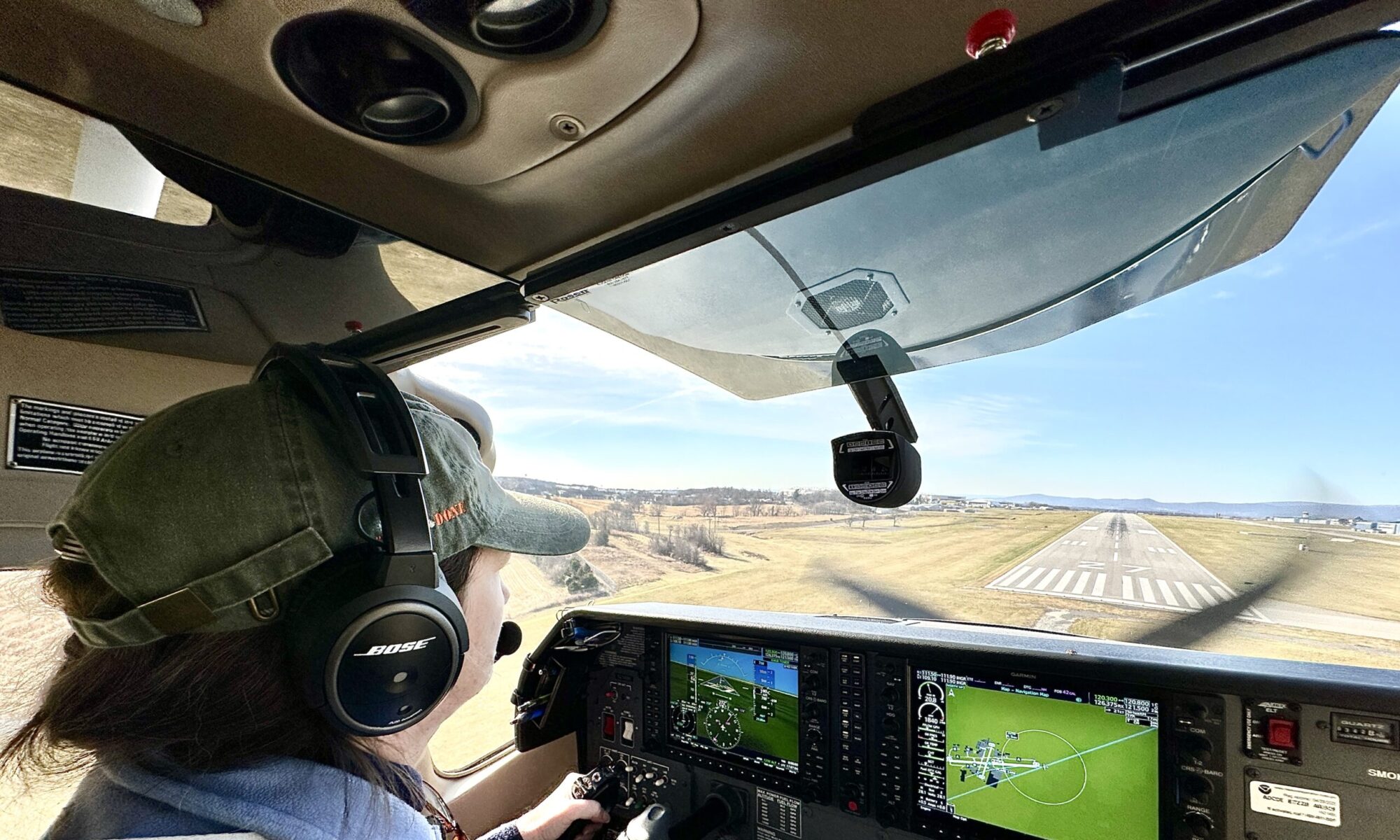
What’s the scoop behind the claim? Calvin Fraites of Flight1 Aviation Technologies joined The Smart Aviator’s Larry Anglisano on AvBrief. com to explain just what this means and how both flight schools and private owners can incorporate robust simulation into their regular practice as well as pursuit of certificates—especially the instrument rating—in Cirrus SR Series and Piper PA28 aircraft equipped with the Garmin Perspective and G1000 NXi.
Flight1 Tech’s Calvin Fraites joined Larry Anglisano of AvBrief.com on The Smart Aviator podcast on November 5, 2025. To visit the podcast, go to the AvBrief website.
We’ve been working with Flight1 Tech to promote its AATDs because I’ve seen how well they work within the flight training organizations with which I’ve collaborated over the years. I’ve known founder and president Jim Rhoads since my days at AOPA, when his company built the Cessna Cardinal model for Microsoft Flight Sim that accompanied the AOPA Sweepstakes Catch-a-Cardinal.
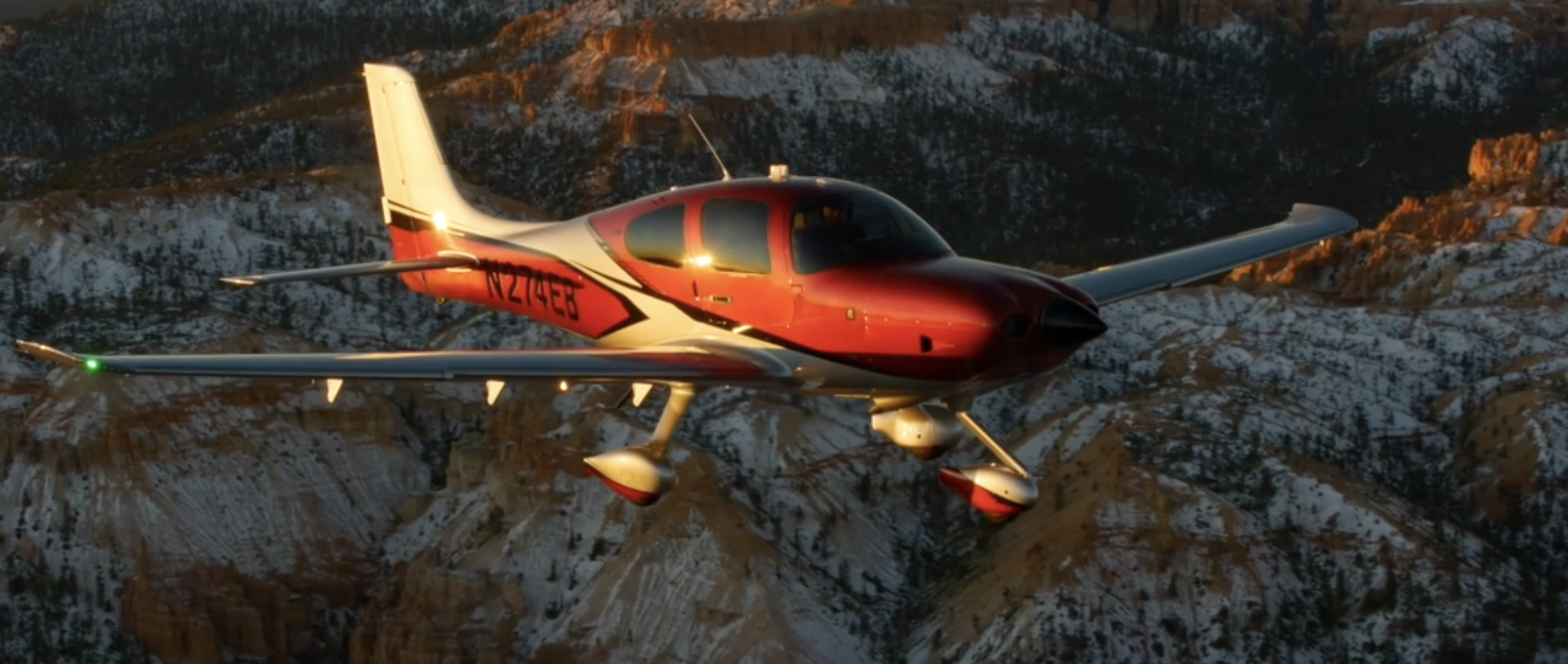
Since then, Flight1 Tech’s FAA-approved AATDs have evolved to emulate faithfully the Cirrus SR series, complete with Garmin’s Perspective+ and CAPS (Cirrus Airframe Parachute System) deployment, and the nuances of the PA-28 based on Jim’s longtime ownership and piloting of his own Piper Cherokee. Now, the modern version replicates an Archer with Garmin’s G1000 NXi avionics suite.
For training that sticks, you need an honest rendering of the instrument panel and associated hardware, and Flight1 Tech does it in a way that keeps it low cost and approachable for a wide range of flight schools as well as private owners.
Trying to re-vision a massive event like NBAA’s BACE—the association’s largest annual gathering—takes time as well as overcoming a lot of inertia, both institutional and across the industry.
With a long-term agreement signed with the Las Vegas Convention Center, NBAA is constricted in its ability to revamp the conference, but it made valiant efforts to do so this year, and try to bring value to the members of the association and the companies and customers they serve.
The Gulfstream team brought the G400, G800, and the cabin mockup of the G300 to the show at NBAA-BACE. [Credit: Julie Boatman]
I found the most value in the meetings, the networking, and the chance conversations that only bringing together a lot of disparate folks in person can do. And that’s really why bizav exists, really, that gathering people together, face to face.
At one point on the exhibit hall floor, I was in a gathering of random friends I knew from no less than 3 prior corporate engagements. No one can plan that kind of synergy.
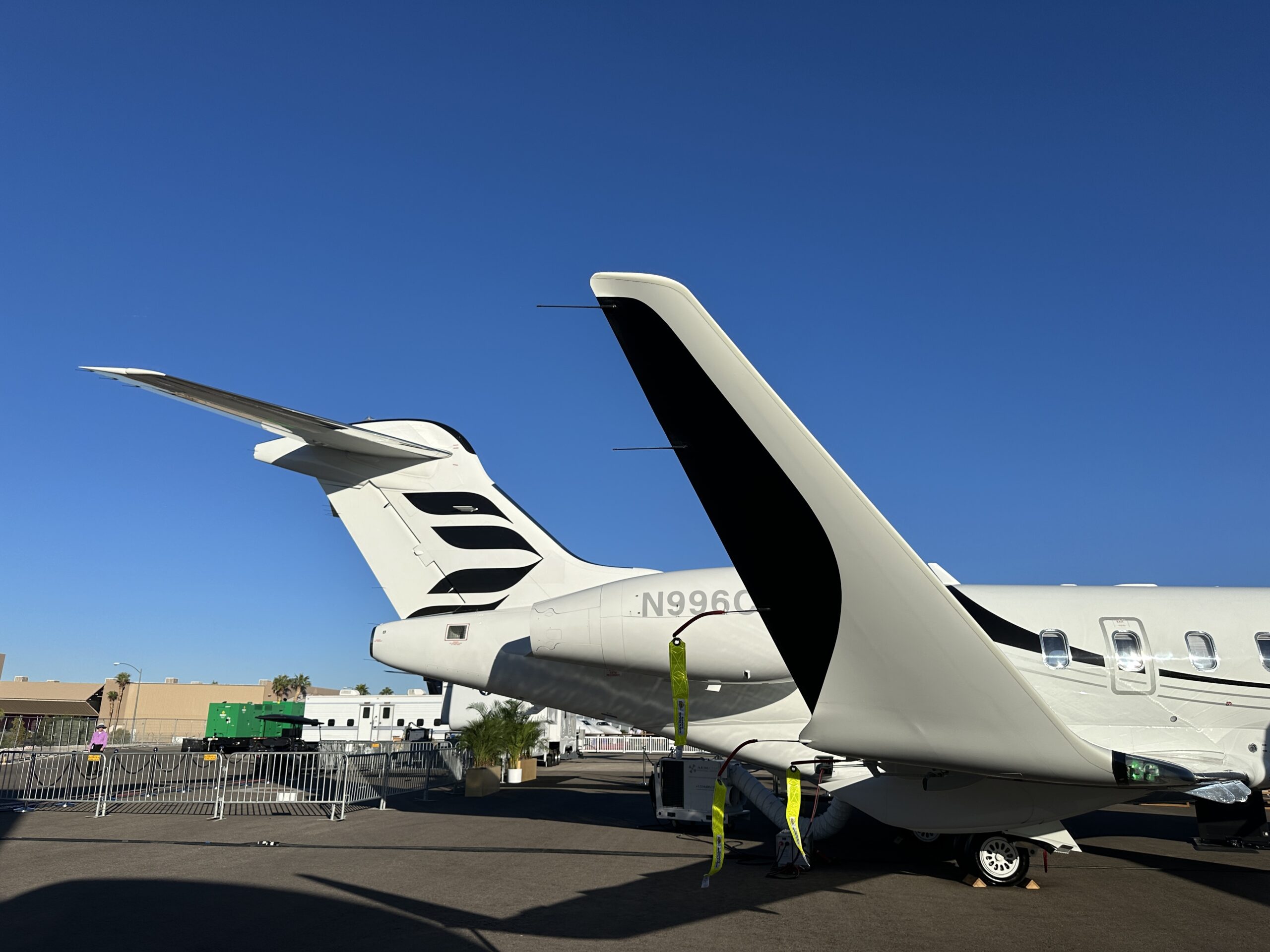
The sleek black Epic E1000 GX poises on the ramp at NBAA-BACE. [Credit: Julie Boatman]The Citation Ascend on the display at Textron Aviation, greeting the morning sun. [Credit: Julie Boatman]Bombardier brought several of its Global and Challenger fleet to the static display at NBAA-BACE 2025. [Credit: Julie Boatman]
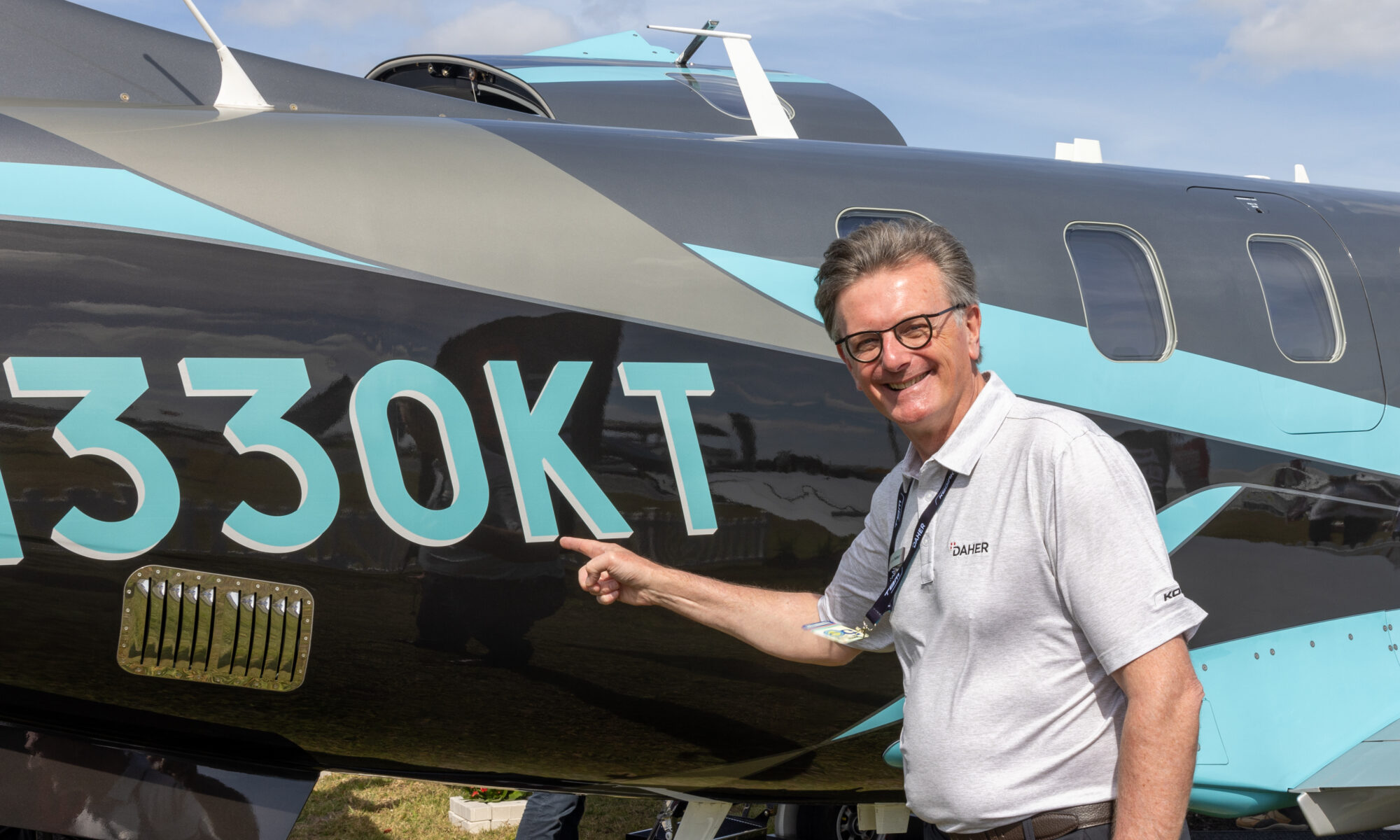
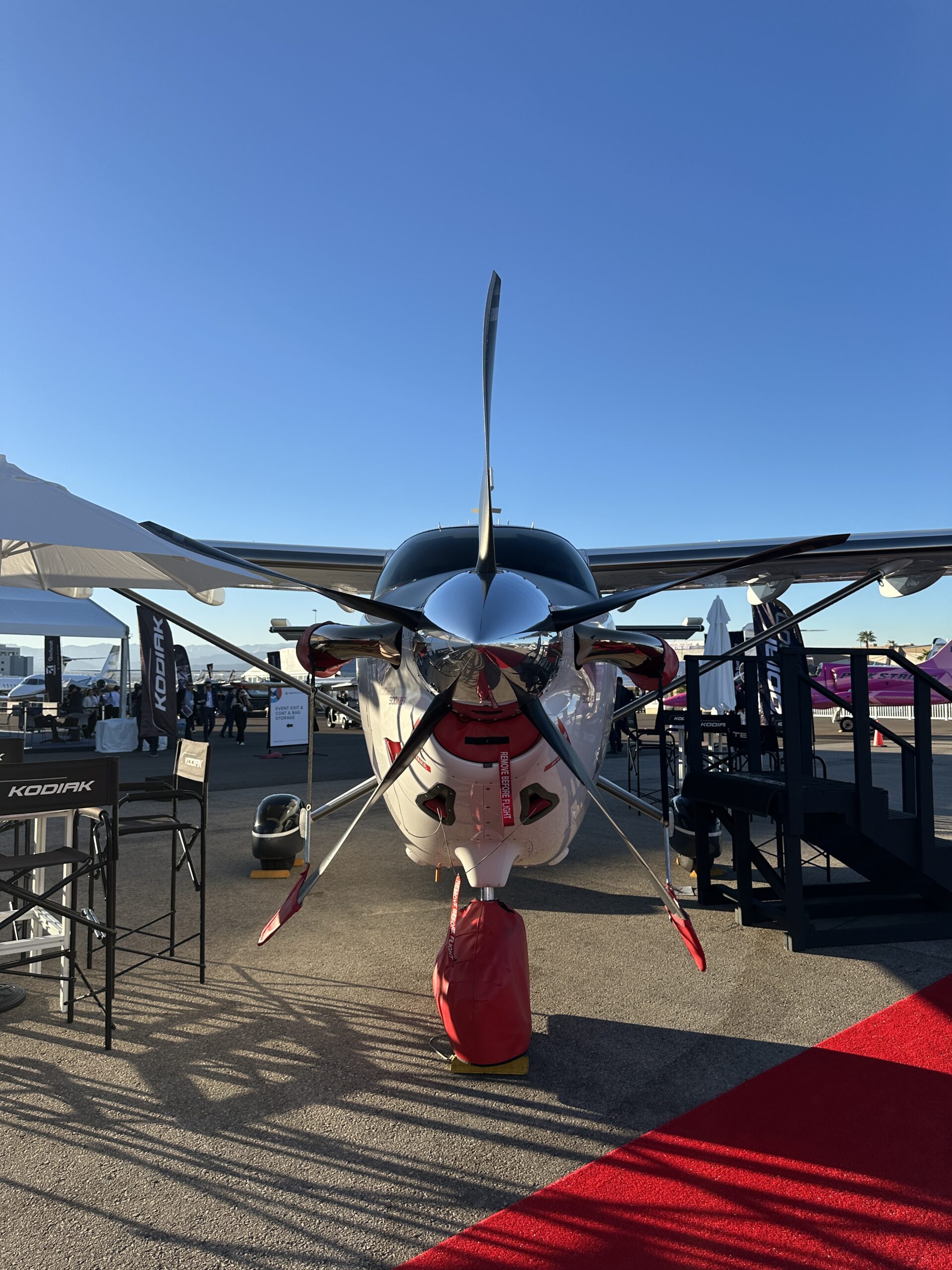
By necessity, the exhibit hall floor was smaller, less full, as well as the static display, with fewer aircraft overall (and a wind/duststorm on Tuesday that drove people away from KHND). But there were some big players there (Gulfstream, Bombardier) as well as new entrants (Epic in a sleek, super-black E1000 GX). In fact, black was a bit of a theme, with Daher’s Kodiak 100 showing up in stealth colors as well.
The flight deck of the Citation Ascend shows the layout of the significant upgrade to the XLS line. [Credit: Julie Boatman]The center power console on the Citation Ascend features two touchscreen controllers as well as the power levers. [Credit: Julie Boatman]
The new Citation Ascend from Textron Aviation made the scene too, and its upgrade from the XLS (though it shares the same type rating, as I was assured) looks pretty spiffy. I can’t wait to fly it. Someday. Maybe I’ll get a chance to do some other Citation flying when the next Special Olympics Airlift comes around—in June 2026, into Minneapolis-St. Paul. It will be my fifth SOA if I can make it happen.
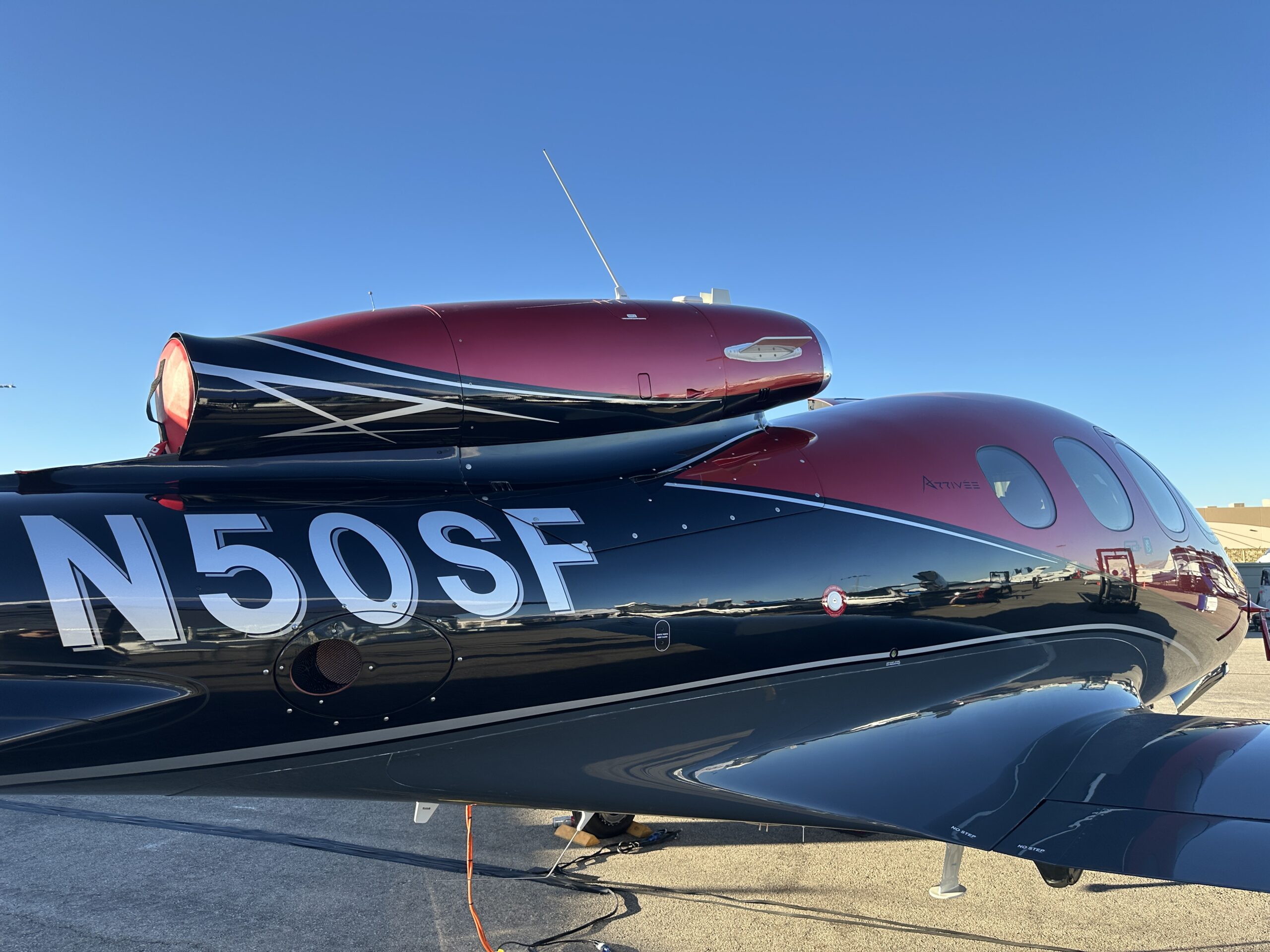
Can you even see the Daher Kodiak multimission aircraft? It is so black. [Credit: Julie Boatman]The stealthy black Cirrus Vision Jet graces the ramp at the NBAA-BACE static display. [Credit: Julie Boatman]
In talking with colleagues from around the bizav space following the show, there was good energy—the dynamic duo of Dierks Bentley and Steuart Walton at the keynote was a high point. I wonder how many downloads/streams of “Drunk on a Plane” or “Riser” happened from that GPS location on the Strip immediately following the keynote… I admit I claim both of them.
All in all, this was still a show not to miss. I found a lot of value in networking and will come away with new business and strengthened relationships across the board.
But the slimmed-down versions of most exhibitors seemed to serve them well too. Your thoughts?
A pair of Falcons perches on the ramp at the NBAA-BACE static display. [Credit: Julie Boatman]
There’s a common thread here. Each one helps add context and fluency to our daily flight ops, whether we fly for ourselves, professionally, or in pursuit of opportunity.
Making sense of all the data we carry in our pocket or purse (or just being able to find it when we need it, at the moment we need it)….this has been the holy grail, elusive to grasp even as we power up the devices we have access to.
Any aircraft owner or pilot flying a high performance airplane in the IFR system knows the intersection of documentation both operational and procedural. Tying all of it together has felt like pushing a boulder up a mountain—from planning the flight and ensuring the aircraft is ready (and legal) to executing a flight plan through the clouds, to recording it faithfully at the end (and getting credit for those approaches logged) and making appointments for the next inspections.
With the sequential release of Garmin’s Smart Charts and ForeFlight’s Dynamic Procedures, depending on which app you use in your planning and as a backup on the flight deck, you can now use the power of the database (Garmin proprietary for Smart Charts or Jeppesen for ForeFlight) to carve out the plan you expect, and then be able to change it on the fly—and only present the data (from NOTAMs to fixes and altitudes) relevant to the approach you plan to fly. Or the one ATC switches you over to (or you choose based on changing conditions).
You can then follow along as your blue ownship toodles through the course on your smart phone or tablet. Briefly. While flying the airplane IRL.
ForeFlight’s Dynamic Procedures reduces the info on the display (here shown on the iPad) and uses a unique sidebar to distill the information and put it into context. [Credit: Julie Boatman]Flying with Garmin Pilot testing Smart Charts on the map view. [Credit: Julie Boatman]The geo-referenced profile view on Garmin Pilot with Smart Charts enabled puts you on the approach, with an immediate visual representation. [Credit: Julie Boatman]
On the aircraft side, two recent updates to the airplane management app world continue to drive critical information into your device, and connect you remotely to your airplane, should you be lucky enough to own one of the new ones. The enabling technology underneath both the Cirrus IQ app and the Daher Me & My TBM (now in a Kodiak version) is Garmin’s GDL 60 datalink unit installed in the airplane.
It needs a connection in order to “go live” so, as it was mentioned in Daher’s press conference today, you need to make sure you park your TBM 960 or Kodiak 900 in a pot with LTE 4G service. Hopefully your hangar has this capability, to start with.
If so, you can wake up the airplane remotely, and find out the fuel, TKS, oxygen, and database status on your phone…before you call the FBO to truck you over some avgas or Jet-A. Pretty amazing stuff.
Cirrus’ Todd Simmons talks about the connected nature of the Cirrus Experience at its press conference at Oshkosh 2025. [Credit: Julie Boatman]Capturing the latest connected Cirrus SR22 G7+ at EAA AirVenture 2025. [Credit: Julie Boatman]Daher Aircraft CEO Nicolas Chabbert and customer service developer Mathieu Pardo talk about the connectivity needed through the Garmin GDL 60 to enable the Me & My Kodiak app. [Credit: Julie Boatman]
Plus, you can stay connected with your friends in the type association, comparing notes on landing prowess and efficiency. If you want. Or you can just assess your own performance and take note accordingly the next time you meet up with an instructor. Other OEMs have similar programs in development, but it’s cool to see Cirrus and Daher leading the pack here in creating the ecosystem that can serve you up the data you need. When you need it.
Stay tuned for more connectivity news as EAA AirVenture 2025 continues….now with charging stations everywhere, appropriately.
Well, now we know which manufacturer will bring Garmin’s Autoland to piston airplanes.
The spark that propels innovation brought Cirrus Aircraft to life—and the company has become a catalyst to change the way people engage with the world around them and explore it on their own terms through the 25 years of its SR Series aircraft.
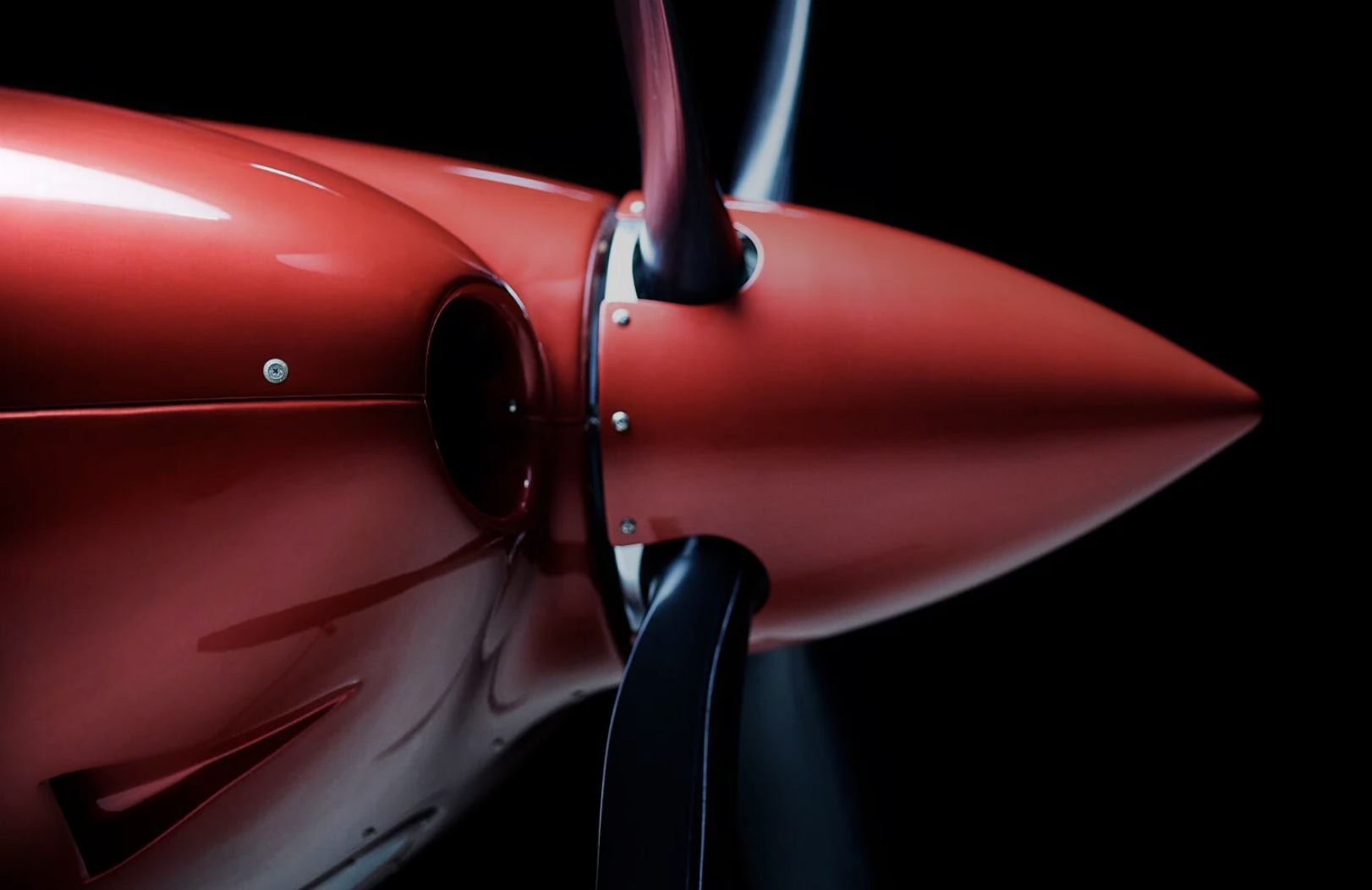
With a relentless desire to elevate quality and comfort within a total safety envelope, Cirrus leveraged its deep bench of precision engineering and legacy of craftmanship to create the highest expression yet of the game-changing Cirrus SR Series, the G7+, which it debuted on May 6.
For Cirrus, the generational progress encapsulated in the G7+ takes safety, style, ergonomics, connectivity, and convenience to the next level, into an airplane that is truly transporting—with updates to answer some of our biggest desires as pilots:
To make the most of our time and opportunities.
To offer a way to bring our families and loved ones together, in magical places.
To get where we’re going wrapped in an environment that rivals the finest luxury autos.
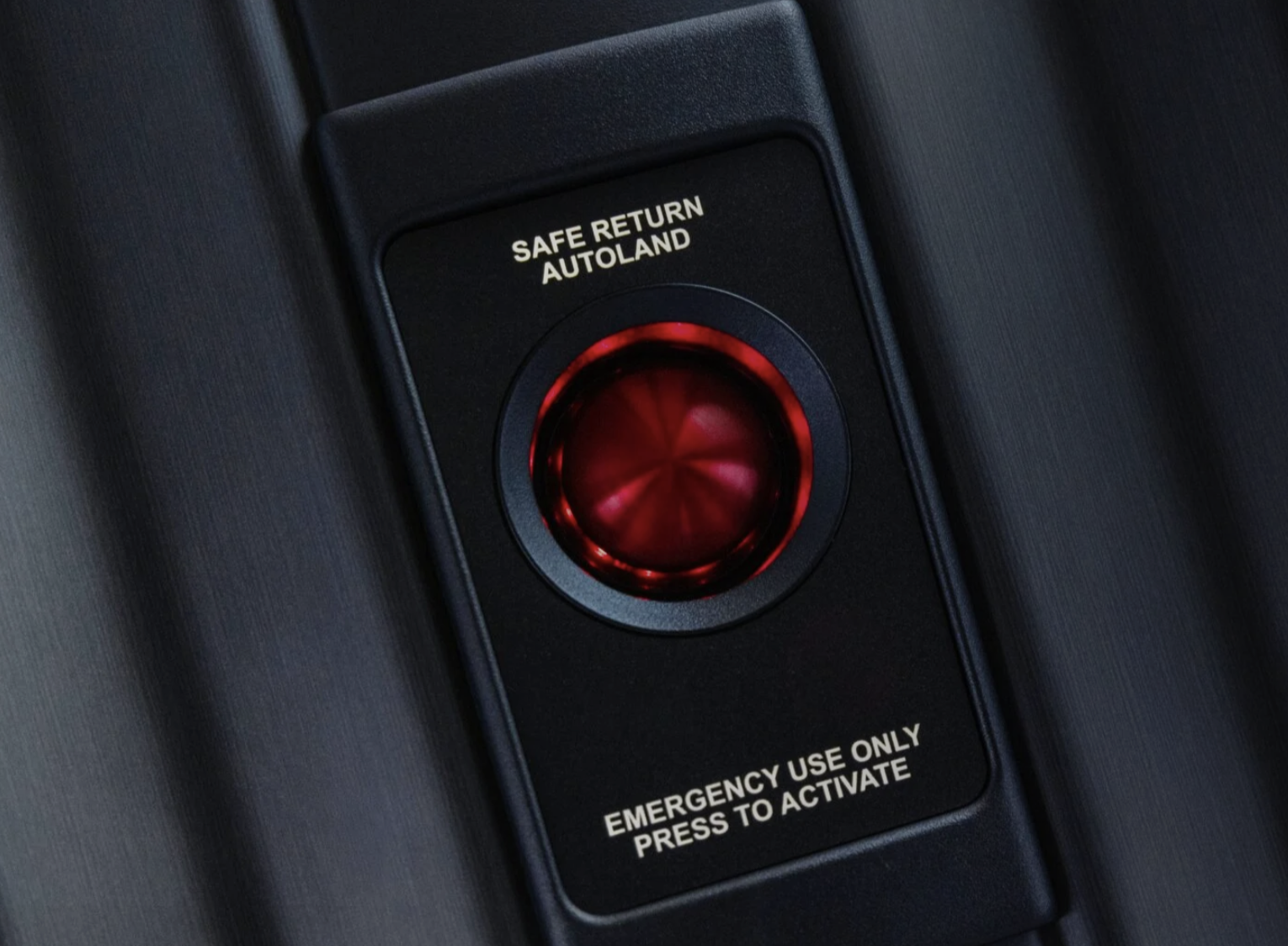
The G7+ adds to the full palette of pilot tools that Cirrus pilots have enjoyed, including the Cirrus IQ PRO app and Collier award winning Cirrus Airframe Parachute System (CAPS), with the introduction of Safe Return, an emergency automatic landing system that solves one of the most pressing concerns in personal aviation: What happens if something happens to the pilot?
Now there is an answer to that. Garmin has seen more than 1,000 aircraft delivered hosting versions of its Autoland system—but they’ve all been turbine- or turboprop-engined aircraft with an autothrottle already introduced.
So how would a piston OEM incorporate the system without that AT in place? The SR Series has had a combined prop/throttle lever and separate mixture, so how to solve that piece of the puzzle?
Turns out, it’s a digital mixture and throttle control system that kicks in when the Safe Return button is depressed and the protocols go into effect. I’d asked Ivy McIver, executive director for the SR Series, about the features added to the G7 that were, shall we say, opportune? when we flew the first version of the series in stealth mode back in December 2023. She couldn’t say it then, bien sûr, but the automated tank selection, flap overspeed functions, and enhanced envelope protection were all keys to the puzzle that would enable the Safe Return system.
I guess they figured out the automatic braking too.
In any event, it has been a pleasure all of these years to watch Cirrus wrap us bit by bit into that total safety envelope—and as a pilot, you get to choose which features you use during any given flight.
But now your passengers get a choice too, in case you’re “unable.”
The machinations of rulemaking crank through on often mysterious schedules…and we’ve collectively as an industry both suffered and been rewarded as of late with the timeliness of FAA process.
But the stars aligned for NBAA’s team in particular on Tuesday at BACE in Las Vegas, as the FAA released the SFAR (special federal aviation regulation) governing the new powered lift category just in time for administrator Mike Whitaker to sign it into action after his appearance with NBAA president and CEO Ed Bolen at the morning keynote. You could practically hear them popping corks in the D.C. offices all the way to Vegas.
This was the big news I’d alluded to in yesterday’s post. Yes, we have witnessed a milestone in the aviation story.
Mike Whitaker, FAA Administrator, delivers the great news on the SFAR on VTOL aircraft to Ed Bolen, president and CEO of NBAA at BACE 2024 Tuesday morning. [Credit: Julie Boatman]
The SFAR on Powered Lift
The ruling and its amendments outline the parameters for pilot certification, operating rules for powered-lift ops, and give guidance on how those aircraft will integrate into the national airspace system (NAS) with fixed- and rotor-wing aircraft. The rules are performance-based, for the most part, which means they generally tell OEMs and operators the metrics they need to achieve rather than prescribing strictly how they will achieve them.
That’s fantastic news for contenders in the market such as Joby, Archer, Lilium, and others who are well on their way into flight testing conforming (or near-conforming) initial production models, standing up the lines to make them, and building out training and support infrastructure.
JP Stewart and B.Marc Allen deliver the latest updates on the E9 hybrid electric STOL aircraft program at NBAA BACE 2024. [Credit: Julie Boatman]
Electra Aero and eSTOL
But wait… there was more in store yesterday in terms of truly new aircraft program updates. Though their big reveal of the E9 “G0” test article won’t take place til November 13, Electra Aero’s J.P. Stewart and B. Marc Allen walked the media through the progress of the two-seat demonstrator and its test campaign underway in northern Virginia.
As a fan of short takeoff and landing (STOL) airplanes, I love this concept, which uses blown and distributed lift to enable super-slow takeoff and landing speeds, bringing those distances reliably under 150 feet. Stewart reported that they had the airplane down to 22 knots in flight—and they haven’t found the stall speed yet.
Think about that for a second. I can’t wait to witness the 9-seat version flying, likely next year.
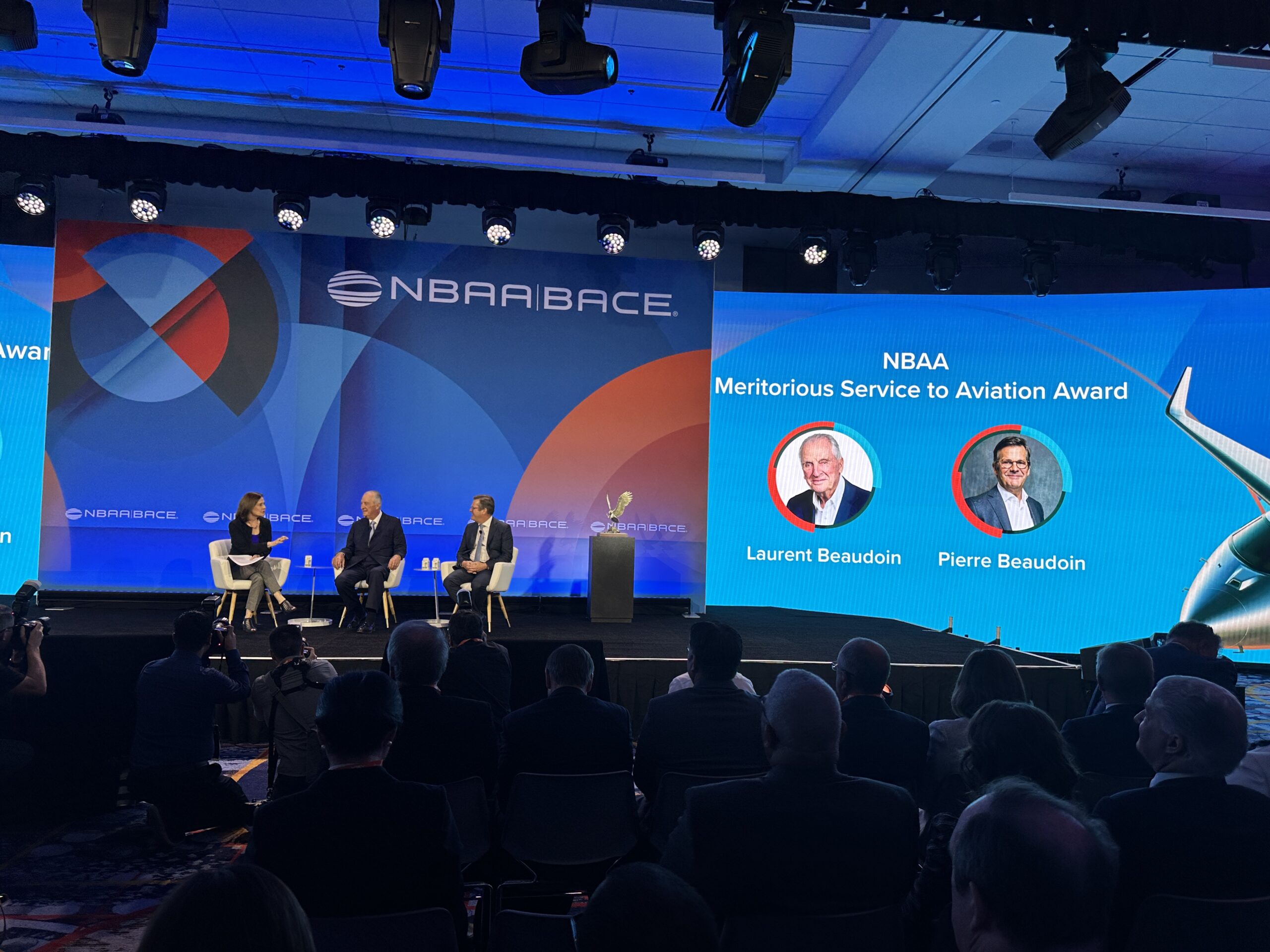
Bombardier founder Laurent Beaudoin and chairman Pierre Beaudoin of Bombardier with Lisa Stark receiving the Meritorious Service Award at NBAA BACE. [Credit: Julie Boatman]In a conversation with Joby Aviation’s Bonny Simi, Neil de Grasse Tyson shows a letter from Orville Wright in highlighting the exponential nature of progress in the aerospace industry. [Credit: Julie Boatman]
Inspiration… in Great Leaders
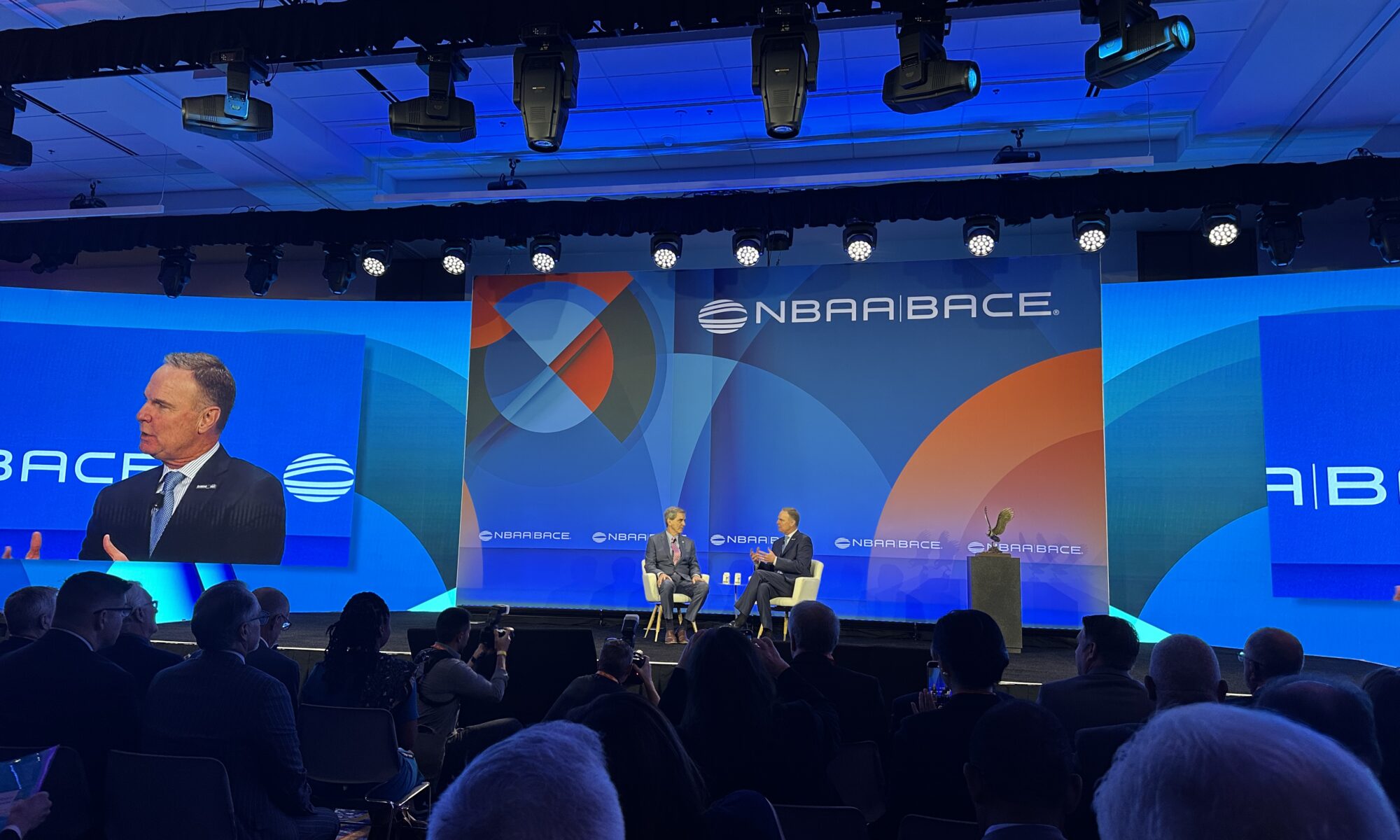
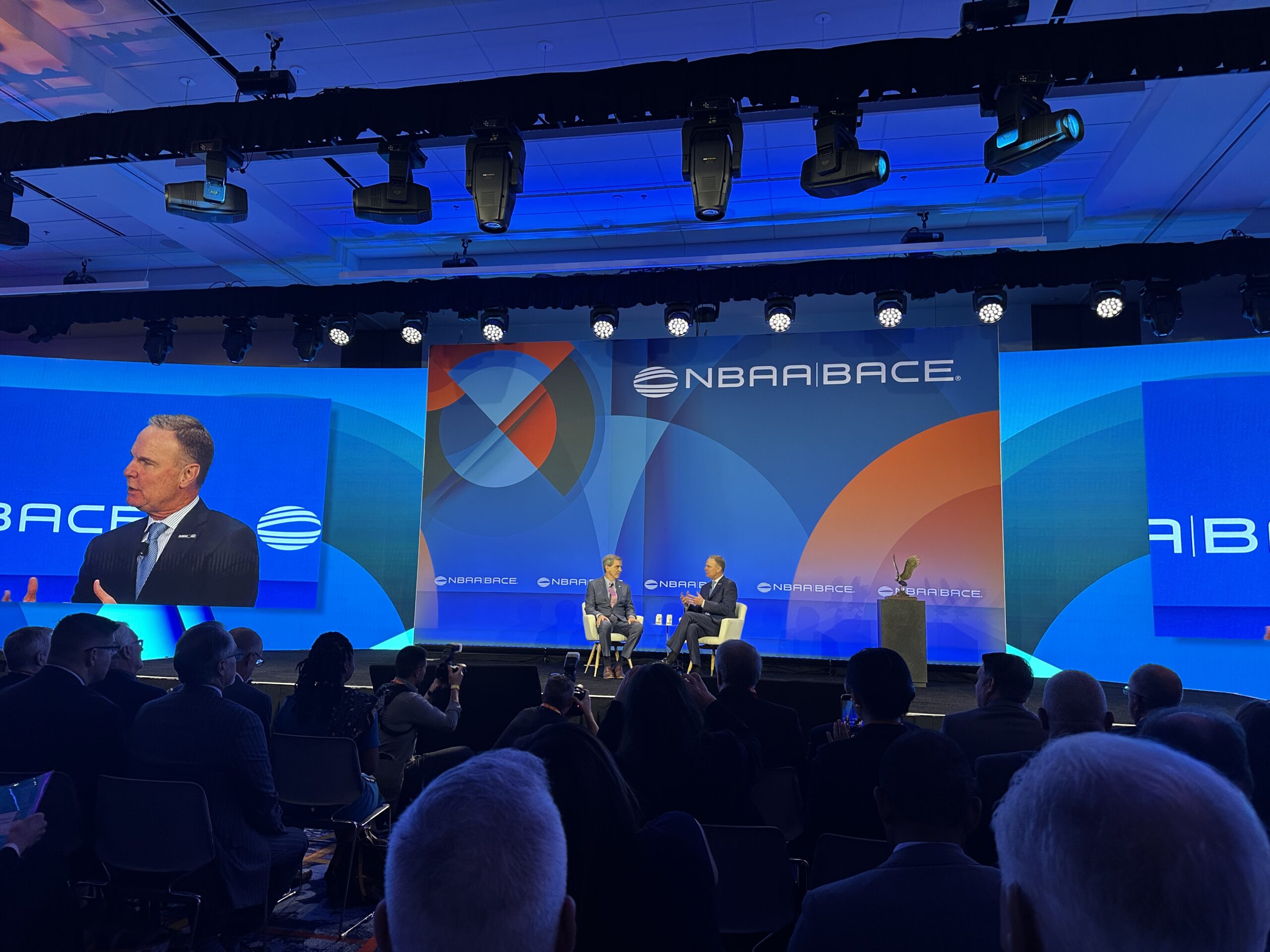
The other keynotes also touched the SRO audience at the morning session. First, Laurent and Pierre Beaudoin, the father-and-son leaders of Bombardier, received the Meritorious Service Award from NBAA for their dedication to building a benchmark airframe OEM out of a company that manufactured snowmobiles in Quebec in the 1960s.
And Joby’s Bonny Simi—riding a serious high with the SFAR now enabling her to press forward in defining ops and training for the eVTOL OEM—delighted in her conversation with astrophysicist/personality Neil deGrasse Tyson. We all did. Tyson managed to paint with words the picture of his 9-year-old self first seeing the stars inside a planetarium, and feeling so moved that he would make astrophysics his life’s work. I’m putting his book, Astrophysics for People in a Hurry, on my reading list. It’s one of Bonny’s faves, she says. Good enough for me.
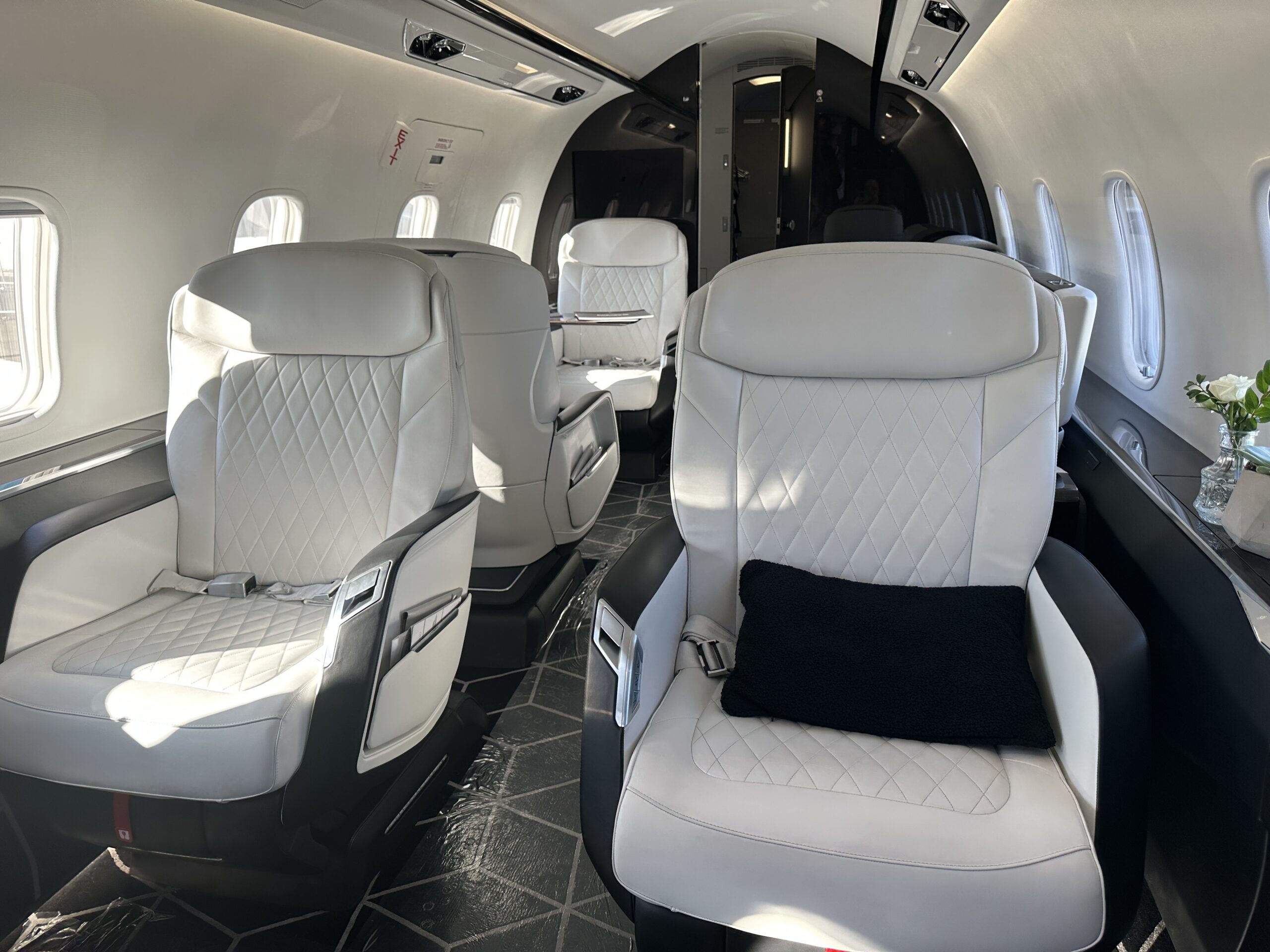
The Bombardier Challenger 3500 at NBAA BACE 2024. [Credit: Julie Boatman]Wiglets form one key part of the wing design on the Challenger 3500 that enable its legendary smooth ride. [Credit: Julie Boatman]The Nuage seating highlights the updated interior on the Bombardier Challenger 3500. [Credit: Julie Boatman]
Inspiration… in Great Airplanes
In the afternoon, I made it out to the static display at Henderson airport (KHND), to meet up with Bombardier’s comms team for an introduction to the Challenger 3500. With this update to the legendary CL-30 type, Bombardier has made a workhorse of the corporate fleet into a thoroughbred. I don’t usually turn right upon entering a business jet, but I needed to try out the Nuage seats that line the bright, well-windowed cabin.
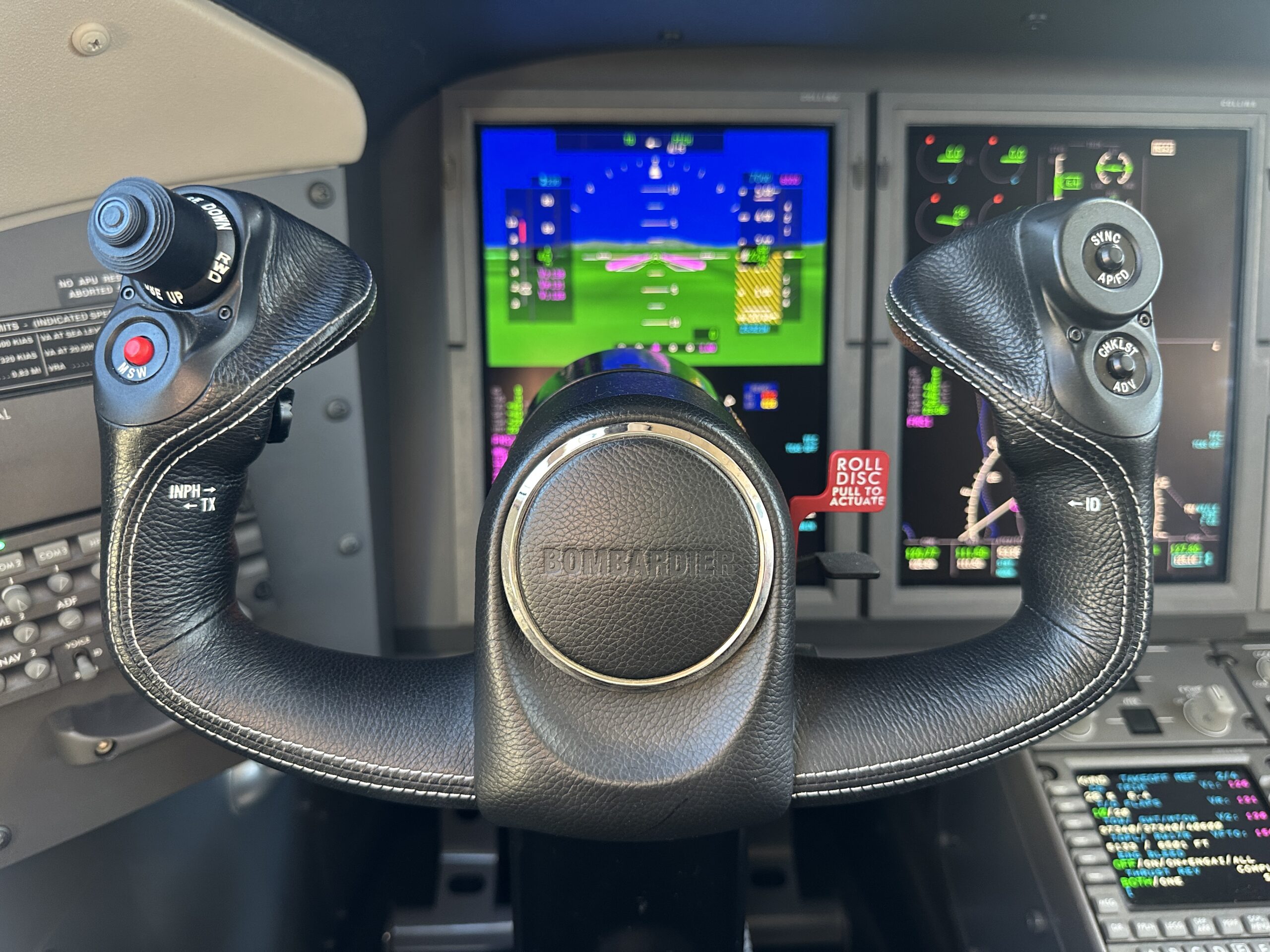
But I didn’t get too comfortable, because demo pilot Mark Ohlau had a tour ready for me of the Collins Pro Line 21 Advanced integrated flight deck. I nestled into the left seat behind the significant and traditional leather-covered yoke, and he walked me through the pilot-centered “dark cockpit,” so well organized that it doesn’t need an overhead panel. Ohlau especially likes the MultiScan weather radar, which has enabled his trips all around the globe in the airplane—including a recent bucket-list approach into Paro, Bhutan.
Stay tuned for a full pilot report to come…
The Arrivée Cirrus SF50 Vision Jet on the static display at NBAA BACE 2024. [Credit: Julie Boatman]The Multi-Mission Daher Kodiak 900 Apex on the static display at NBAA BACE 2024. [Credit: Julie Boatman]
I visited other favorite airplanes on the display, in particular the latest Cirrus SR G7 launch edition, and the SF50 Vision Jet Microsoft Flight Sim edition, in honor of its inclusion in the latest release of that software. I also took some time to admire the latest Daher Kodiak 900, the multi-mission APEX version, with a digital camo paint scheme to suit its Swiss-Army-knife capabilities in the field.
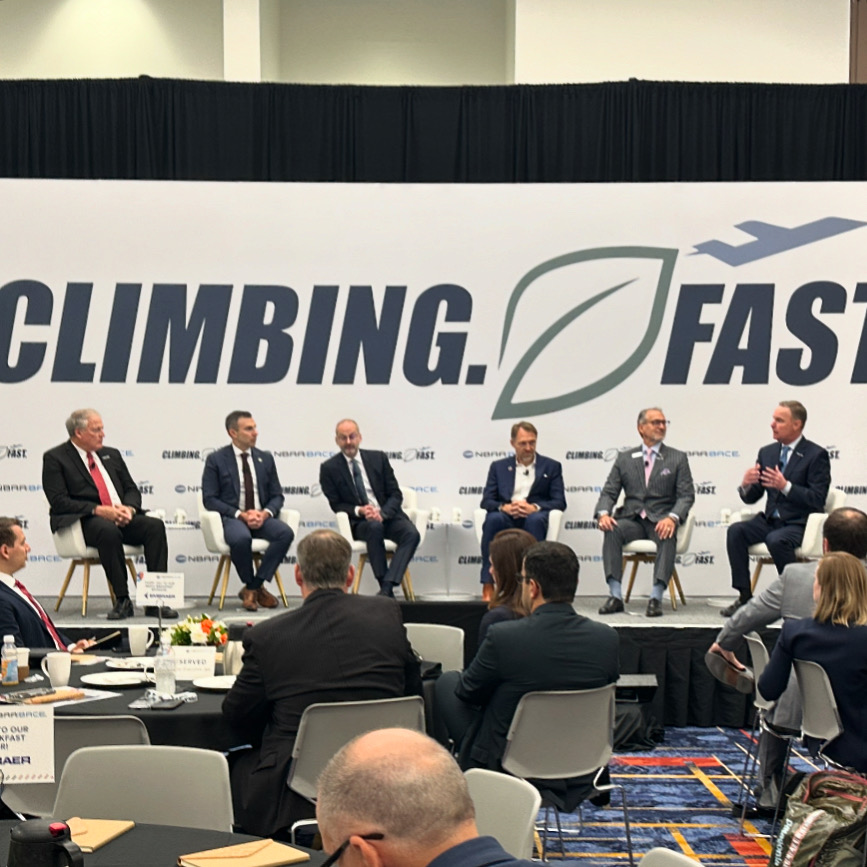
Looking forward to my Day Three at the show…prepping for the Climbing.Fast panel with business aviation leaders who champion the sustainability cause. That facet of BACE kicked off Tuesday morning (early…yawn!) with a panel update co-hosted by GAMA.
I get up that early just to see what stylish (and sustainable?) ensemble Embraer’s Michael Amalfitano has pulled together… always check the socks.
The media breakfast on Tuesday championed the Climbing.Fast. program and progress made on various pillars of the push to net-zero emissions by 2025. [Credit: Julie Boatman]
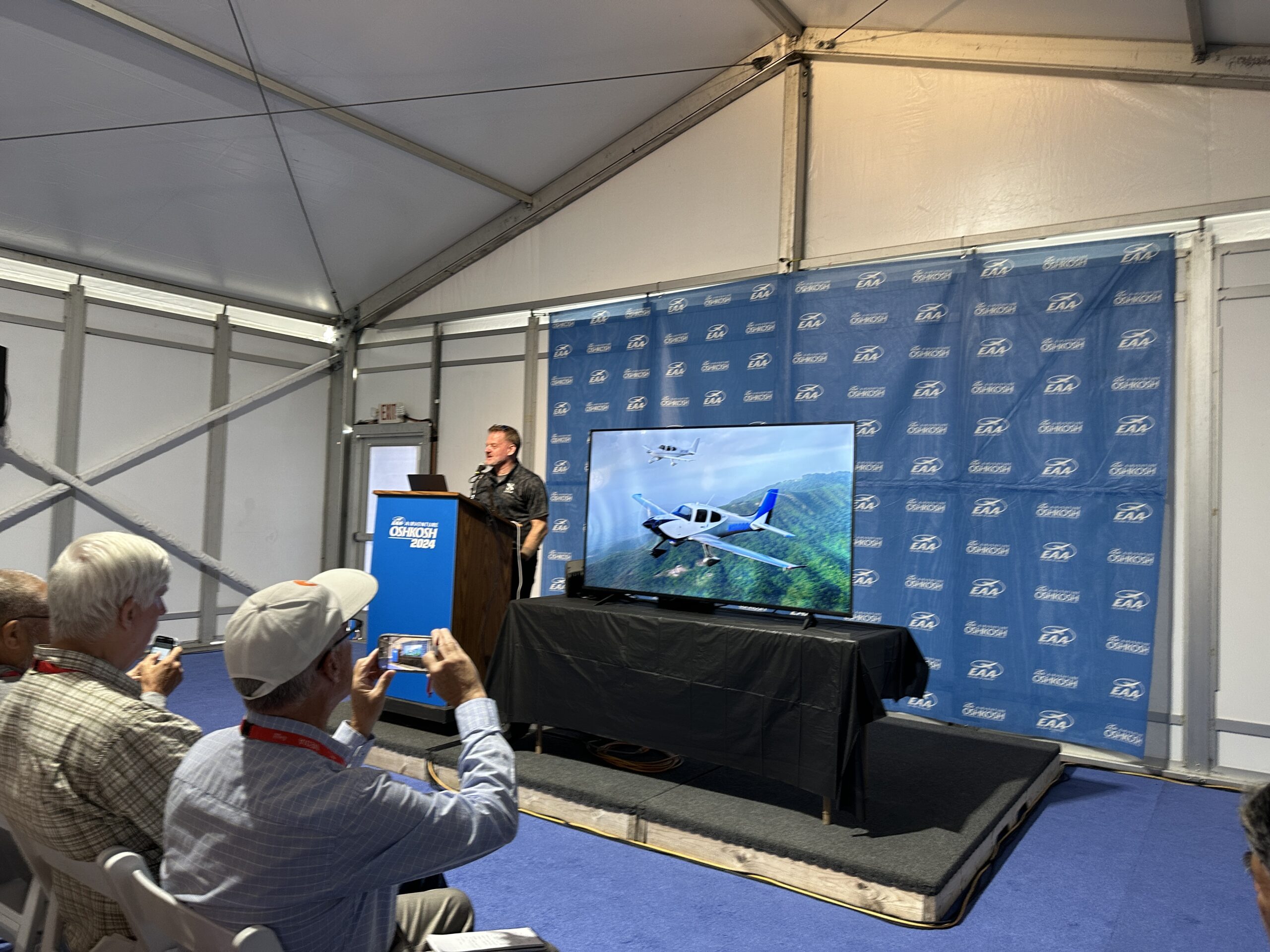
This year’s EAA AirVenture launched with a relentless lineup of press conferences and events impossible for one person to cover—so it’s great to have a team here!
We started off with the Cirrus presser and Todd Simmons gave his characteristically enthusiastic run down of the company’s recent success—and the 10,000th SR and 500th Vision Jet are on display here at the show.
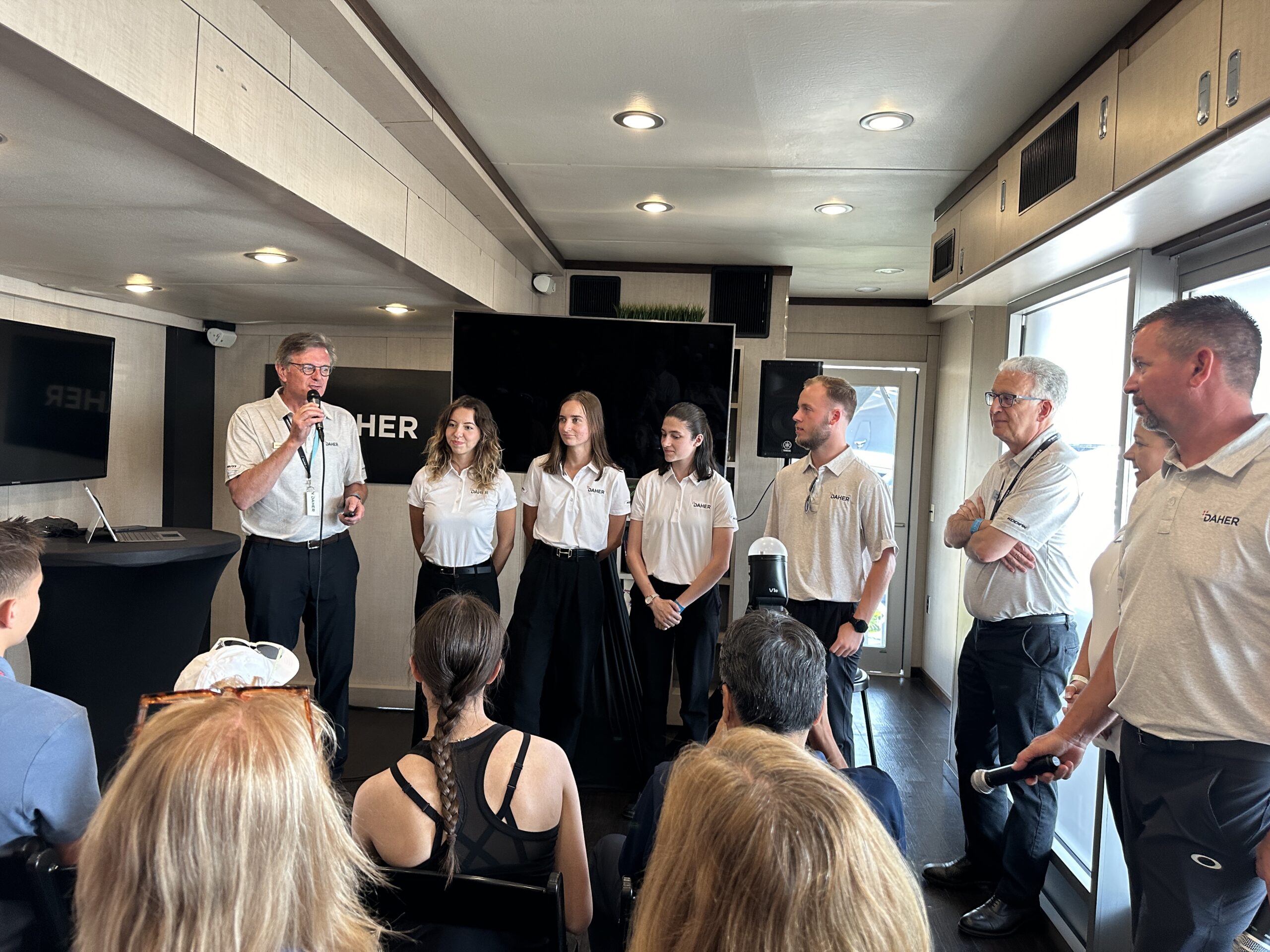
Daher’s Nicolas Chabbert introduced the Multi-Mission Kodiak 900 with its truly dynamic paint scheme to show off the company’s new paint facility in Sandpoint. Chabbert gave the mike to CEO and group chair Didier Kayat for his update, then introduced the interns for 2024—one from the US, one from Canada, and two from France.
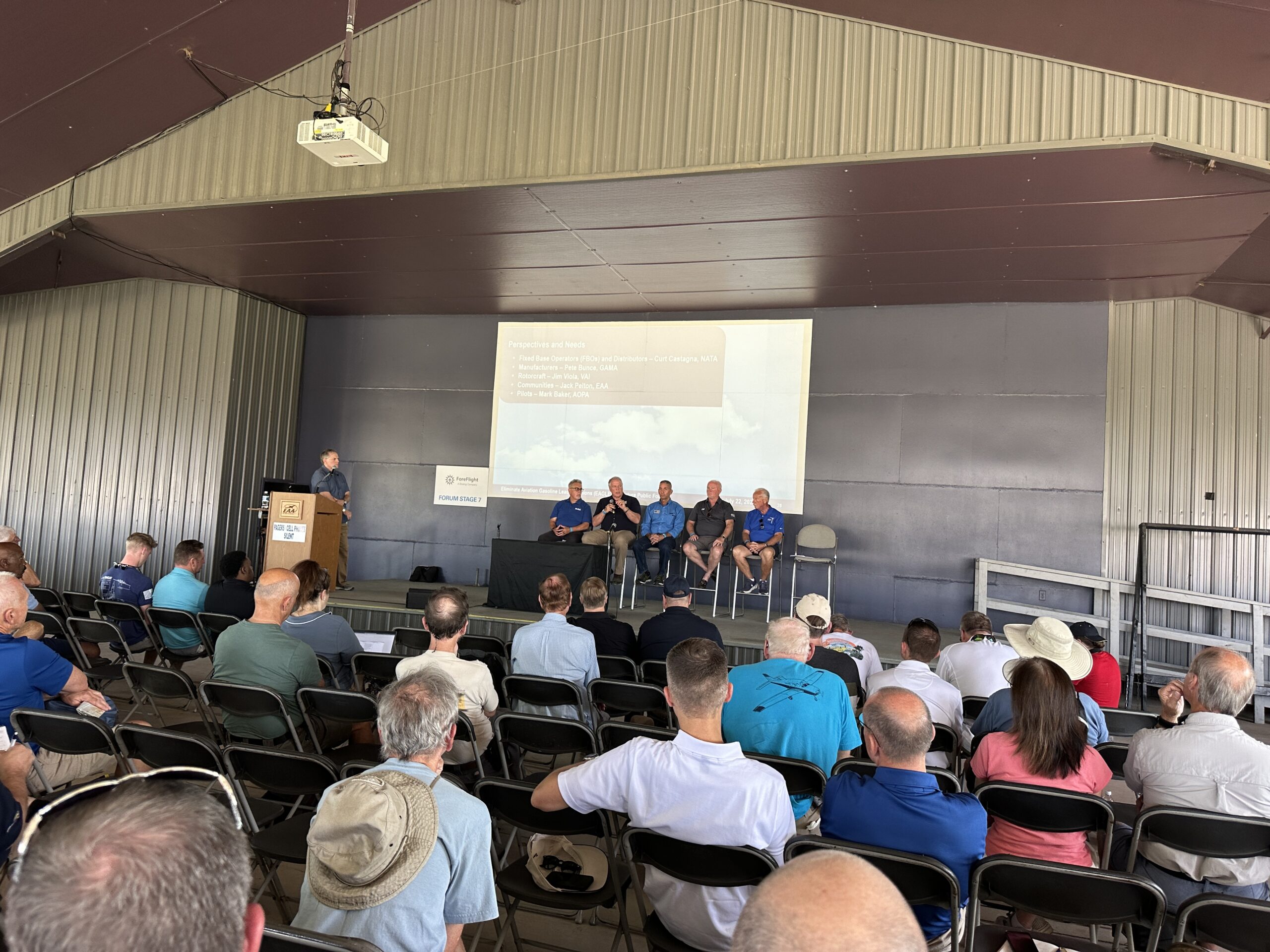
The EAGLE initiative delivered a detailed update—and raised a lot of questions. More on this in an in depth edition of #JustJuliesTakes later this week.
Todd Simmons heads up the customer experience team at Cirrus. [Credit: Julie Boatman]Nicolas Chabbert, CEO of Daher’s Aircraft Division, introduces the 2024 interns in the company’s program with GAMA. [Credit: Julie Boatman]The EAGLE update on unleaded fuel for GA sparked a lot of questions from the crowd. [Credit: Julie Boatman]EAA Chairman and CEO Jack Pelton and Director of Coms Dick Knapinski kick off AirVenture with a big lineup and lots of folks flying in. [Credit: Julie Boatman]
Day Two at AERO: If you’re not innovating in this space, you’re not doing it right.
Just from the lineup of press conferences on Wednesday, you can sense the bench depth and range of the companies showing off their latest—and those are just the projects they’re ready to talk about:
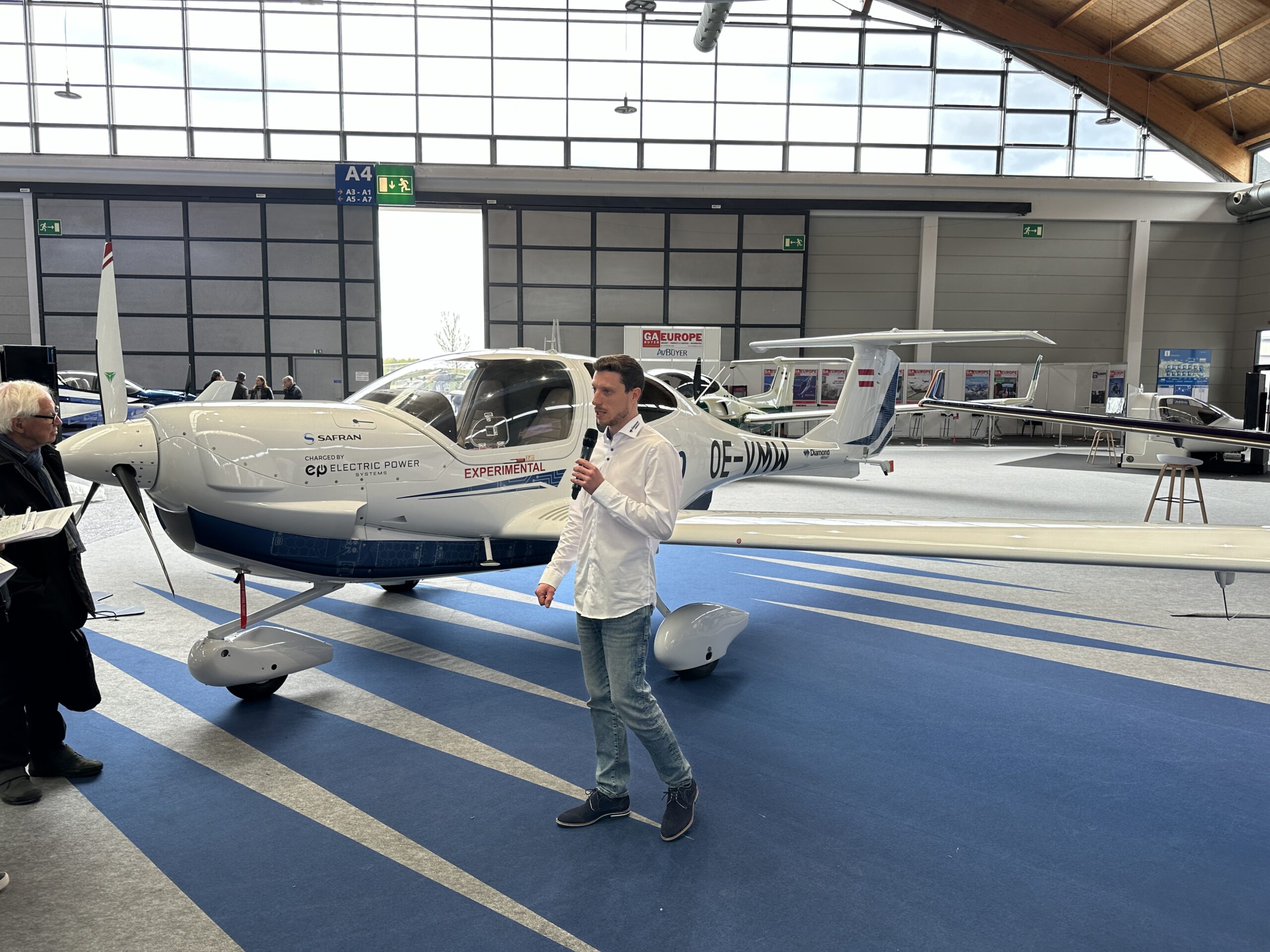
🟦 Elixir’s two-seat trainers are produced with One Shot composites for low parts count, and low operating cost. 🟥 Daher’s Eco-Pulse has logged 14 “e flights” on its Safran-powered wings, completing noise tests and flying through Phase 3/4. 🟩 Tecnam’s P2006NG reduces training costs, consuming just 14 liters/hour in fuel, and reducing emissions by 70 percent. ⬛️ Cirrus’s SR G7 re-envisions the flight deck using Garmin Perspective+ to simplify the pilot-airplane interface. 🟧 Bell’s 505 hosts the Garmin G600H autopilot, greatly assisting the pilot into hover and other regimes. ⬜️ Diamond’s eDA40 has begun flight testing powered by its Safran ENGINeUS motor. 🟪 Textron Aviation’s service center network has achieved recert from NATA as a Green Aviation Business.
A full day—and that’s just scratching the surface. More to come today as we meet with innovators across the 12 halls and static display…
Day Two of the Sun ‘n Fun Aerospace Expo brought more sun… but also special connections and two new perspectives on the show.
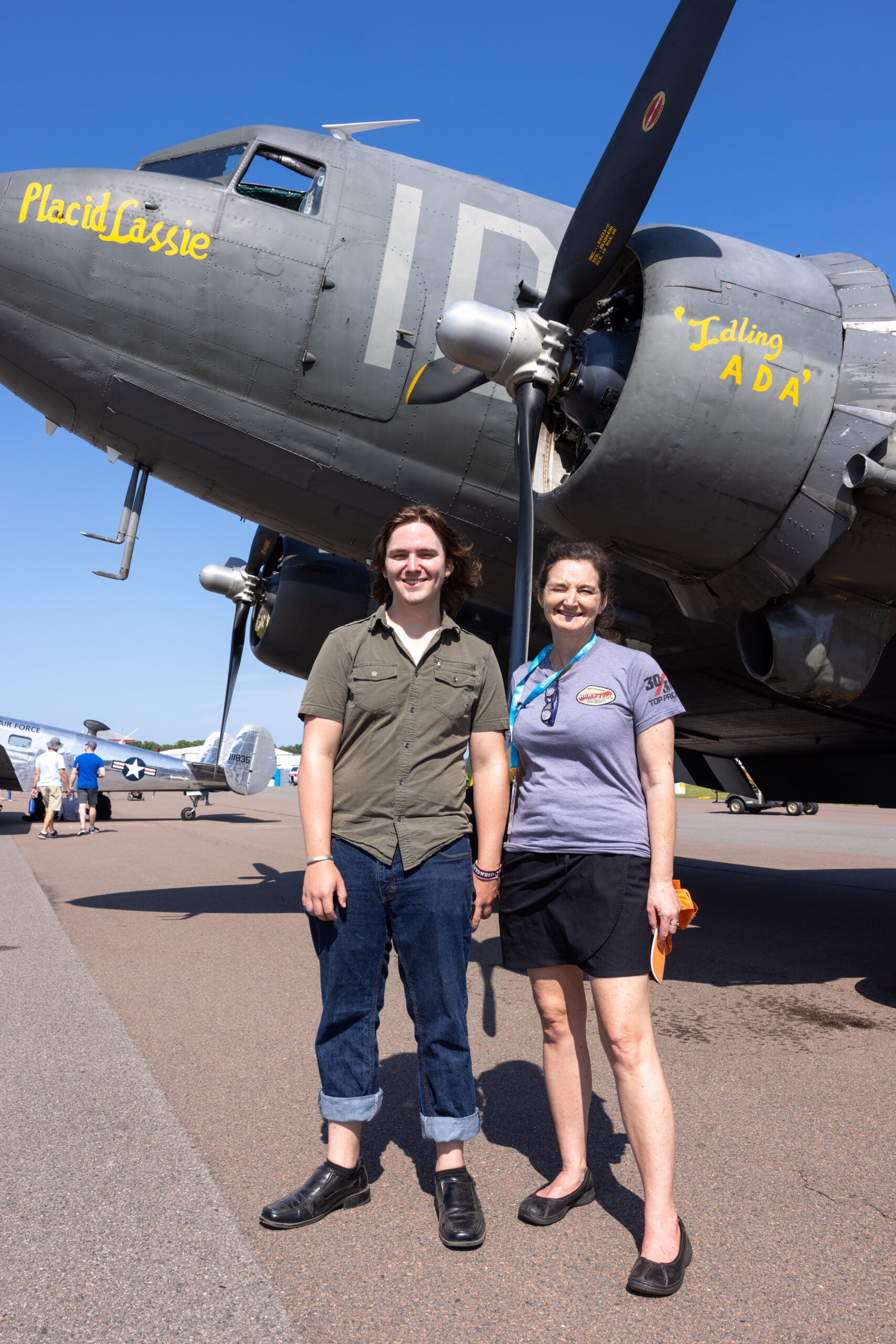
First, my cousin Nolan joined us for the day. He’s an aspiring pilot just starting lessons and seeks a career in the industry. So, we toured the grounds, talking with a wide range of friends in roles at a broad spectrum of aviation companies.
He learned how to cleco in a rivet at the Daher booth in the Future ‘n Flight Career Fair, he tested out the new Bose Corporation A30s, and climbed up into the D-Day Squadron’s “Placid Lassie” on the warbird ramp. His take? You can translate a pilot certificate and that knowledge into so many professional paths in aviation. Indeed!
We also did a big loop of the flight lines with my longtime friend Patrick Gordon who has devoted his investment in pilot mental health to working in the HIMS program for Frontier, assisting pilots of any commercial background in getting their medical certificates back, especially in recovery. Thank you Patrick for all you and your peers at ALPA are doing to support pilots when they need it most.
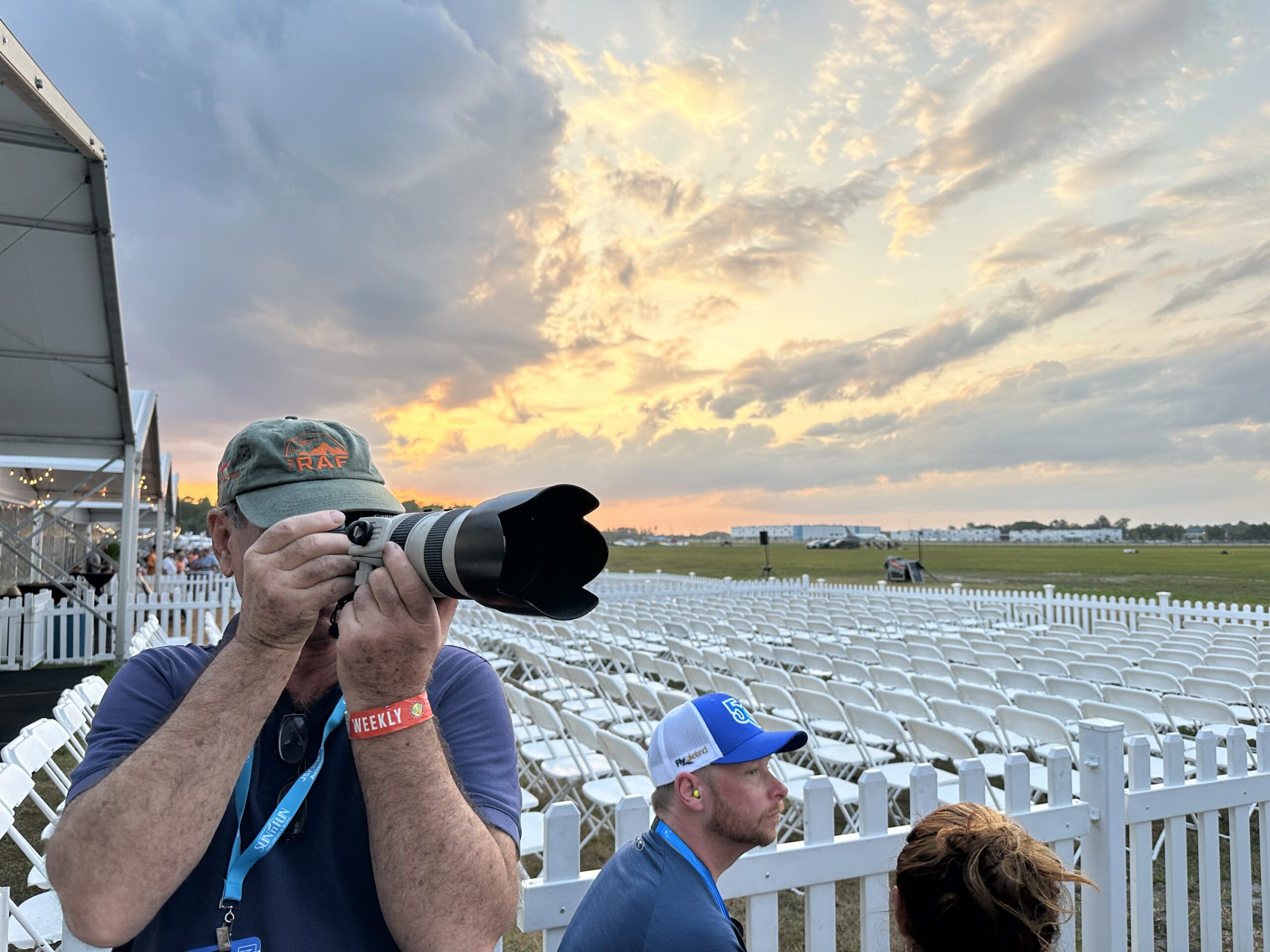
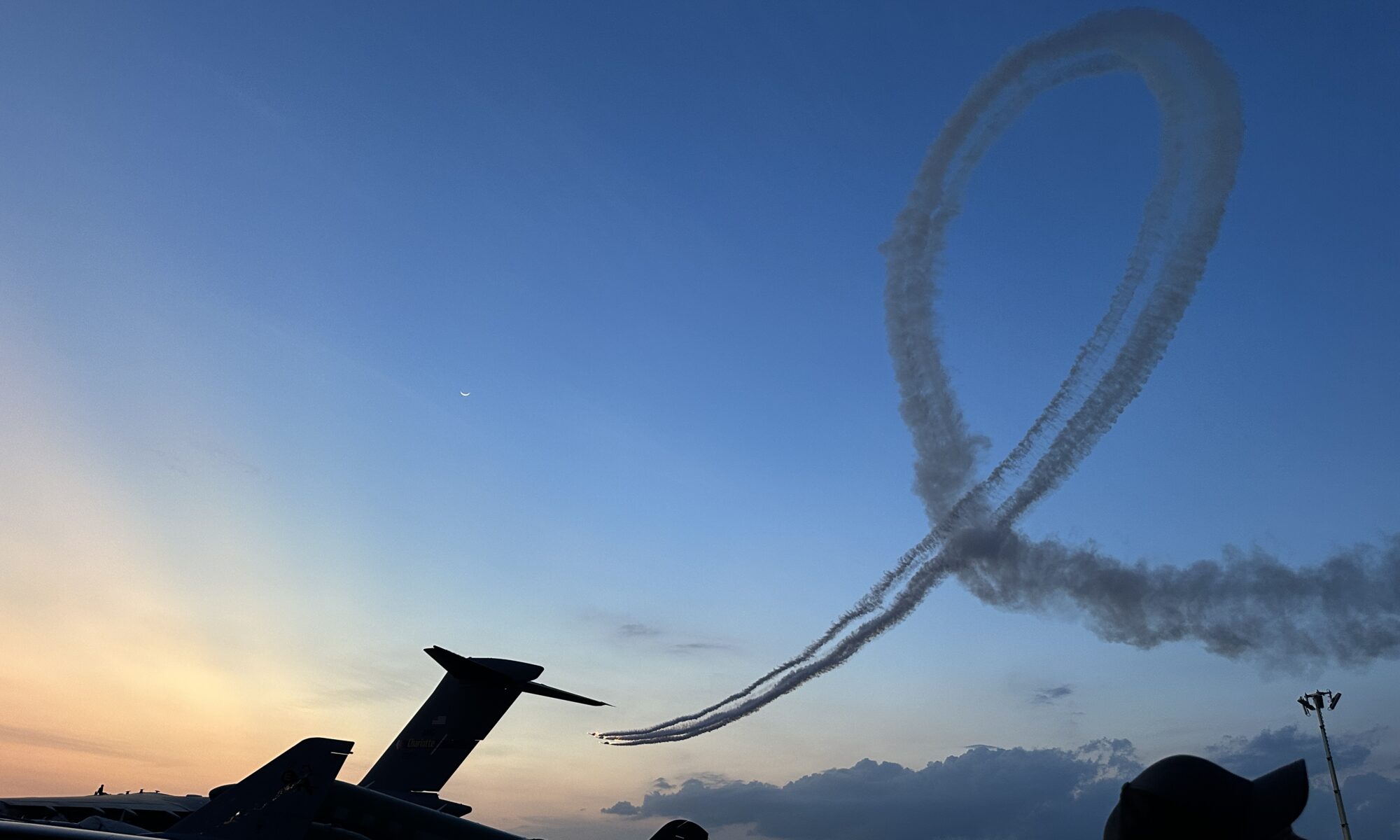
Third, there was the night airshow… it’s becoming a tradition to join friends at Cirrus for a bite and a beer on the flight line before adjourning to the party (with hats!) at Whelen Aerospace Technologies and say hi to the Mike Goulian Aerosports team… thank you Mike and Karen and Nate for a special evening.
Stephen Yeates captures the action from the Cirrus Owners Suite on the flight line. [Credit: Julie Boatman]I introduced my cousin Nolan to “Placid Lassie” and the D-Day Squadron. [Credit: Julie Boatman]
Day One for JulietBravoFox Media at Sun ‘n Fun Aerospace Expo… and just a few takes in addition to my favorite moments of the day.
Top news of the day: While the respective OEMs had announced Piper’s M700 Fury and the Cirrus SR G7 series earlier this year, #SNF24 is the first official place to see those new models on display. Those who come to Sun n Fun are pilots… we want to touch the new airplanes!
Hats off to Daher, though, for delivering a full lineup of solid news—and cupcakes!—at their exhibit. The TBM 960’s new take on a stunning scheme draws you in—but the beauty is not just skin deep. There are enhancements to Home Safe, pilot alerts, and progressive taxi context inside. More to come from the French OEM that continues to expand its stake in North America.
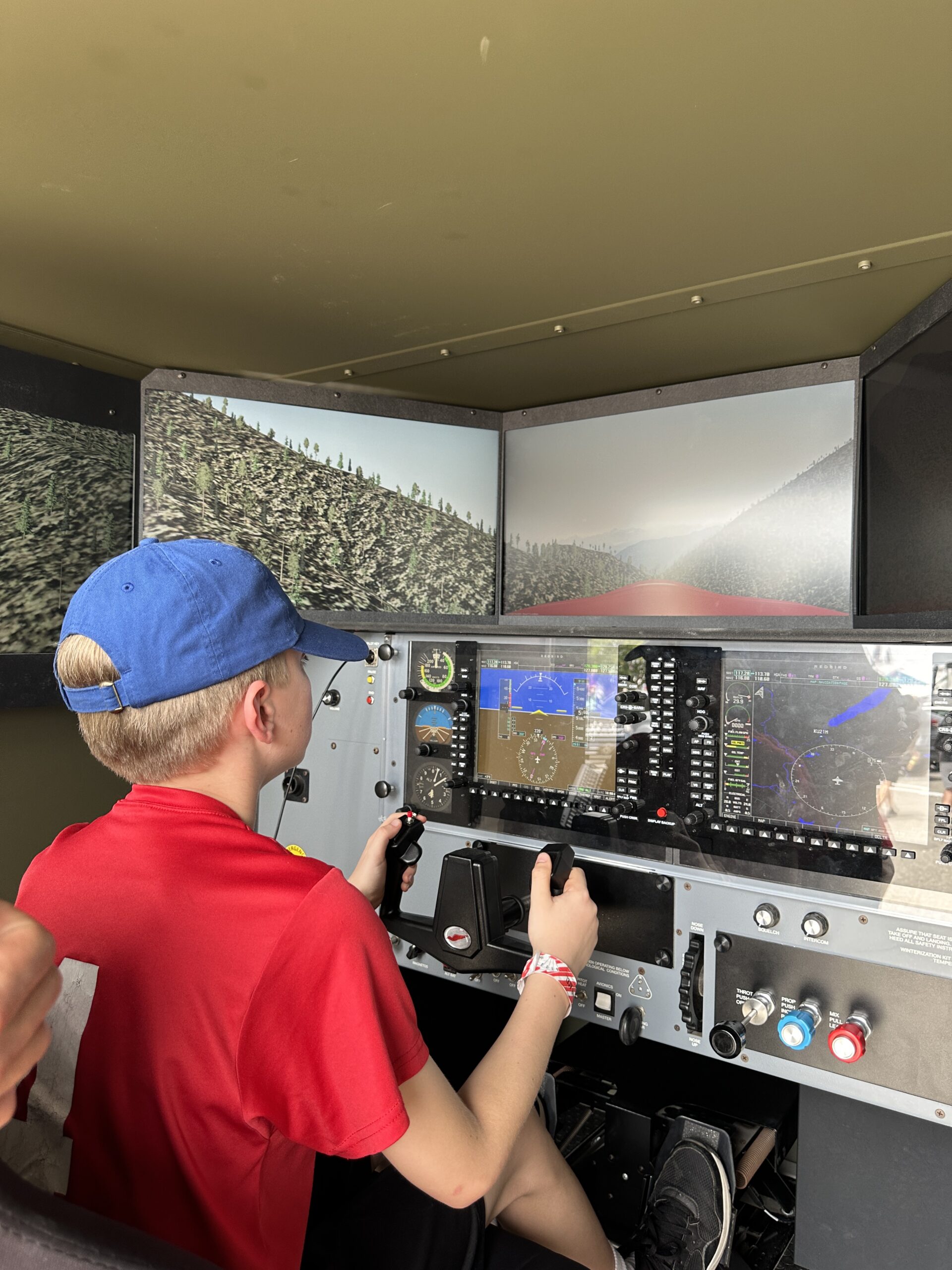
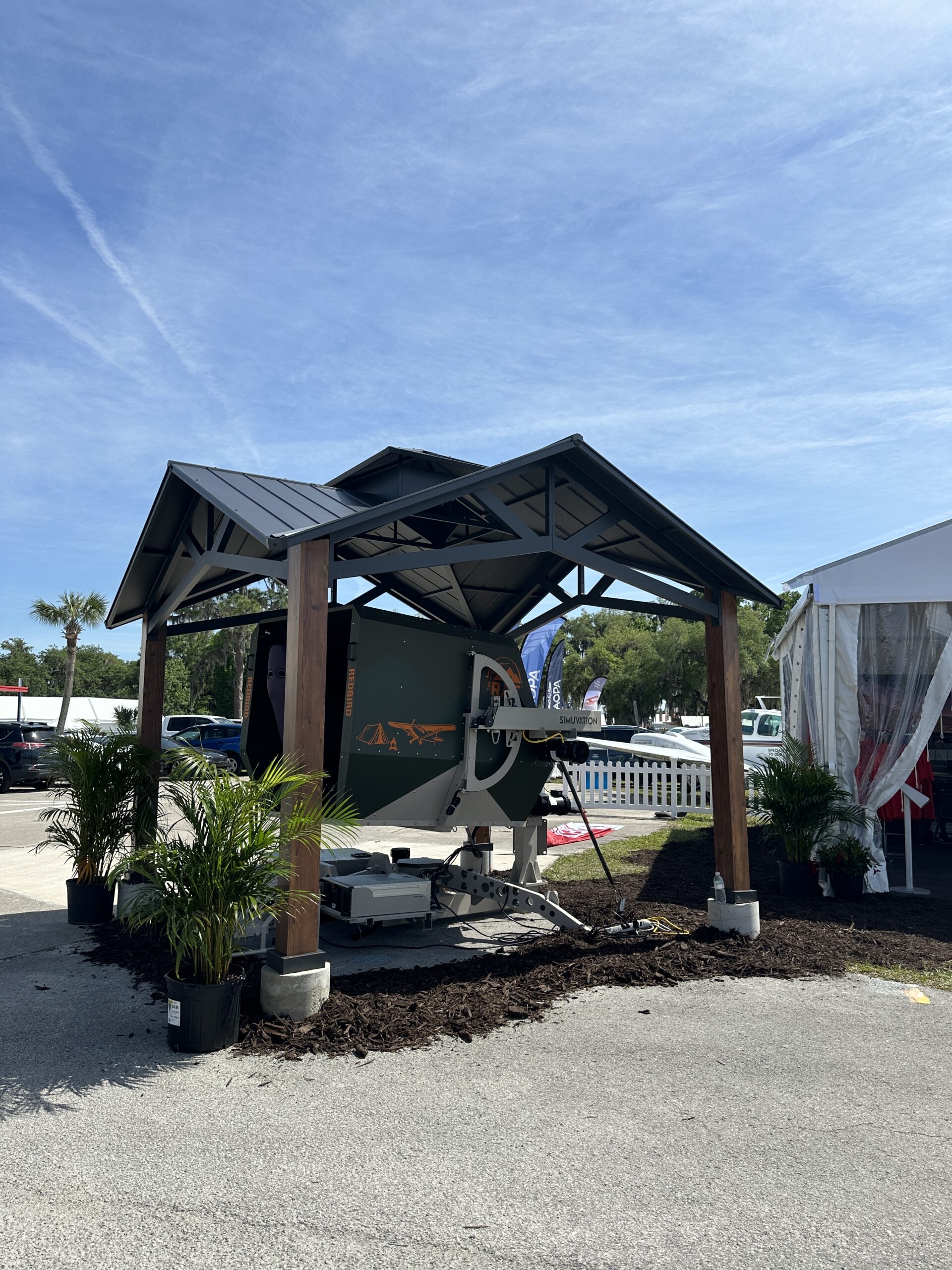
Redbird returns… and the sim you see under a canopy on the corner between the FAA building and AOPA is a joint project with the Recreational Aviation Foundation. Inside the motion sim—which you can try out—lies a G1000 Cessna 182 going in to Ryan Field in MT, among other strips the RAF’s volunteer corps serves to protect.
And… Kudos to the new press center! Everything (internet, power, check in, people) worked, and the new level of organization fixes so many issues from the past. To be a legitimate forum for industry news, you need to give those working the show from the media a quiet space in which to do so. It may be “spring break for pilots” and a great chance to catch up with colleagues, but we have a job to do. Thank you for meeting us there!





![At the Daher booth in the Career Fair, we learn how to cleco a rivet. [Credit: Julie Boatman]](https://julietbravofoxmedia.com/wp-content/uploads/2024/04/IMG_3516-scaled.jpeg)