
A look at history reveals the deeply embedded congestion issues confluenced with the pressure to utilize a close-in transportation hub.
I’ve been on that flight, essentially, more than a couple dozen times.
A direct Piedmont Airlines, or Envoy, or SkyWest flight into Washington National airport—KDCA—from some point on the map. Often Charlotte or Chicago, but also LaGuardia, Chattanooga, and Philly.
And Wichita, too.
So I’ve had ample time to contemplate both sides of the equation in the steep ramp-up in flights that American Airlines and others have made into DCA over the past three years. There’s the me that wants to get directly to where I’m going, and the me that has done a double-take at the stacking of aircraft on crossing taxiways and runway ends that it apparently takes to accommodate that increase in flights.
I took a picture once because I thought for sure a runway incursion had at least a 50/50 chance.

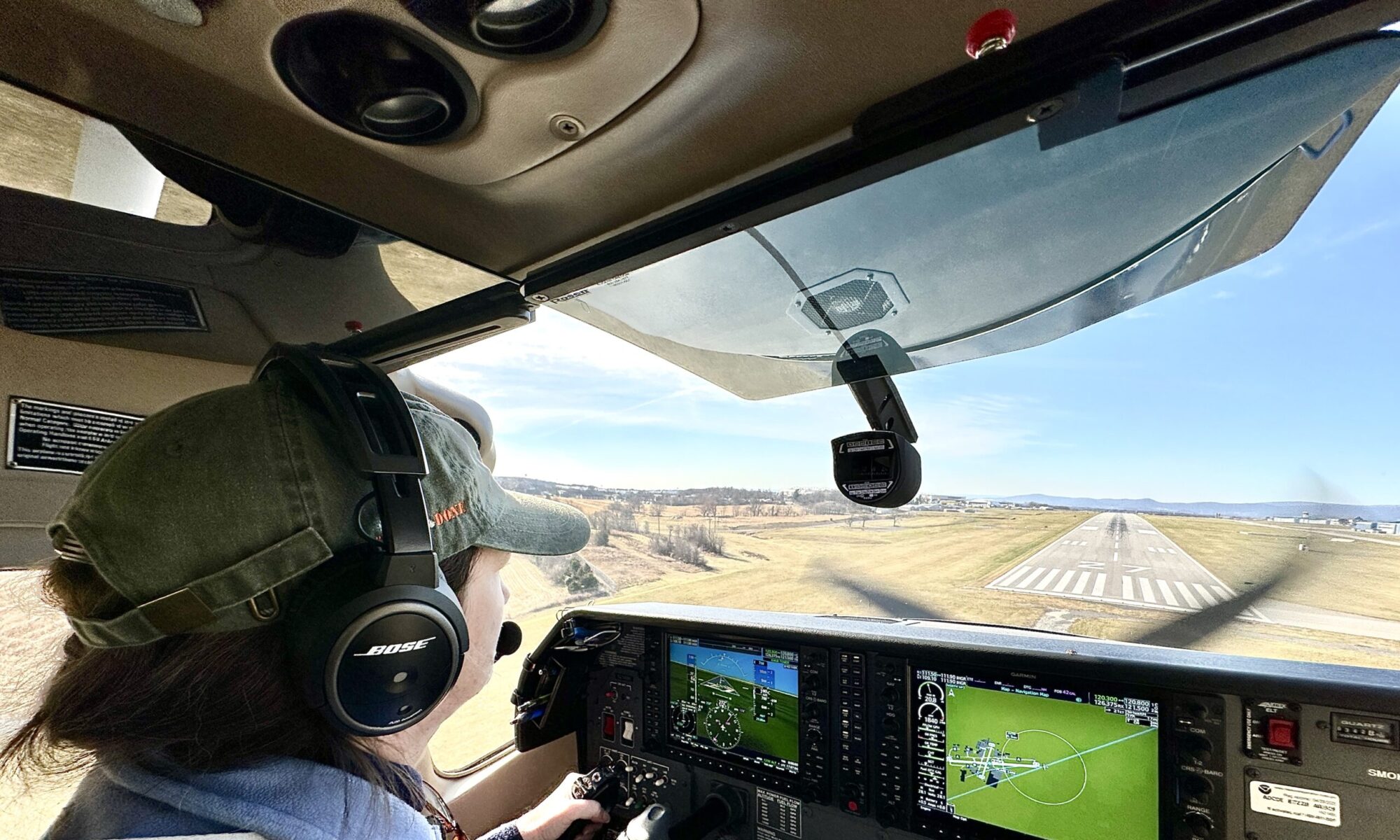
I took other pictures because at its heart, I love DCA, though because of 9/11 I never have flown into it as PIC. I love the River Visual, the finesse it takes to stick the landing, and the central location. The close-in economy parking. The quick check-in by the North Security area.
But it turns out, DCA has been an accident waiting to happen for a long time. In fact, an accident similar to the one in which a PSA CRJ700 collided with a U.S. Army Black Hawk helicopter that took 67 lives last January 29 happened there, in the late 1940s.

Eastern Air Lines in 1949
Eastern Air Lines Flight 537, N88727, was a Douglas DC-4 aircraft en route from Boston, Massachusetts, to Washington, D.C., by way of a few stops on the old airmail route on November 1, 1949. But a horrifying accident took place near the approach end of Runway 3 (now 4) at Washington National that day. The DC-4—often taking on the role of regional airliner in that day—struck a military aircraft. This time it was a P-38 Lockheed Lightning undergoing an acceptance flight test trial for the Bolivian Air Force.
At 300 feet and a half-mile from the threshold, it killed the 55 passengers and crew aboard the DC-4 and—amazingly—only seriously injured the pilot of the P-38, a Bolivian national by the name of Erik Rios Bridoux.
According to the Wikipedia entry, “at the time, it was the deadliest airliner incident in United States history.”
But even with that dramatic loss of life in the heart of the nation’s capital, it wouldn’t be the trigger that set in motion real change in the governance of aviation in the U.S.
What Does It Take to Make Real Change?
That distinction would go to the much more well-known Connie vs. DC-7 mid-air that took place over the Grand Canyon in 1956, which took the lives of 128 people between the two aircraft.
There’s a symmetry here: a keystone accident preceding the bigger one that turned out to be the last straw.
The 1956 mid-air has long been identified as the catalyst for creating a federal aviation agency with coordinated national air traffic control—now the FAA. Perhaps the accident on January 29, 2025, is the similar catalyst that help mitigate issues of congestion and staffing shortages at one of the nation’s most critical airports. Because it does not compute that the denizens of D.C. (myself included) will want to give up their direct flights, regardless of their political clout.
But it can’t be a catalyst without continuous funding support for ATC, disentangled from the machinations in D.C. As Rep. Rick Larsen, D-WA, ranking member of the House’s Transportation & Infrastructure Committee, said in December 2025, “We have to avoid history repeating itself.”
The Aviation Funding Solvency Act (HR 6086) is part of the current proposition to achieve this goal. It “provides continuing appropriations to the Federal Aviation Administration (FAA) if (1) an appropriations bill for the FAA has not been enacted before a fiscal year begins, or (2) a law making continuing appropriations for the FAA is not in effect,” according to the entry on congress.gov.
During the National Transportation Safety Board meeting on the PSA/BlackHawk mid-air on January 28, the NTSB reviewed several recommendations it would make within its final report, most pointing the finger at the FAA for issues of system and culture that persist at DCA.
So far, only one has already been addressed—the rendering permanent of the TFR closing the helicopter route that placed the Black Hawk in the path of the PSA CRJ700. The remainder hangs in the balance as we teeter towards another government shutdown—particularly if HR 6086 doesn’t come to fruition in advance of that stoppage.
We have the technology tools to help mitigate one cultural issue—the regular reliance on visual separation by the DCA control tower. With the final report yet to be released, we can push for the increased staffing that will almost certainly boost sagging morale, and potentially decrease persistent mental fatigue levels amongst our friends at ATC.
While the DC-4 disaster at DCA didn’t prompt change back in 1949, perhaps nearly 77 years later we’ll see a hauntingly similar regional-and-military mid-air lead to real solutions. Surely we’ve come that far along in all of those years.


