The comment period closed on Friday, March 13, on a letter that solicited “concepts for the efficient and cost-effective operations and management of atmospheric observational platforms, cyberinfrastructure and computing capabilities, and community training on weather and space weather modeling and forecasting” for the National Science Foundation. Specifically, the letter targets operations at the NSF’s National Center for Atmospheric Research (NCAR), located in Boulder, Colorado.
So I’m a little late on this post if you thought for a moment that your feedback would alter the fate of NCAR in any way. Here’s hoping some greater scientific minds than mine have put their two cents in.
NCAR, as it has been operating since 1960, has offered a unique position at the intersection of meteorology, hydrology, solar physics, atmospheric chemistry, machine learning science, oceanography, cryospheric science, engineering, and education. It treats the Earth as a single yet vastly integrated system, and puts the hundreds of scientists who work at the lab and in associated locations into a nexus where they can naturally collaborate in a cross-disciplinary manner.
The center has focused on four areas of critical importance to our healthy existence and economic viability on the planet:
- Severe weather
- Water cycle
- Sun & space weather
- Air quality
Its perch on the ledge of the Flatirons overlooking the Boulder Valley in Colorado means that those scientists go to work every day in a location where those areas are not abstract but immediate concerns. The building itself, designed by I.M. Pei, inspires higher thought, and the miles of trails interlinking across the mesa offer active contemplation (via a lunchtime run or hike) for not only the folks who work there but also the community at large.
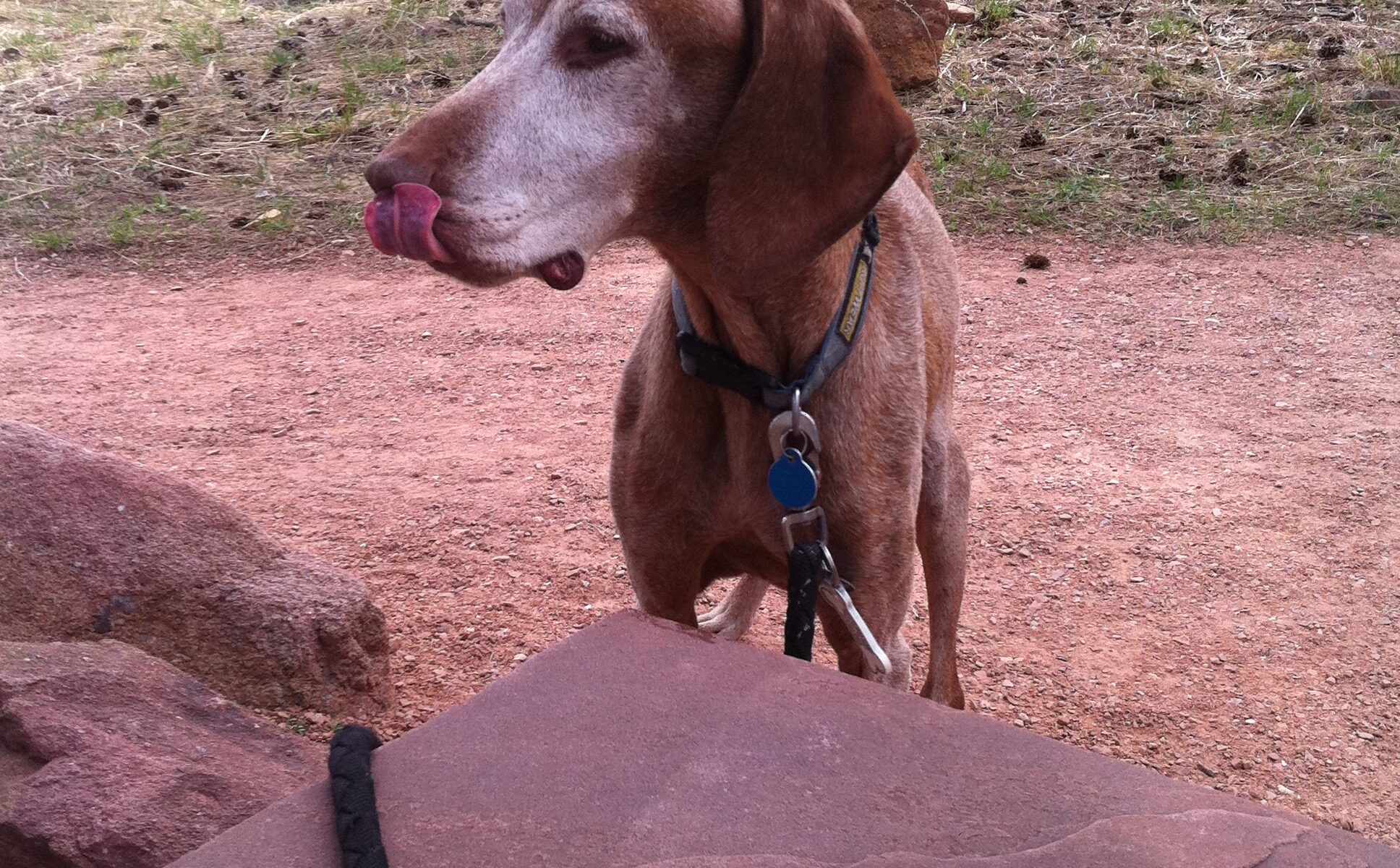
I’ve personally logged hundreds of miles there during my time living in Boulder County, with pups as companions (including the Fabulous Fred, pictured above on a hike 14 years ago this month on an NCAR trail). There are few places like it, where you can be both within the folds of the foothills and consider the great plains stretching east. You can see a hundred miles in each direction on many days of the year, and watch the weather unfold as it tumbles over the Rockies on its way downstream. Location matters, and grounds the science in everyday reality.
However, the wording of the letter makes it clear that the building itself is at risk along with the unique opportunity those scientists have had to come together over the decades. The missive solicits private or public use of the building… to what end better than it already does?
My relationship with NCAR intersects in other ways: There have been several scientists who were also pilots who I flew with and taught over the years. And air quality projects that make use of the location included in the late 1990s air sampling missions that I participated in as a young flight instructor. Flying a Cessna TR182 equipped with data collection and recording devices up to the flight levels (the low ones), we’d run racetracks at each altitude on the way back down to the Boulder Airport (then 1V5, now KBDU). Now a Gulfstream GV does similar work, but it may not for long, as the letter notes those aircraft may been discharged and the missions put to other aircraft in the future.
When high winds threaten the Front Range (which they do even more regularly now than when I was an undergrad), NCAR’s forecasting informs the population ahead of time. Following the devastating Marshall Fire on December 30, 2021, the power company Xcel Energy now preemptively shuts down power when these intense mountain wave winds are predicted.
I studied mountain wave activity while a student at the University of Colorado, in an aviation meteorology class also tied into the work of our local NCAR and UCAR scientists. That understanding, watching the wave rip rotor clouds into shreds at the foot of those mountains from the ramp at the Boulder Airport, has helped me both teach meteorology to my own students and assess micro and macro weather conditions as I’ve flown across the country. NCAR’s contributions to the study and mitigation of the effects of microbursts on aviation have been profound and lifesaving.
Yes, I feel a personal hit when I think of the Boulder community losing NCAR, and the effect that loss will have when its mission is broken into pieces because it fell into the cross-hairs of an administration bent on restructuring and retribution.
Maybe there’s still time to fight for science, for both our aviation family and our world.