NCAR and the Ides of March

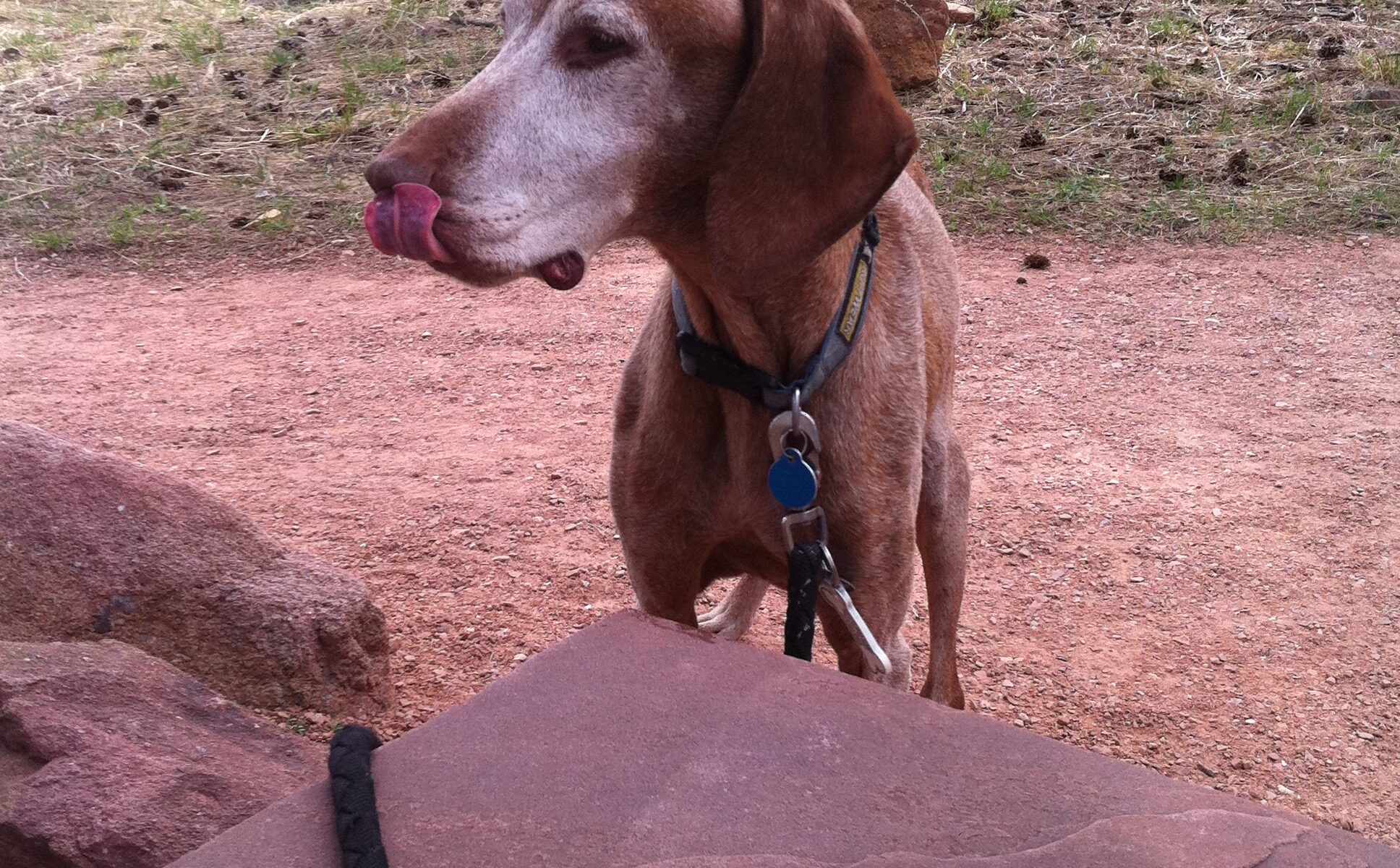
a senior Vizsla make dog with a whit muzzle licking his chops behind a red stone bench and in front of a stand of pine trees, with foothills behind.

The comment period closed on Friday, March 13, on a letter that solicited “concepts for the efficient and cost-effective operations and management of atmospheric observational platforms, cyberinfrastructure and computing capabilities, and community training on weather and space weather modeling and forecasting” for the National Science Foundation. Specifically, the letter targets operations at the NSF’s National Center for Atmospheric Research (NCAR), located in Boulder, Colorado.

So I’m a little late on this post if you thought for a moment that your feedback would alter the fate of NCAR in any way. Here’s hoping some greater scientific minds than mine have put their two cents in.

NCAR, as it has been operating since 1960, has offered a unique position at the intersection of meteorology, hydrology, solar physics, atmospheric chemistry, machine learning science, oceanography, cryospheric science, engineering, and education. It treats the Earth as a single yet vastly integrated system, and puts the hundreds of scientists who work at the lab and in associated locations into a nexus where they can naturally collaborate in a cross-disciplinary manner.

The center has focused on four areas of critical importance to our healthy existence and economic viability on the planet:

  • Severe weather
  • Water cycle
  • Sun & space weather
  • Air quality

Its perch on the ledge of the Flatirons overlooking the Boulder Valley in Colorado means that those scientists go to work every day in a location where those areas are not abstract but immediate concerns. The building itself, designed by I.M. Pei, inspires higher thought, and the miles of trails interlinking across the mesa offer active contemplation (via a lunchtime run or hike) for not only the folks who work there but also the community at large.

I’ve personally logged hundreds of miles there during my time living in Boulder County, with pups as companions (including the Fabulous Fred, pictured above on a hike 14 years ago this month on an NCAR trail). There are few places like it, where you can be both within the folds of the foothills and consider the great plains stretching east. You can see a hundred miles in each direction on many days of the year, and watch the weather unfold as it tumbles over the Rockies on its way downstream. Location matters, and grounds the science in everyday reality.

However, the wording of the letter makes it clear that the building itself is at risk along with the unique opportunity those scientists have had to come together over the decades. The missive solicits private or public use of the building… to what end better than it already does?

My relationship with NCAR intersects in other ways: There have been several scientists who were also pilots who I flew with and taught over the years. And air quality projects that make use of the location included in the late 1990s air sampling missions that I participated in as a young flight instructor. Flying a Cessna TR182 equipped with data collection and recording devices up to the flight levels (the low ones), we’d run racetracks at each altitude on the way back down to the Boulder Airport (then 1V5, now KBDU). Now a Gulfstream GV does similar work, but it may not for long, as the letter notes those aircraft may been discharged and the missions put to other aircraft in the future.

When high winds threaten the Front Range (which they do even more regularly now than when I was an undergrad), NCAR’s forecasting informs the population ahead of time. Following the devastating Marshall Fire on December 30, 2021, the power company Xcel Energy now preemptively shuts down power when these intense mountain wave winds are predicted.

I studied mountain wave activity while a student at the University of Colorado, in an aviation meteorology class also tied into the work of our local NCAR and UCAR scientists. That understanding, watching the wave rip rotor clouds into shreds at the foot of those mountains from the ramp at the Boulder Airport, has helped me both teach meteorology to my own students and assess micro and macro weather conditions as I’ve flown across the country. NCAR’s contributions to the study and mitigation of the effects of microbursts on aviation have been profound and lifesaving.

Yes, I feel a personal hit when I think of the Boulder community losing NCAR, and the effect that loss will have when its mission is broken into pieces because it fell into the cross-hairs of an administration bent on restructuring and retribution.

Maybe there’s still time to fight for science, for both our aviation family and our world.

Garmin’s Autoland Activation in the Wild

Canva filter in purple and neon orange with Autoland sequence display shown on a display in an instrument panel.

I’ve been thinking about the first activation of the revolutionary Garmin Autoland system “in real life” for more than a week.

I recall clearly sitting as a silent witness to the compelling initiation and execution of the Autoland sequence several years ago. A couple of times, in fact.

Both of these activations happened in demo mode and were not the full “in the wild” experience. The first took place before the system was certificated, at Garmin’s flight department headquarters at New Century AirCenter (KIXD) near Olathe, Kansas, in August 2019, in a Piper M600 modified for testing.

My second experience took place in the Beechcraft King Air 200 used as the test bed for the currently deployed aftermarket system on that airframe, away from Garmin’s home base, and with a Garmin flight demo pilot in the left seat, and me in the right seat. The tower had been advised of the demonstrations taking place, but we otherwise slotted into the regular stream of traffic at a busy airport. No total clearing of the airspace took place, because it was understood by ATC not to be an emergency.

You can see essentially the same demo I sat through here, on AvBrief.com.

A lot has been said about the circumstances surrounding the event, which happened over the Rocky Mountains on December 20, 2025. That activation occurred not with a push of the guarded Autoland button, but when the pilots of N479BR [operated by Buffalo River Aircraft Services] experienced a pressurization emergency at 23,000 feet after taking off from Aspen (KASE). The Garmin integrated system sensed the loss of cabin pressure and activated the Emergency Descent Mode (EDM). The EDM protocol commands a descent to 14,000 feet. If no response is sensed from the pilots after 60 seconds of inactivity, the Autoland system engages thereafter.

The pilots of the ferry flight had no passengers on board, and elected to allow Autoland to progress to its conclusion, which ended in a safe, apparently textbook approach and landing at Rocky Mountain Metro Airport (KBJC) in Broomfield, Colorado.

My friend and colleague Max Trescott happened to be flying in a Cirrus SF50 Vision Jet in Colorado at the same time as N479BR activated Autoland, and he managed to record much of the comms on Guard, sharing this with listeners on the podcast NTSB NewsTalk he produces with another former colleague of mine, Rob Mark.

As it turns out, the King Air leveled at 18,000 feet instead—my assumption is that the aircraft stopped at 18,000 feet because of MEAs along the mountainous route, until you reach the relative flatlands of the Front Range near KBJC. The audio that Max replays on the podcast illuminates one interesting situation for pilots who remain conscious and compos mentis during the Autoland engagement: The crew reported they could only transmit on Guard; it’s true that a pilot (or passenger) can’t change the radio frequency once activated—you’d need to disengage Autoland in order to do so, and recommence flying.

Autoland can easily be deactivated by pressing the autopilot key on the a/p control panel, or the a/p disconnect switch on the pilot’s control yoke or stick. So, the question on many a commenter’s mind is why the pilots rode the system out to its conclusion rather than disengaging Autoland once they were descended below 14,000 feet msl. Some bemoan the giving over of command to the system too easily—and the potential for piloting skills to erode further as we let automated systems handle the hand-flying to a greater and greater extent.

While my experience in high altitude ops is limited, I can’t help but think back to a cross-country flight I took back in 1995 in a friend’s Cessna T303 Crusader—you don’t hear enough about these classy airplanes imho—where we elected to fly at FL250 on oxygen masks headed from Colorado to Chicago. As a climber and well acclimated by years of living at 10,000 feet, my friend in the left seat took off his mask and ate lunch while I stayed on the gas and the controls from the right. About 5 minutes later, he donned the mask again, and I took my turn.

I got about three bites into my granola bar when I found I couldn’t chew anymore. The hypoxic effects took only that long to sink in. So yes, a pressurization event at FL230 is no joke to me. After years of flying in Colorado, I know hypoxia is insidious, and that a pilot can feel giddy and overconfident as a result. That would lead me to choose to monitor a fully and correctly functioning Autoland system while I monitored my own condition and that of the airplane while on supplemental oxygen. That’s me.

Frankly, I’m more surprised the first irl activation took this long to occur. As a corollary, the Cirrus SR20 obtained certification on October 23, 1998, and the first Cirrus Airframe Parachute System (CAPS) “save” took place not quite 4 years later, in an SR20 on October 3, 2002. Autoland gained its first cert on the Piper M600/SLS Halo in May 2020—so we took 5.5 years for that fateful button push. And that’s for a system you can reset. Once a CAPS is deployed, the cat is out of the bag, literally.

I think about it this way: The Autoland sequence began at an altitude where pilot incapacitation remained a serious concern. With the system flying the airplane, the crew could focus 100 percent on their own health, and running checklists and other troubleshooting, maintaining greater situational awareness. In your everyday flying, if the autopilot is making a coupled approach well, do you click it off just to prove you could hand fly the airplane?

We have a conscious choice to keep our skills from eroding in the face of a capable “auto-whatever,” whether it’s CAPS or Autoland or just a really great autopilot. The advent of tools that leverage technology requires more from pilots than just accepting them carte blanche and allowing them to take over every time. And we need to practice our hand-flying skills regularly.

But during an abnormal or emergency situation, when you need to access all of the resources at your disposal, it surely makes sense to me to keep Autoland engaged as long as it’s performing as promised.

There’s always the little red button on the yoke.