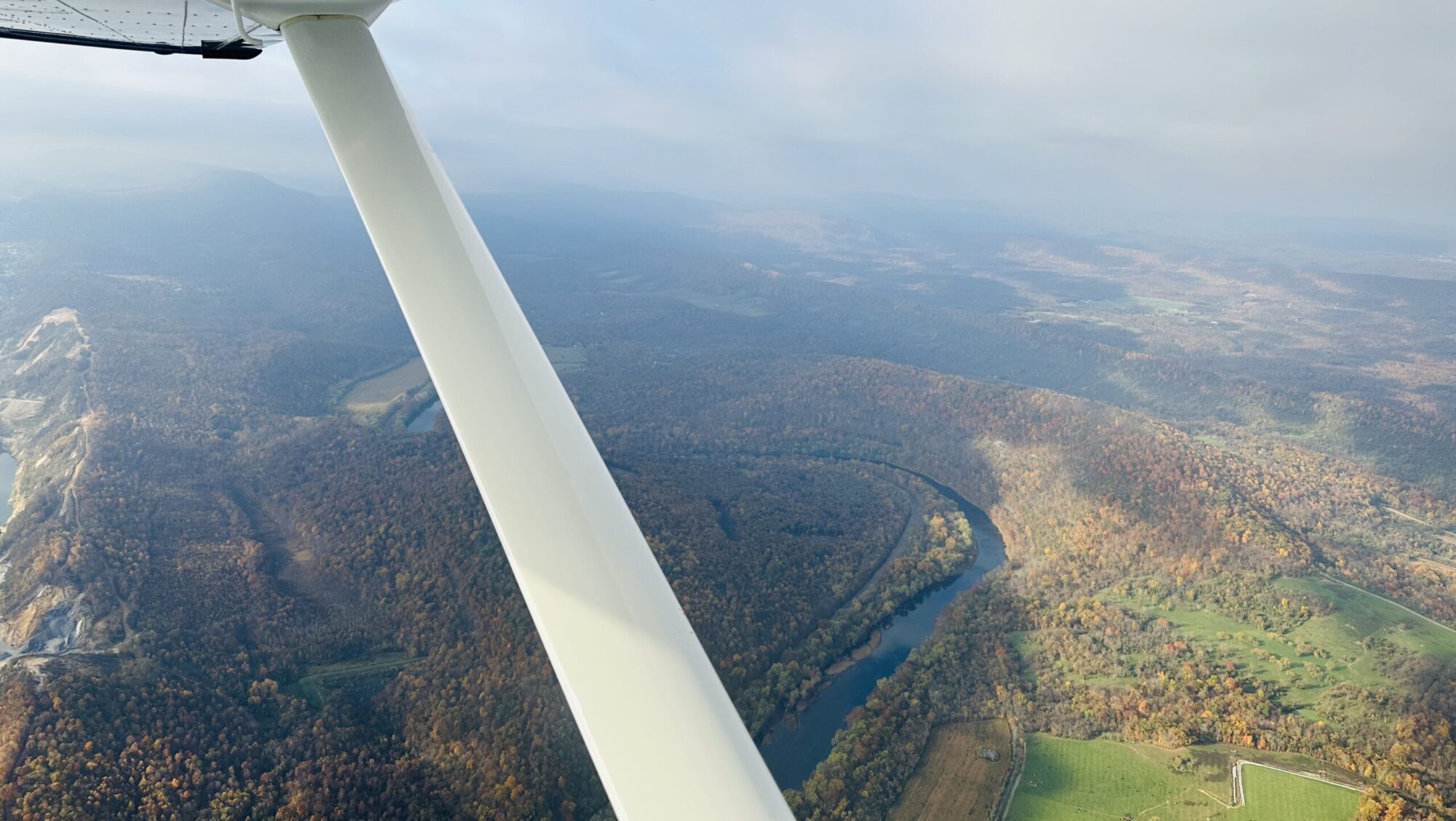
With the snow capping the Pyrenées to the south, my last visit to Tarbes took place on a chilly day in November 2021. I was meeting up with Margrit Waltz, who readied a new TBM 940 for its ferry flight across the ocean.
At the time, I didn’t realize that the next TBM had already moved onto the production line, the serial number (SN) that would become the first TBM 960. That model debuted in April 2022, and I had a chance to fly it from Sun ‘n Fun Aerospace Expo down to Daher’s then HQ in south Florida, at KPMP, Pompano Beach.
Now, nearly four years later, Daher debuts its latest, the TBM 980, and what looks like a similar aircraft has changed significantly under its gorgeous skin.
Similiarly, Daher may look like the same company if you just glance at the buildings collected on the ramp at LFBT, but so much has changed. The company has three locations now in Florida—at KSUA where the TBM will soon be built on a new line, and at KFLL where the new U.S. headquarters is located. And the Kodiak’s home base in Sandpoint, Idaho, now churns out Kodial 900s as well as the 100 Series III.
And…just in time to kickoff 2026, the TBM 980 takes the stage.
The sixth 900-series turboprop launched by Daher since it took possession of the aircraft model line in 2014, the TBM 980 integrates the Garmin G3000 PRIME that the avionics OEM debuted in late 2024 on the competing Pilatus PC-12 Pro. But this is more than a makeup game. The G3000 PRIME replaces the previous G3000 with three 14-inch touchscreens and app-based functionality to evolve the flight deck experience to match what most pilots carry in their pockets.
The first integrated flight deck into the TBM series took off when Garmin and then-SOCATA signed the contract to put the G1000 into the TBM 850 at NBAA 2005. It was the beginning of the end of “federated” avionics—the separate boxes that worked in concert that we used to know so well.
Twenty years and 1,000 TBMs later, the flight deck now integrates into the pilot’s life. “When you pick up an iPad, you don’t read a manual, you pick it up and use it intuitively,” said Nicolas Chabbert, Daher Aircraft CEO, at a livestream event on Thursday, January 15, in the evening from Daher’s main hangar in Tarbes. The PRIME drives closer to that mark than any flight deck thus far.
The presets are contextual, allowing for the phase of flight to drive them. And that’s just the beginning. There’s a joystick to aid in selection, rather than a button for scrolling, and the ability to check in on the airplane remotely via Garmin PlaneSync.
Guillaume Remigi, test pilot, said at the event that the biggest surprise he discovered during flight test was how much he appreciated the touchscreens. Rather than being a novelty, they became natural and intuitive, he found.
Another operational improvement sure to be well-received by pilots is the ability to operate without adding Prist to the fuel. The Prist-free option had to be validated in hot and humid weather conditions, so the test pilots related during the livestream how they flew to Agadir, Morocco, leaving the aircraft outside overnight, experiencing temperatures ranging from +40C to -50C in the desert, and up to 90 percent humidity on the coast.
An enhanced interior features a new passenger display through which the folks in the back can see flight data… Chabbert likened it to Concorde, though perhaps not into the Mach numbers!
The new TBM will be Starlink Mini-capable, and to preview this, Daher’s Michel Adam de Villiers and longtime TBM pilot and superfan Dr. Ian Fries called in during the event from in-flight over Florida. Fries is the first publicly announced customer to purchase the TBM 980, which will be SN 1634, ready in March—Number 6 for Dr. Fries. That said, SN 1627 and SN 1628 are already poised to depart for their first customers.
Frankly, I can’t wait to get my hands on the new yoke—and on the touchscreens—either.
With the report from Daher, Safran, and Airbus on the Eco-Pulse hybrid-electric TBM-inflected tech demonstrator, the collective teams have the opportunity to stay future-forward—and incorporate lessons learned. In the interest of meeting the industry’s sustainable aviation objectives, we all have a vested interest in these outcomes.
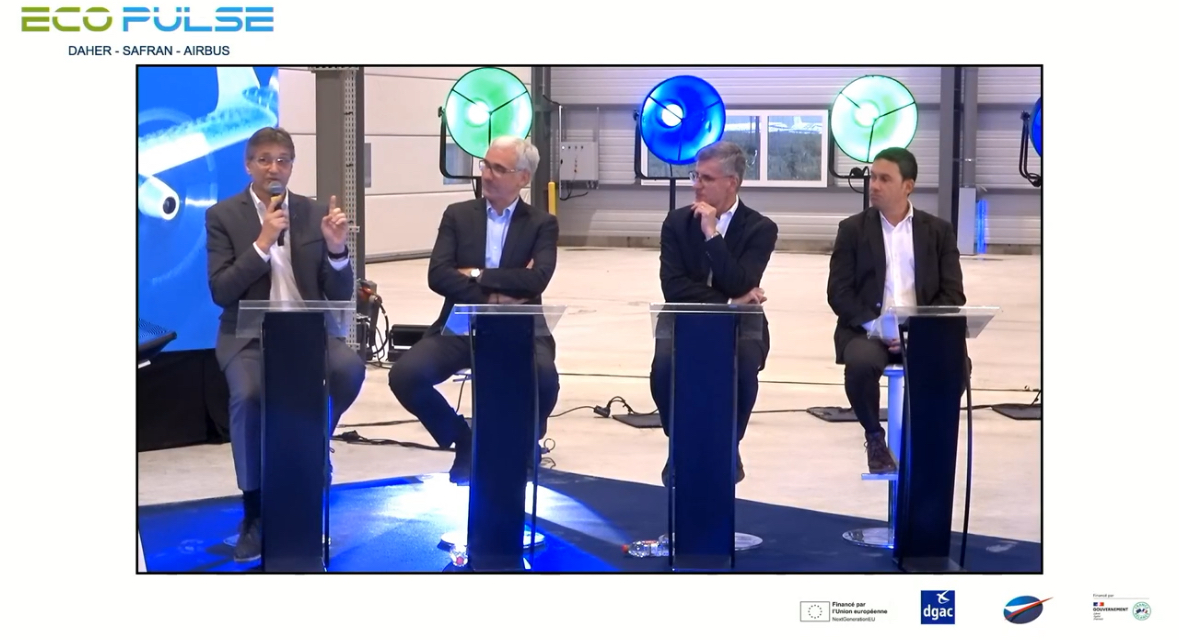
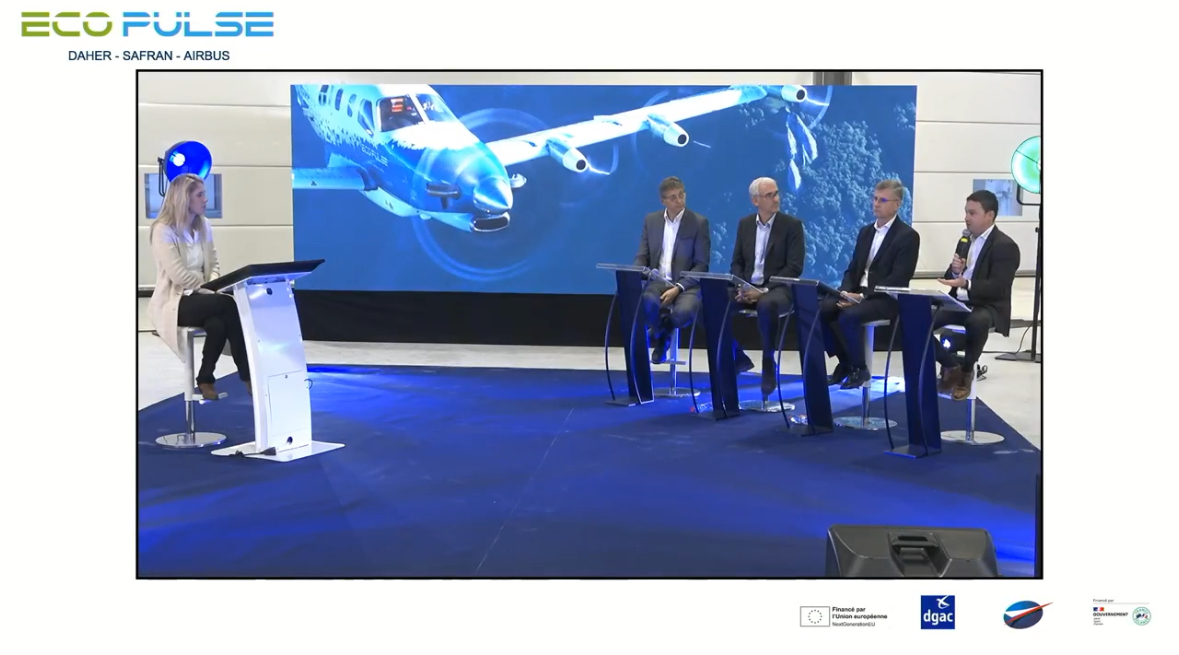
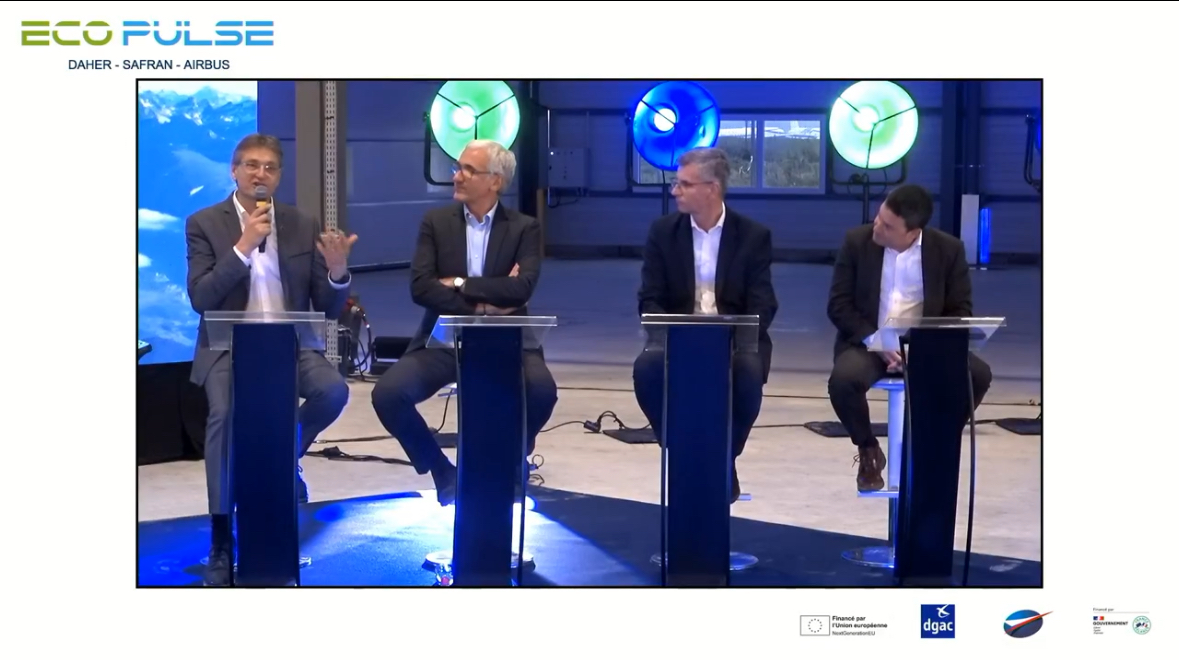
A media briefing preceded the LinkedIn liverstream on December 10, from Tarbes, France. Leaders from each company—including Pascal Laguerre, CTO of Daher; Éric Dalbiès, SEVP of strategy/CTO of Safran; and Jean-Baptiste Manchette, head of propulsion of tomorrow from Airbus—joined project lead and head of aircraft design Christophe Robin from Daher. Over the past five years since the project debuted at Paris Air Show in 2019, I’ve stayed in touch with Robin on its progress, which will inform the way forward for all three companies.
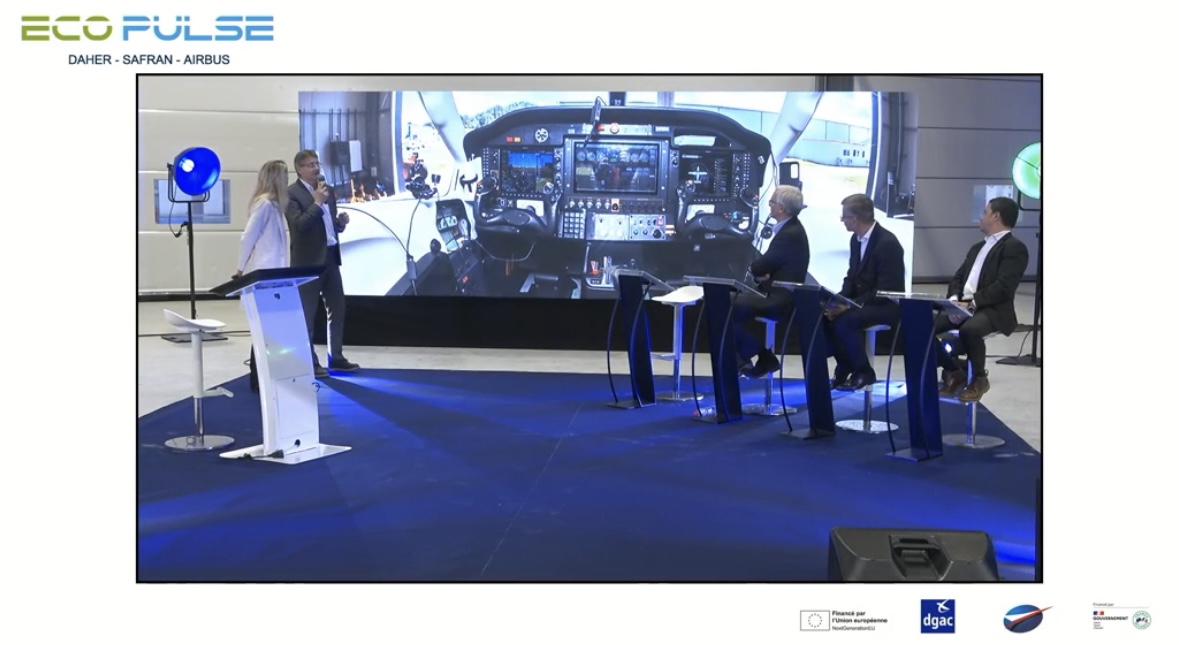
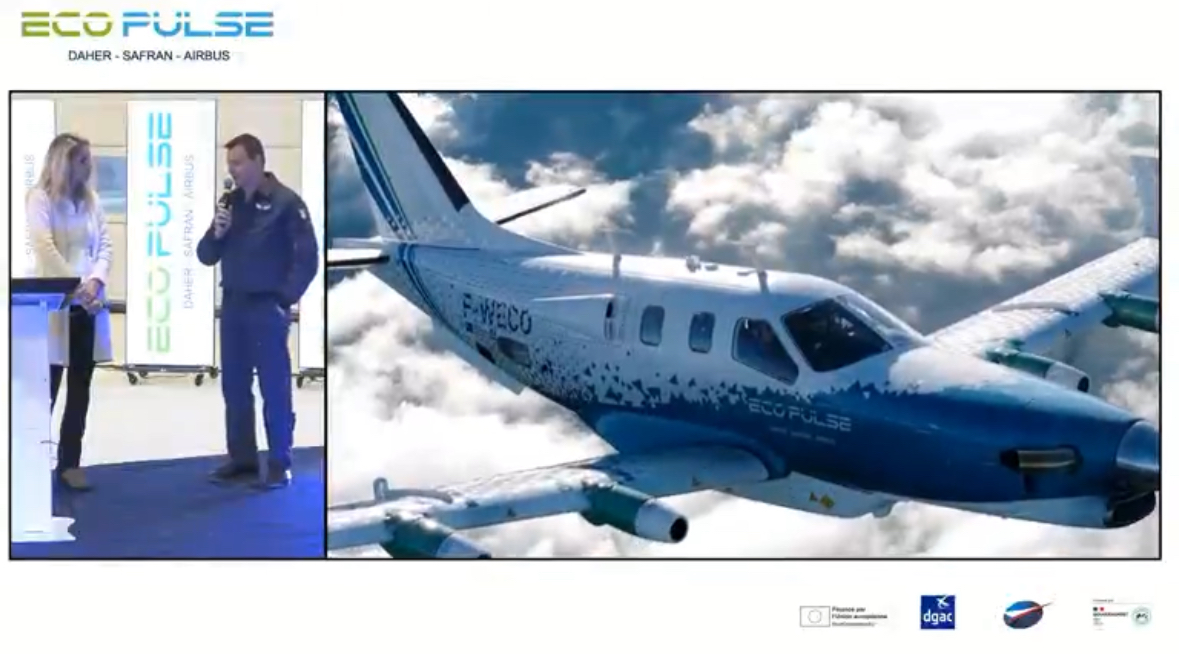
The panel of leaders from Daher, Safran, and AirbusChristophe Robin shows the flight deck of the Eco-Pulse along with its side stick unified flight control.
What Is Eco-Pulse?
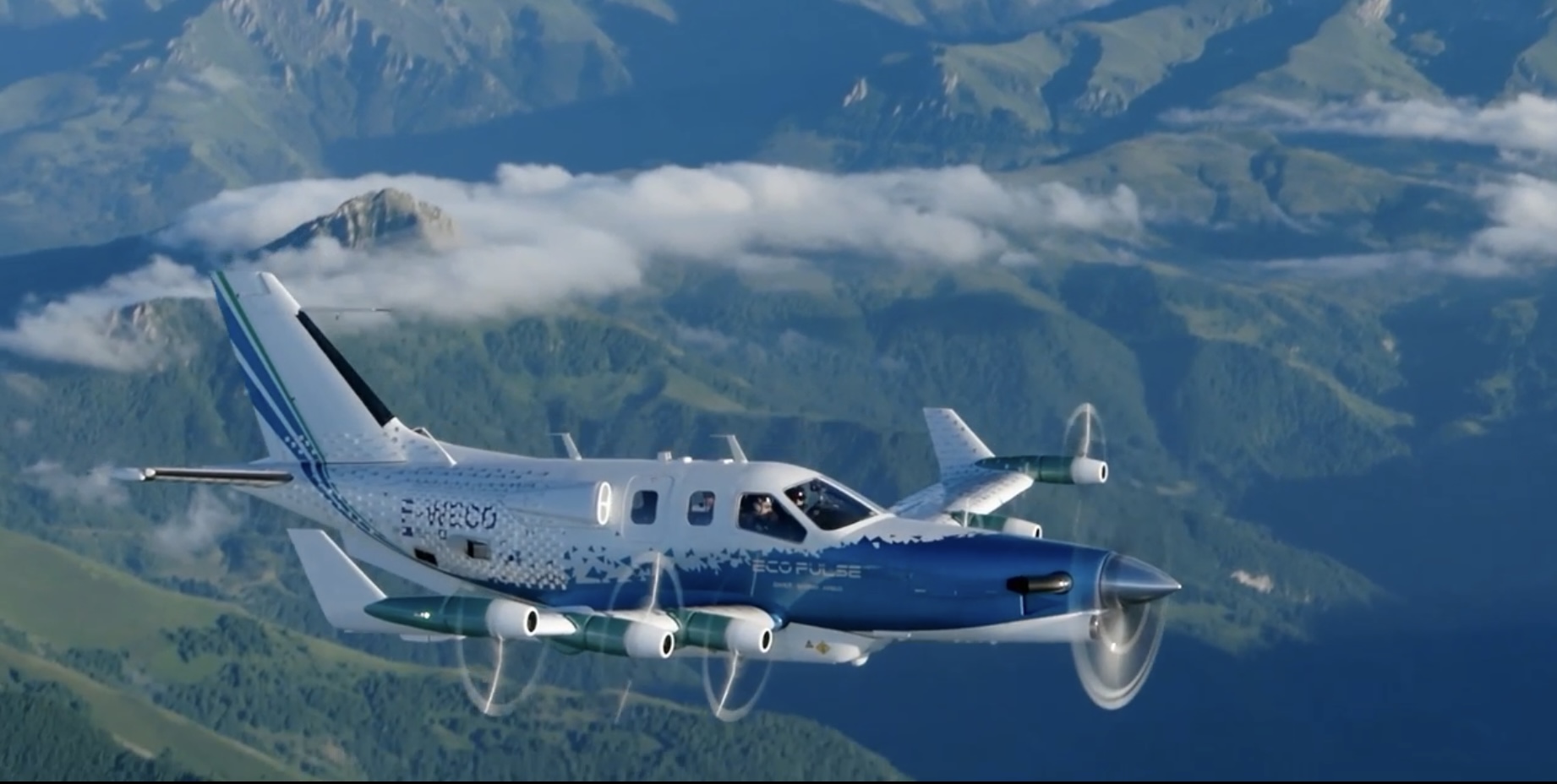
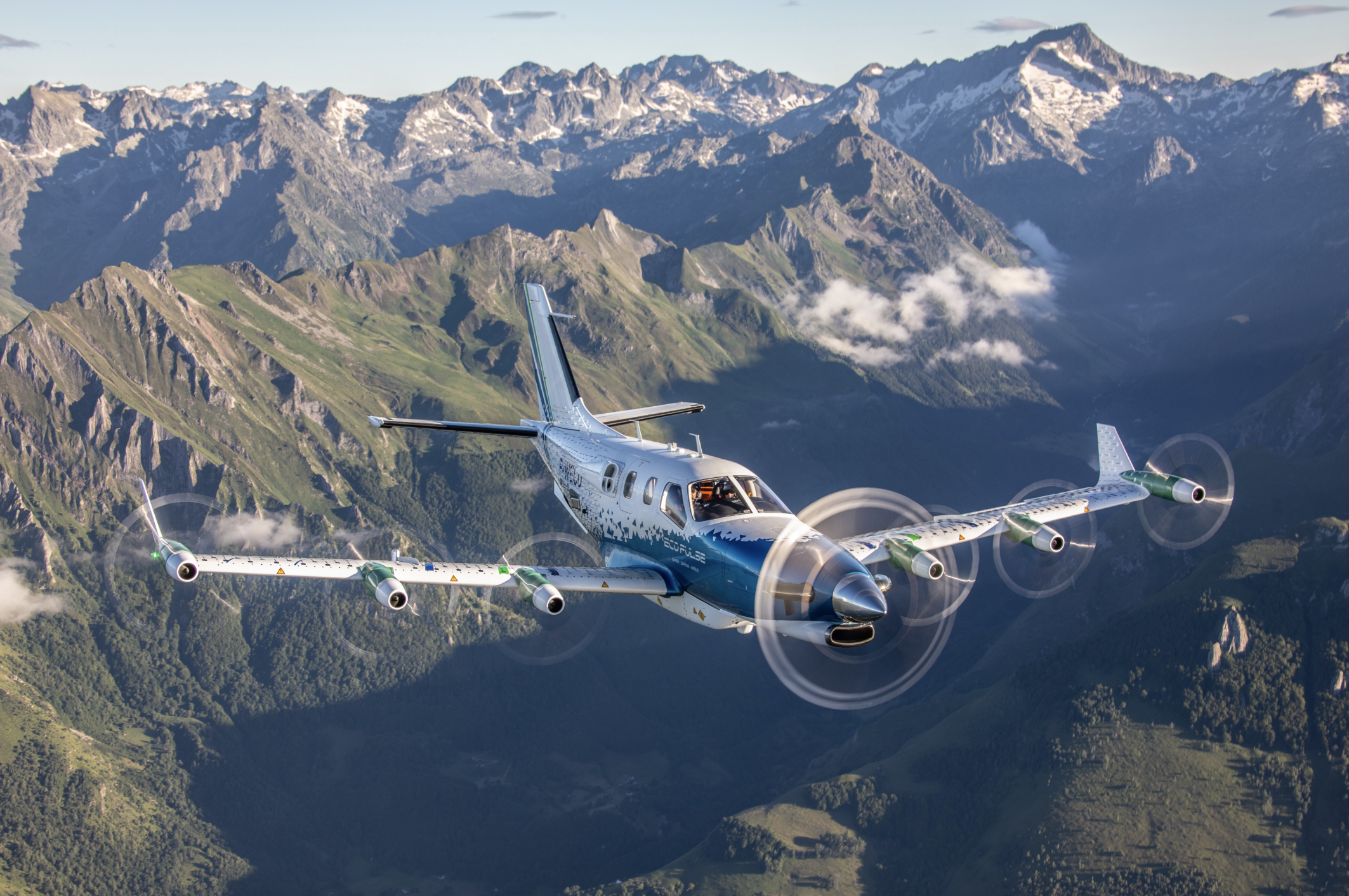
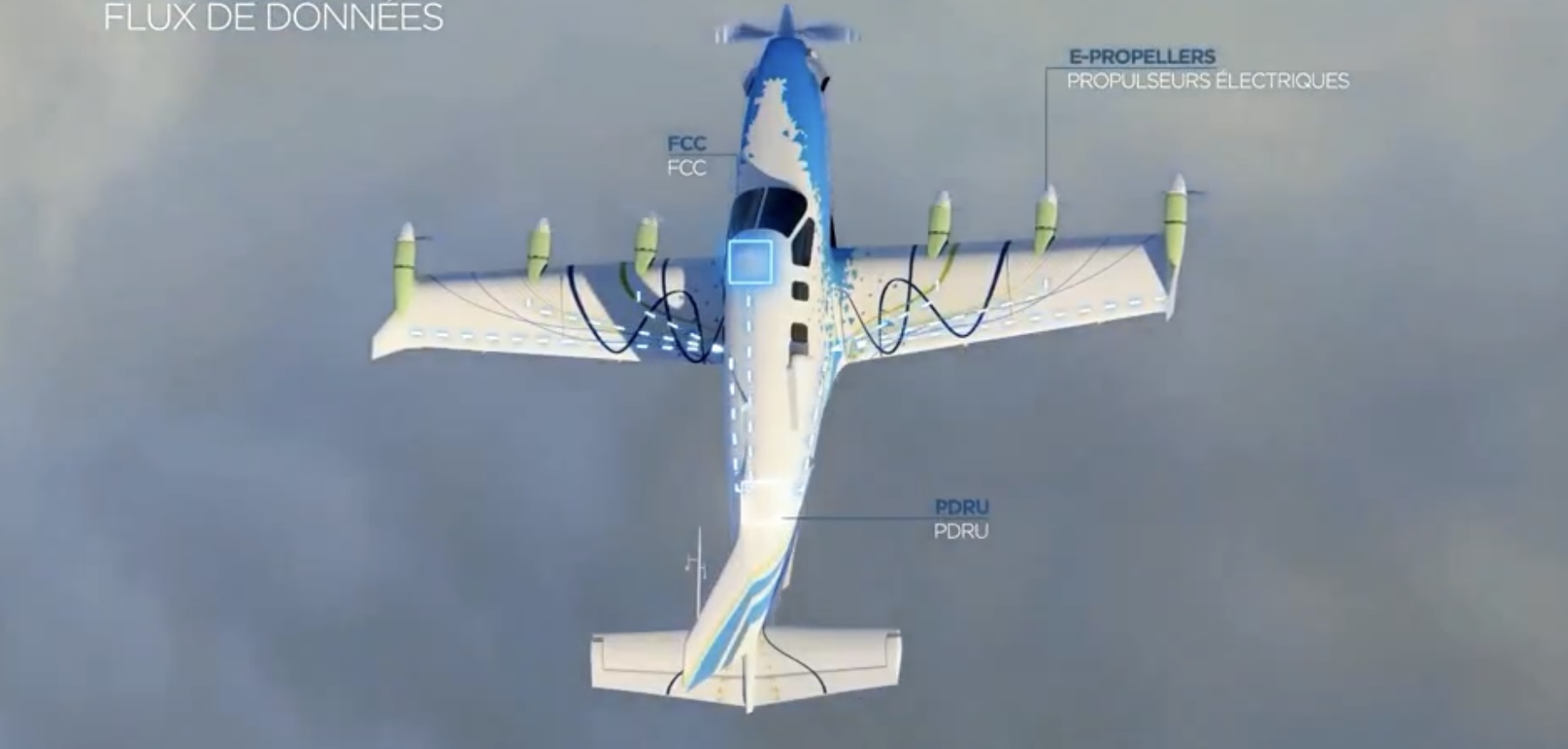
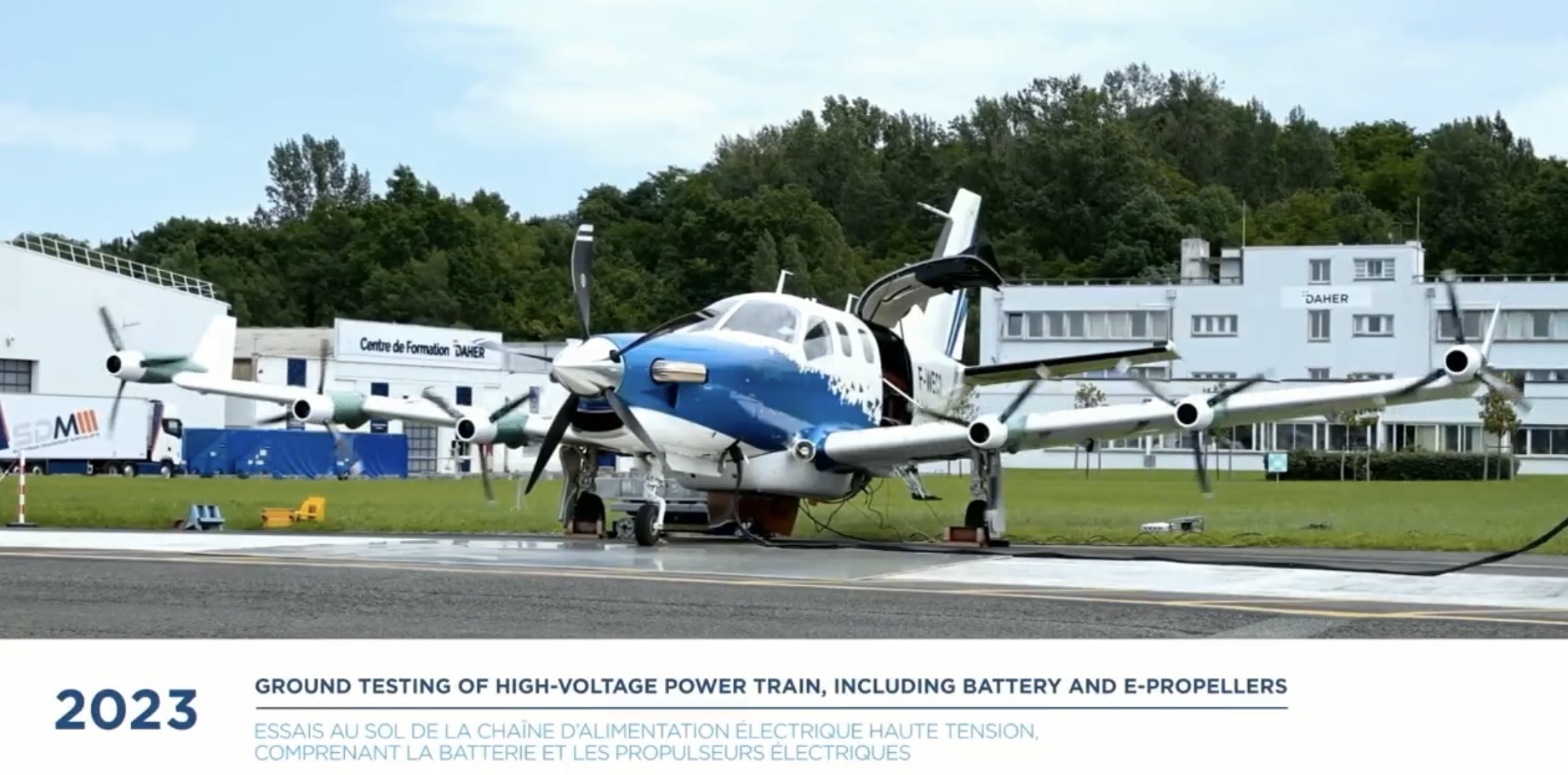
The Eco-Pulse project is critical for these leaders among aerospace OEMs because hybrid-electric propulsion forms a bridge between current jet-A (sustainable aviation fuel) burning turbine engines and full-scale electric propulsion. The aircraft at its heart is a technology demonstrator, in which a standard Pratt & Whitney PT6 turboprop engine remains in place on a tried-and-tested Daher TBM 900-series airframe. It’s joined by six Safran ePropellers on the wings integrated with a Safran-built turbogenerator and Airbus’ high-voltage battery pack (at 800 volts DC and up to 350 kW of power). A power distribution and rectification unit (PDRU) protects the high voltage network and distributes power via high-voltage supply harnesses.
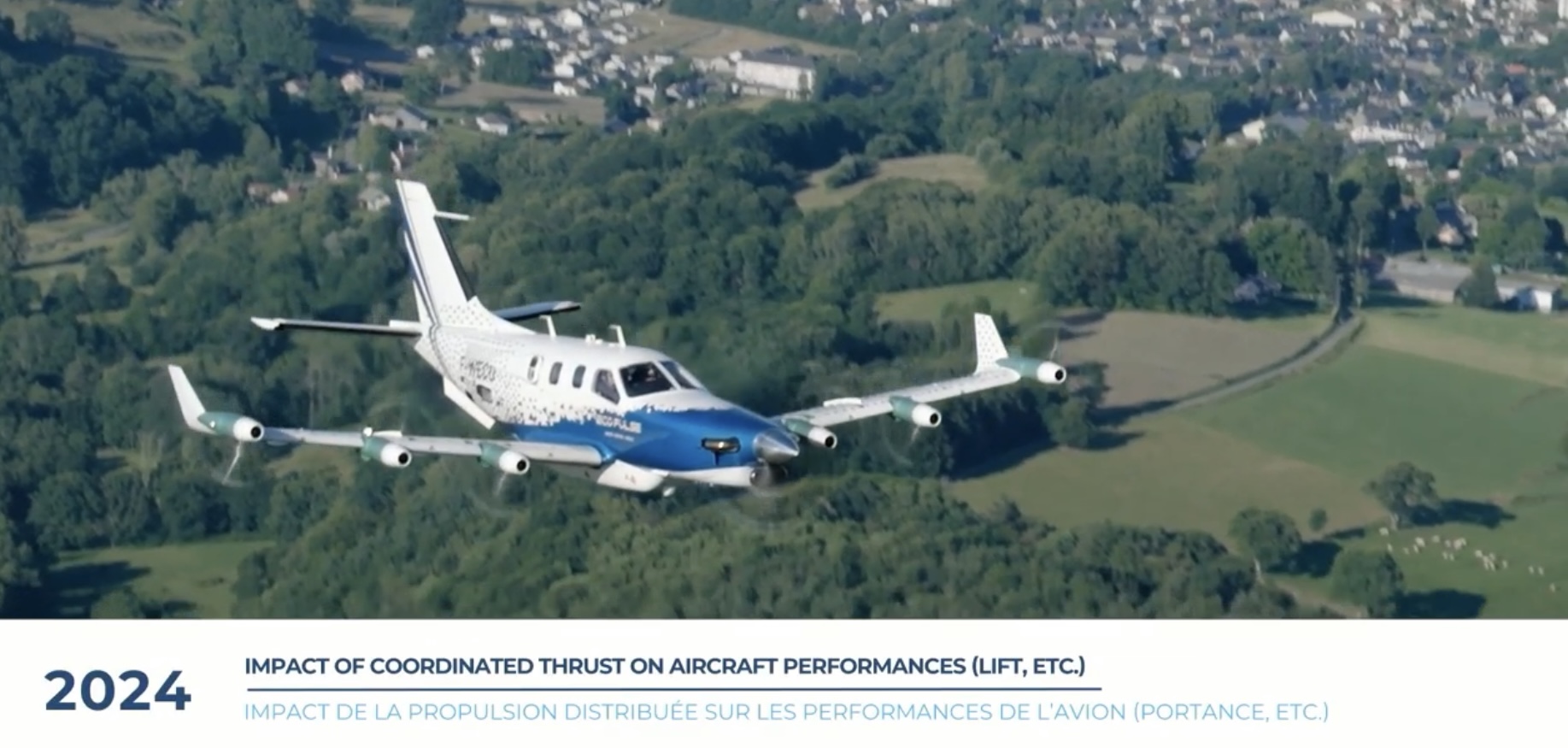
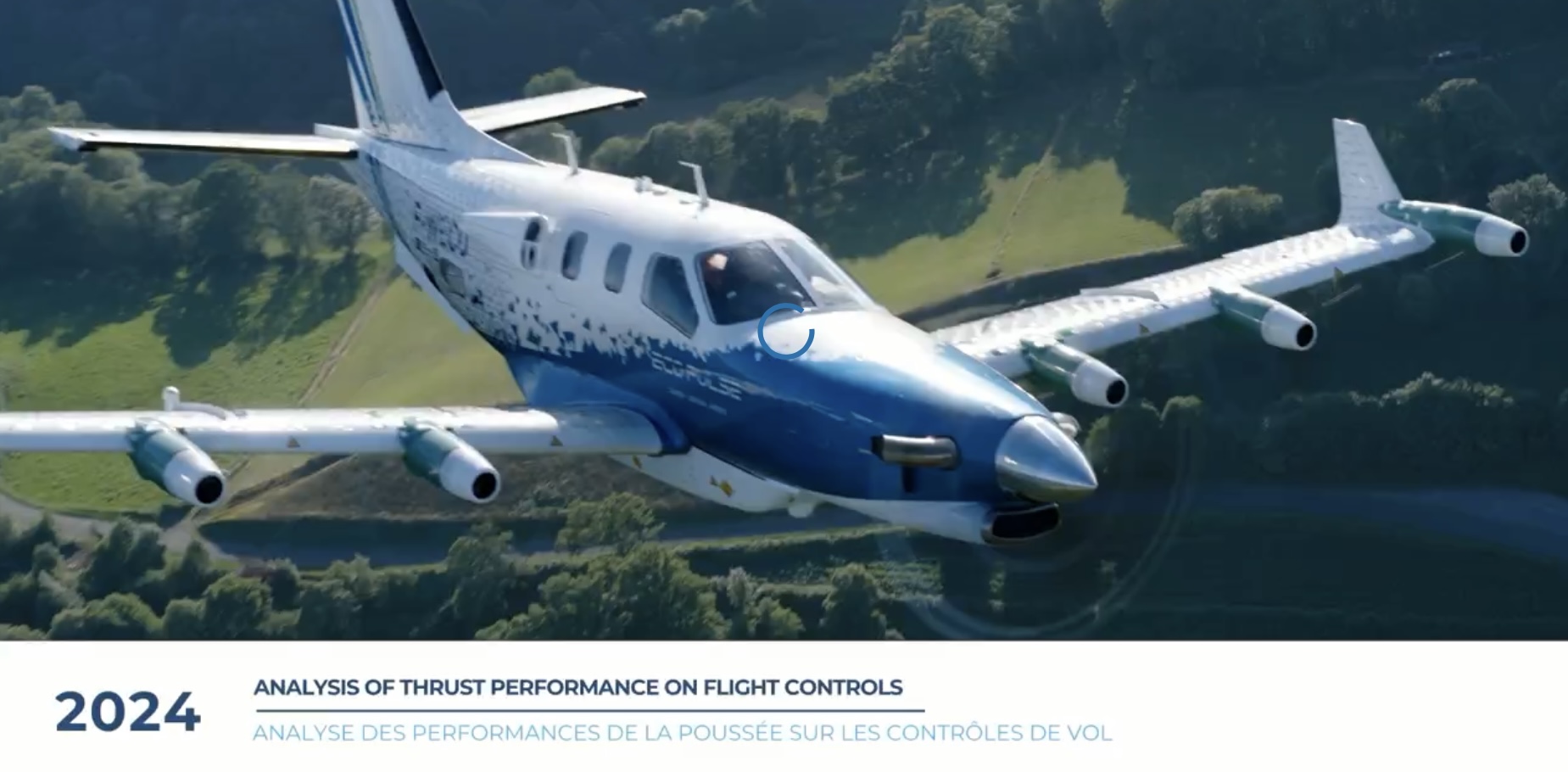
The Eco-Pulse flew for the last time, perhaps, in July 2024. [Credit: Daher/Jean-Marie Urlacher]Distributed lift exploration formed a key takeaway from Eco-Pulse.
The pilot can use the six motors propelling distributed lift over the wing via a unified joystick-style flight control, via the integrated flight deck. It’s a unique marriage of tech dreams and true life—the Eco-Pulse project allowed for demonstration of these technologies within the envelope of safety required by the simple fact it was taking flight in the real world, not a simulation.
Flying it remains key to showing the operational safety necessary to move forward.
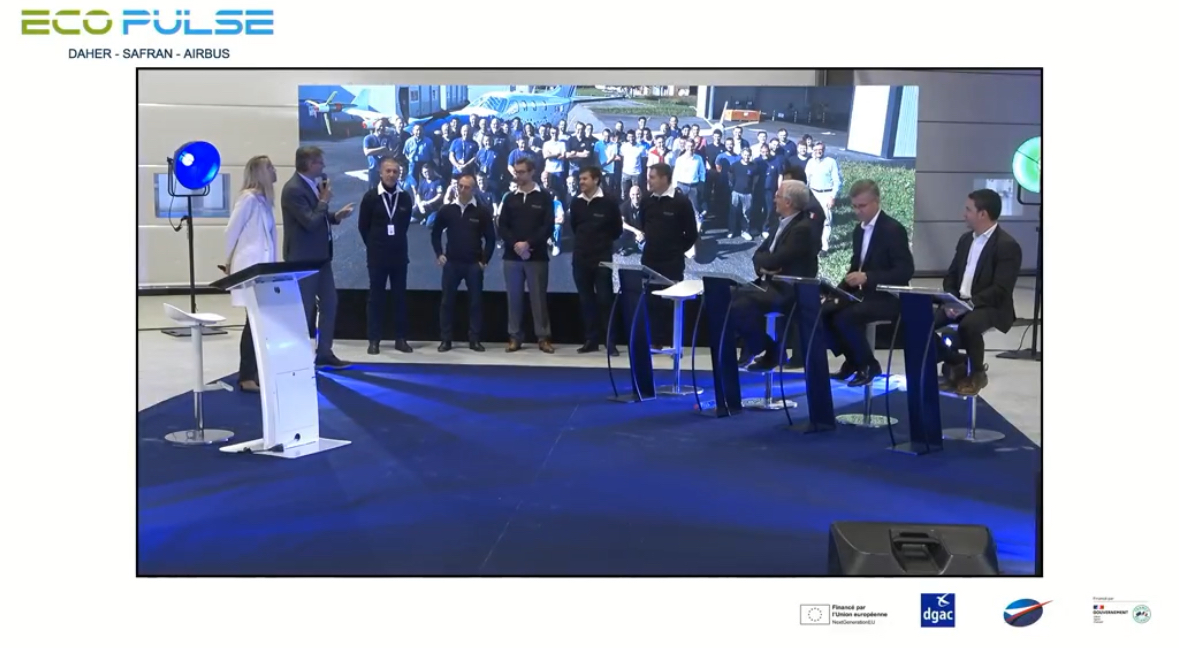
The flight testing took place mostly with the PT6 in “transparent” mode.Christophe Robin with the Daher flight test team on Eco-Pulse.
Flight Testing the Eco-Pulse
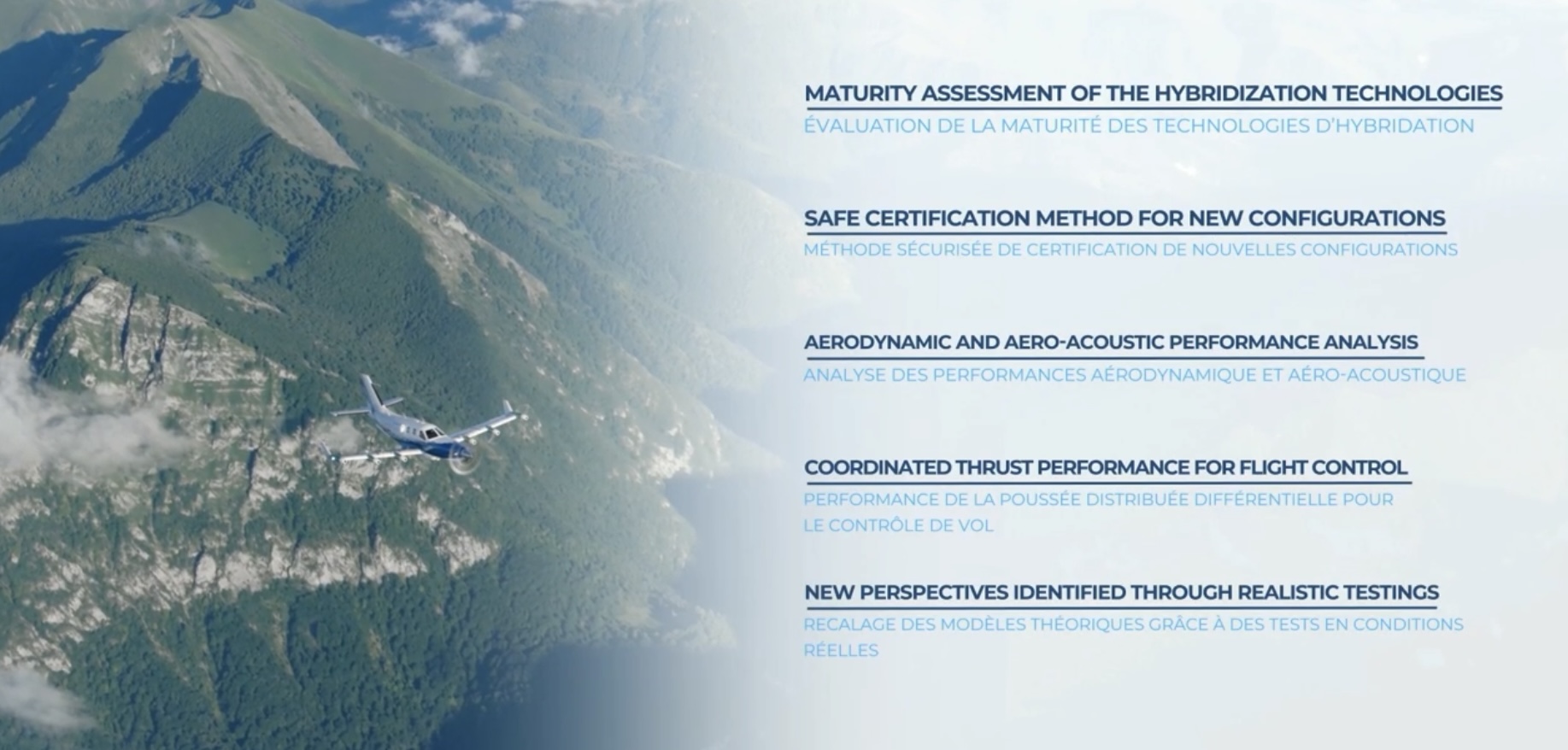
In the livestream, the flight test team described the progressive activation of the ePropellers and the eventually complete electrical actuation of the airframe and powertrain. During flight test, most of the hours of electric flight were conducted with the PT6 in “transparent” mode—not producing power, but not completely shut down.
Each step provided data to the respective companies, building on successive knowledge. For example, much was learned by flying the aircraft under its fly-by-wire (FBW) system, and under speed constraints. Stalls as well as the top speed of the demonstrator (190 kts) were explored. Slower airspeeds—as opposed to high-speed flight—provided some of the richest data, as the effect of the distributed lift caused by the ePropellers showed up most with lower in-flight airflow.
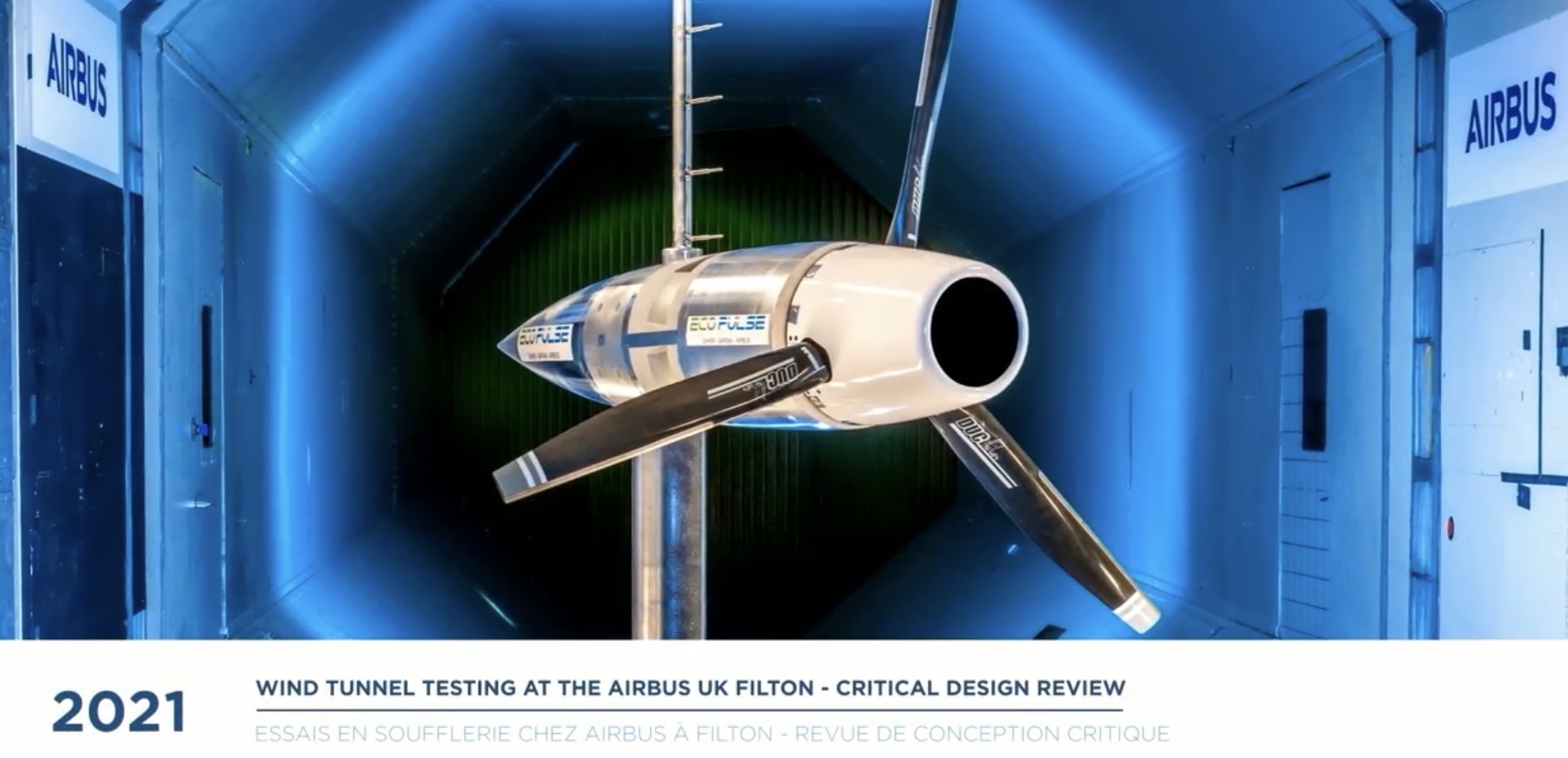
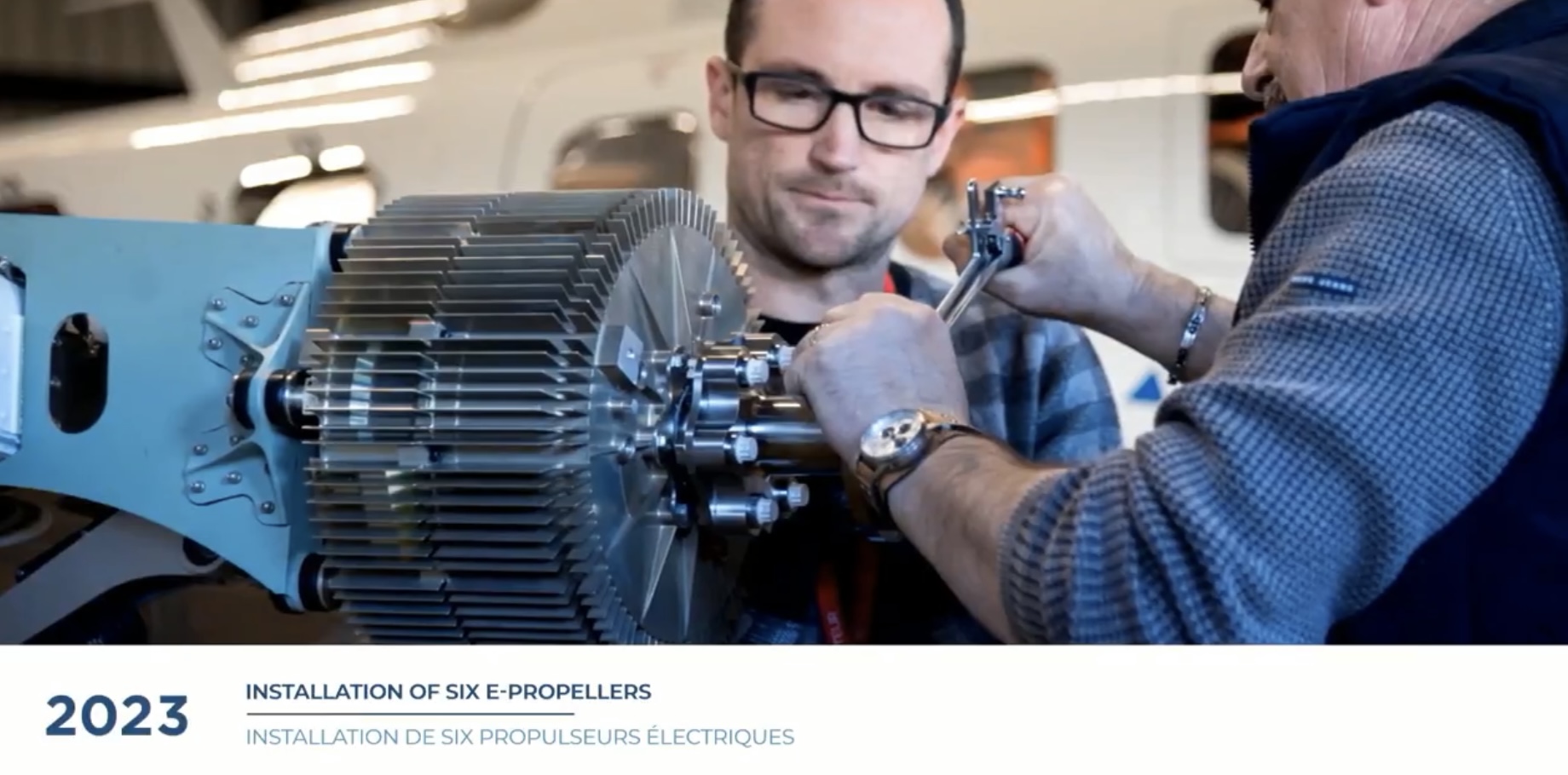
Wind Tunnel Test 2021Installation of ePropellers 2023
“You can imagine when when you have this propeller on the wing,” said Robin in the briefing. “The behavior is really different—you ‘blow’ the wing so the efficiency of the wing is completely different, thanks to the blowing effect of these six propellers. You increase the performance at takeoff, [and] during some maneuvers, and you can play with the flight controls, playing with the different[ial] power of these six engines. By doing that, you can play with the trajectory of the aircraft.”
Since the first hybrid-electric test flight on November 29, 2023, the Eco-Pulse has logged more than 100 hours in 50 flights, during which the team also noted other performance improvements, as well as the ability to reduce cabin noise with synchronization of the six propellers.
Two key learnings included a big challenge—managing the 800 VDC battery and the harness that distributes the power—as well as understanding how it will be maintained and serviced in real-world conditions. Things are just different in the air: A battery fire, for one, is more complicated than in ground-based vehicles, and because of the presence of the traditional turboprop engine, that fire may occur in close proximity to the fuel system.
The team learned from these issues: “Each unexpected issue on the aircraft has been ‘good news’,” said Robin. “There’s been…bad things, but also good news, because when on a subject…we didn’t think about, and Safran didn’t think about, that means that there was something real [to test and discover], That’s the point of making a demonstrator, to be in real life and not making only Powerpoints.
“We had some integration issues about the harness,” he continued. “It seems easy to install [an electrical distribution] harness with 800 volts in real life. [But] when you get more knowledge, [it’s] not that easy, especially when you have fuel, which is not too far away. You have to take care of all the dysfunctional cases. And we learned that some of them were probably not taken at the right level. We learned a lot on the integration of the harness.”
“We learned a lot also about the operation of high voltage aircraft,” he added, “because we are thinking design as an engineer [during] certification, but at the end of the day, well, you have an aircraft, and if you have 800-volt batteries, how you do you operate? How do the maintenance people take care of it?”
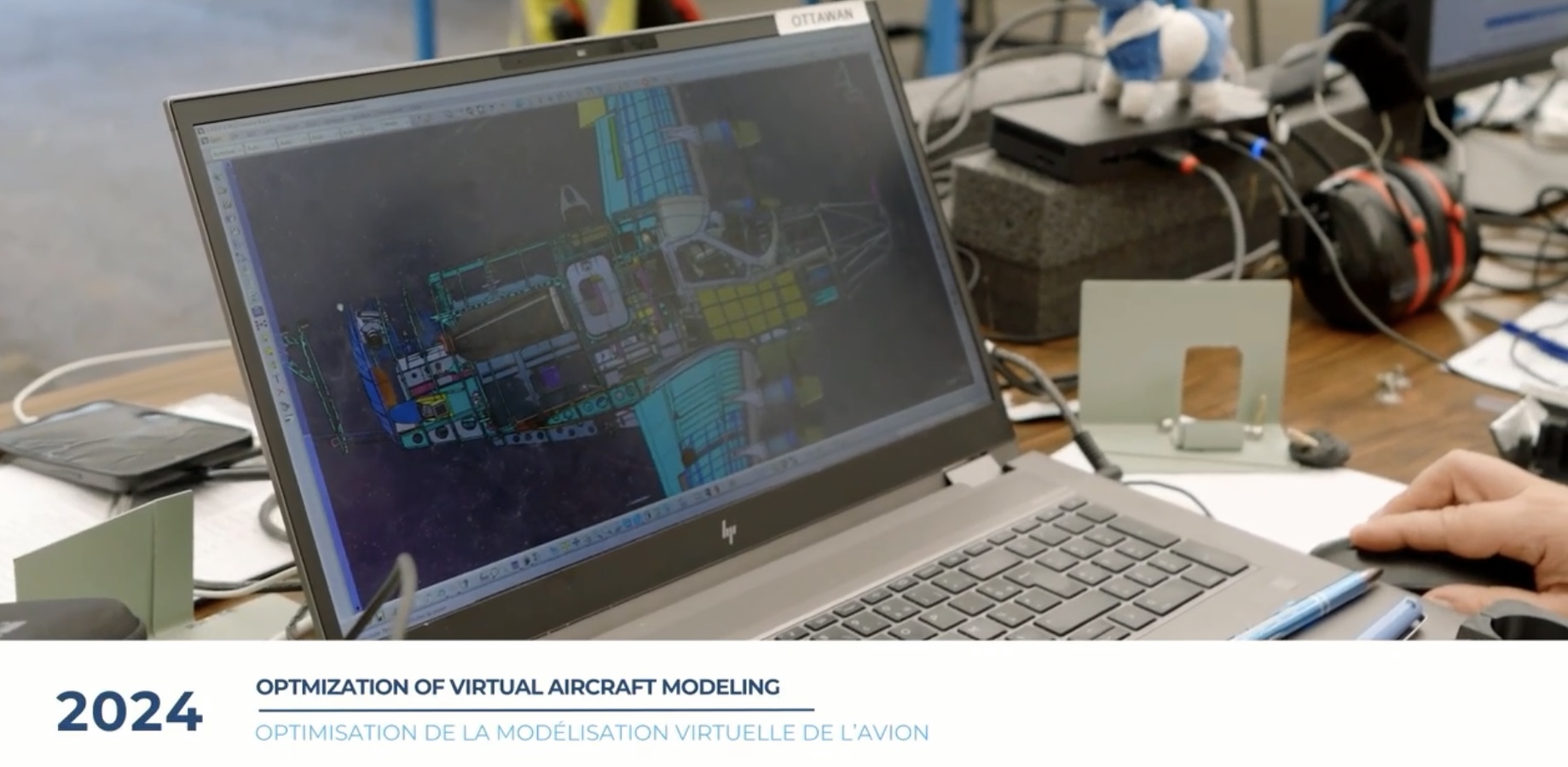
Ground Testing of High-Voltage Systems 2023Aircraft Modeling Optimization 2024
Daher + Safran + Airbus
Collaboration between the three giants was also a key takeaway: They essentially learned how to transform the relationship between airframe and powerplant OEMs as well as how to leverage the agility of start-ups that were brought into the development of the Eco-Pulse. The marketable aircraft program will depend on this coordination.
“So for the time being, we can enjoy something like 10-year periods, starting 2020 till the end of the decade, where we can focus our engineering teams on the preparation of the most disruptive technologies for the future,” said Pascal Laguerre in the media briefing. “That’s really an opportunity to make this happen. So we see this opportunity between our companies to align our goals at the same moment in time with the same mindset, the same intent, and saying, ‘Well, none of us individually can do it, can make it happen.’”
Sourcing of raw materials, including the rare earth metals needed for the batteries, from places on the globe that are not secure, is another takeaway from the program. Recycling those materials in a circular economy is vital to meeting several objectives, including those overall to support sustainable aviation. Finding other ways of approaching component construction and reuse is also critical.
Thrust Performance & Flight Controls 2024The three OEMs gained much more than expected from the collaboration.
What Comes Next for Daher?
The follow-on aircraft program from Daher and CORAC will be explored with a project beginning in 2025 with the goal of meeting the OEM’s objective of a go-to-market aircraft plan by 2027. With the real flight testing of Eco-Pulse, the goals are transformed beyond “the paper” according to Robin: “We have now a better idea of what the maturity is of the technological bricks [that] we can put inside an aircraft. We will launch next year a new CORAC project with Safran, in order to work on these hybridization and electrical technologies.
“The idea is to have this assessment of the [technologies’] maturity and to be able to meet the objectives given by my CEO [Didier Kayat],” he concluded. “That’s to propose a design and manufacture aircraft by the end of this strategic plan—so by the end of 2027, we [will be] working on this more electrical aircraft.” Also, Daher’s team will determine what the benefits were of the distributed propulsion system.
We’re certainly excited to see the next project leave the hangar…
In times of uncertainty, what do people tend to do? Nothing.
Or perhaps more appropriately, they wait and see. They make incremental changes at most, staying a conservative course until some trigger releases them from this holding pattern.
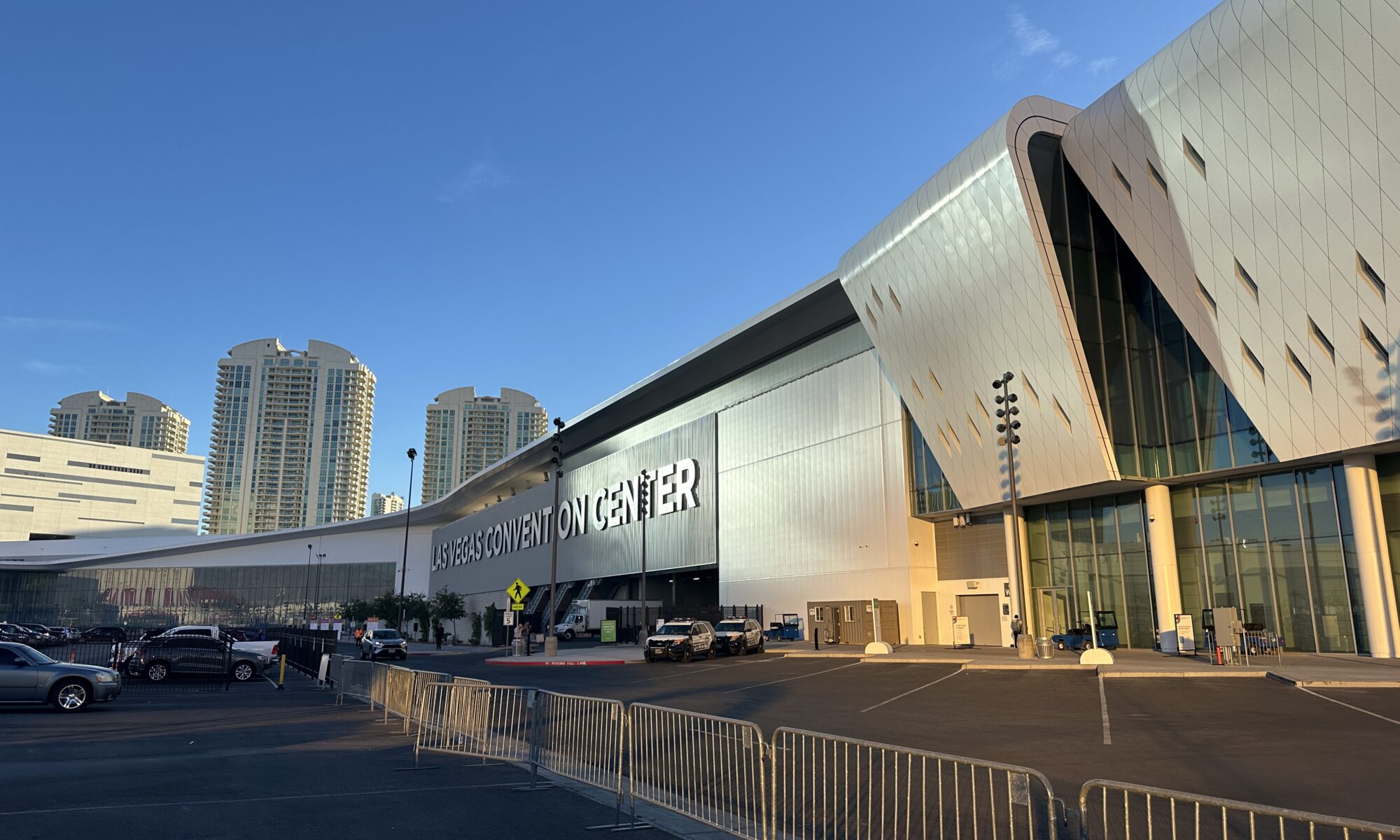
Though the week will tell if this bears out, that sense of anticipation pervaded on the Monday before opening day of the National Business Aviation Association’s Business Aviation Convention and Exhibition 2024.
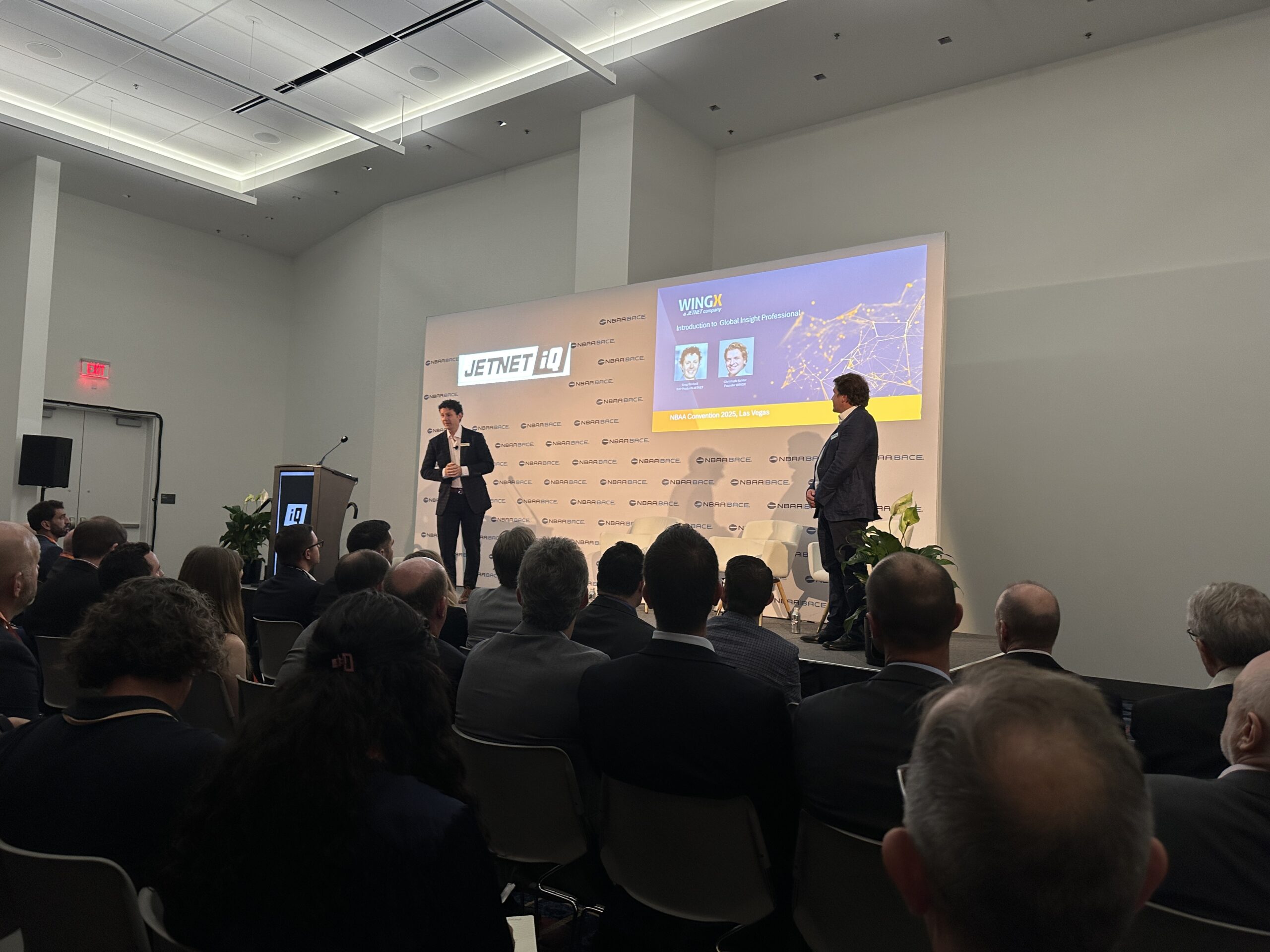
“‘I’d say uncertainty is the word right now,” said Rollie Vincent, founder of JetNet, in its annual state of the market briefing on October 21. “Whether it’s geopolitical, whether it’s political, election oriented, whether it’s ‘are we still going to like each other after a certain date on the calendar’…all these sorts of silly things, which aren’t so silly, because they create policy impacts that can drive our industry down, sideways, or in directions we don’t know.”
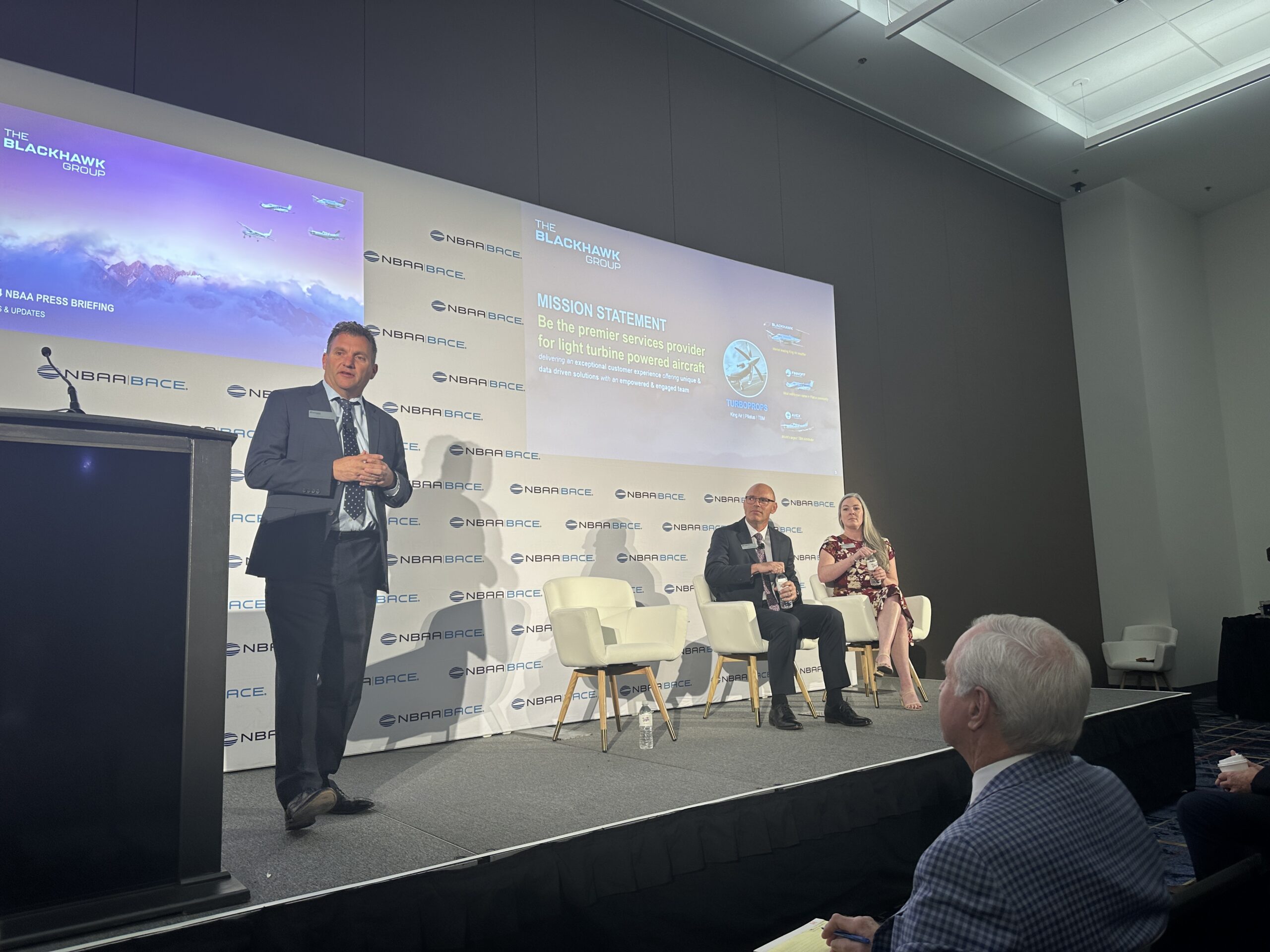
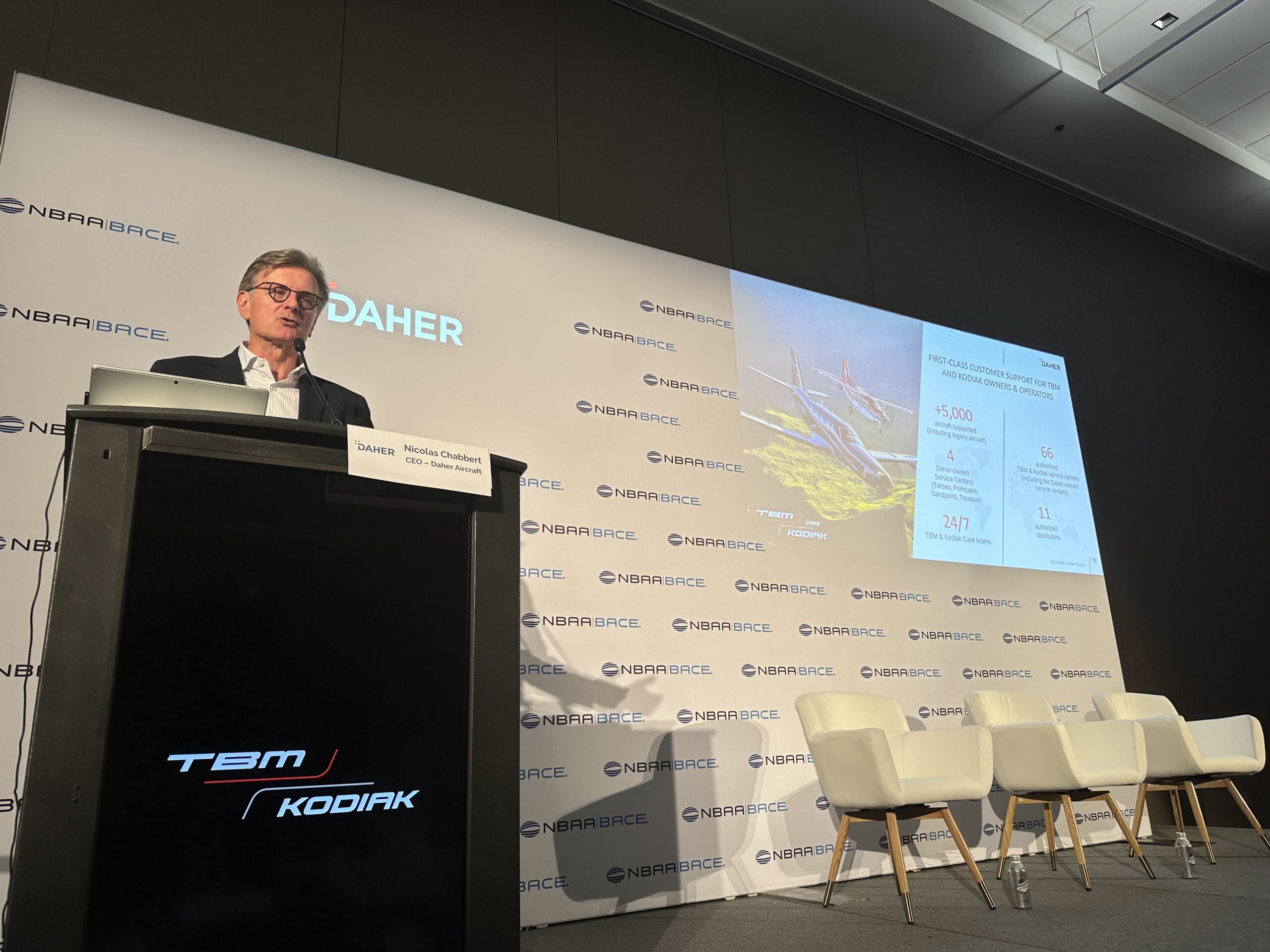
JetNet hosts the launch of WingX’s Global Insight Professional driving data into a concrete snapshot of business jet activity. [Credit: Julie Boatman]Blackhawk Group’s Chad Cundiff introduces a series of new programs that the Blackhawk/Avex/Finnoff association will bring to the market. [Credit: Julie Boatman]Nicolas Chabbert, CEO of Daher Aircraft, describes the customer service approach that has led to top scores in the segment in Professional Pilot surveys for 4 years running. [Credit: Julie Boatman]
Textron Aviation Puts Garmin G3000 Prime in CJ4 Gen3
Under the umbrella of that uncertainty, we still have innovation quietly laboring along, with tried-and-true platforms gaining from those evolutionary efforts. The news from Media Day—when the reporting pool and other associates move from press conference to luncheon to reception in hopes of gleaning stories from that access—bore out that observation.
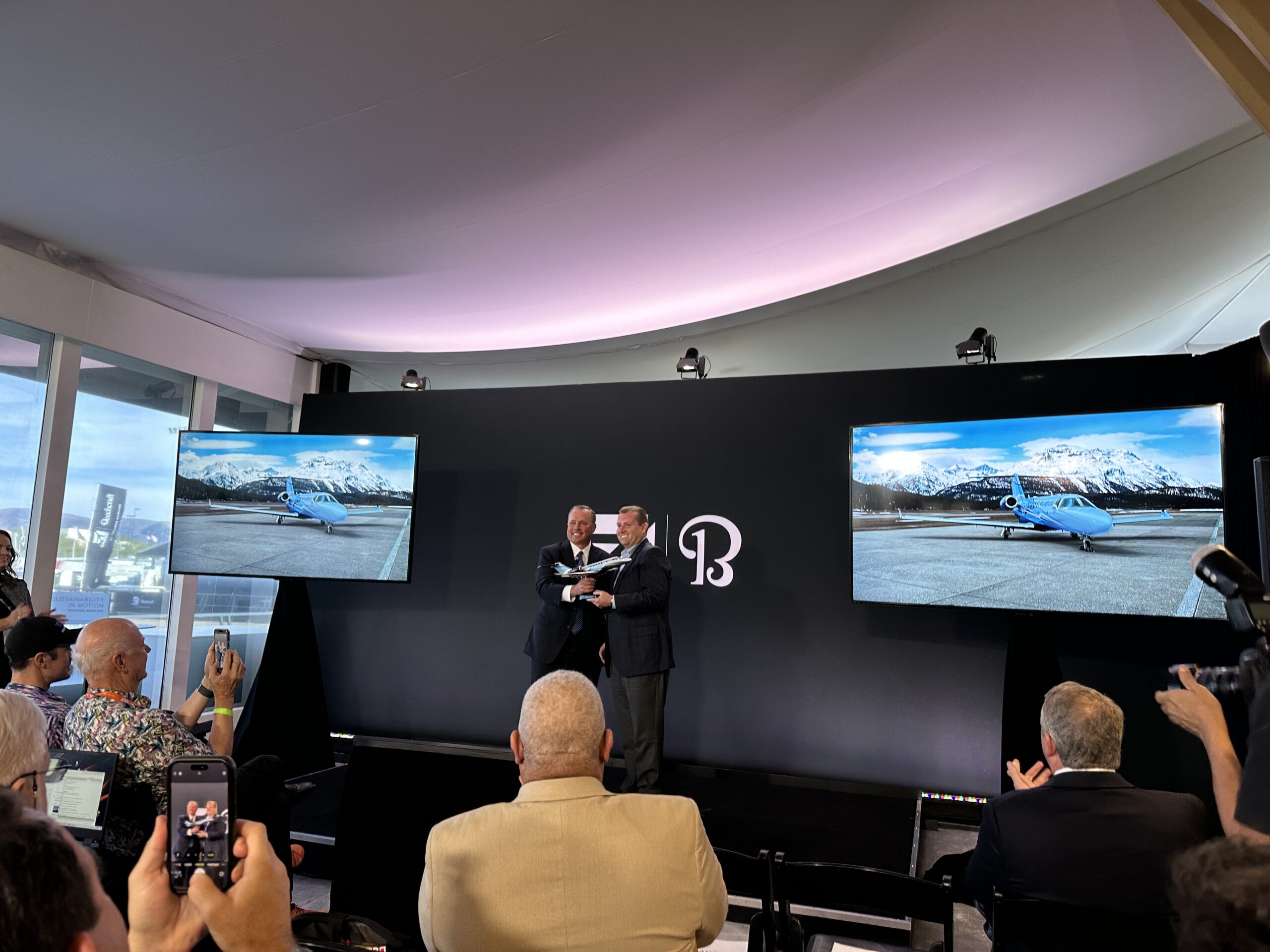
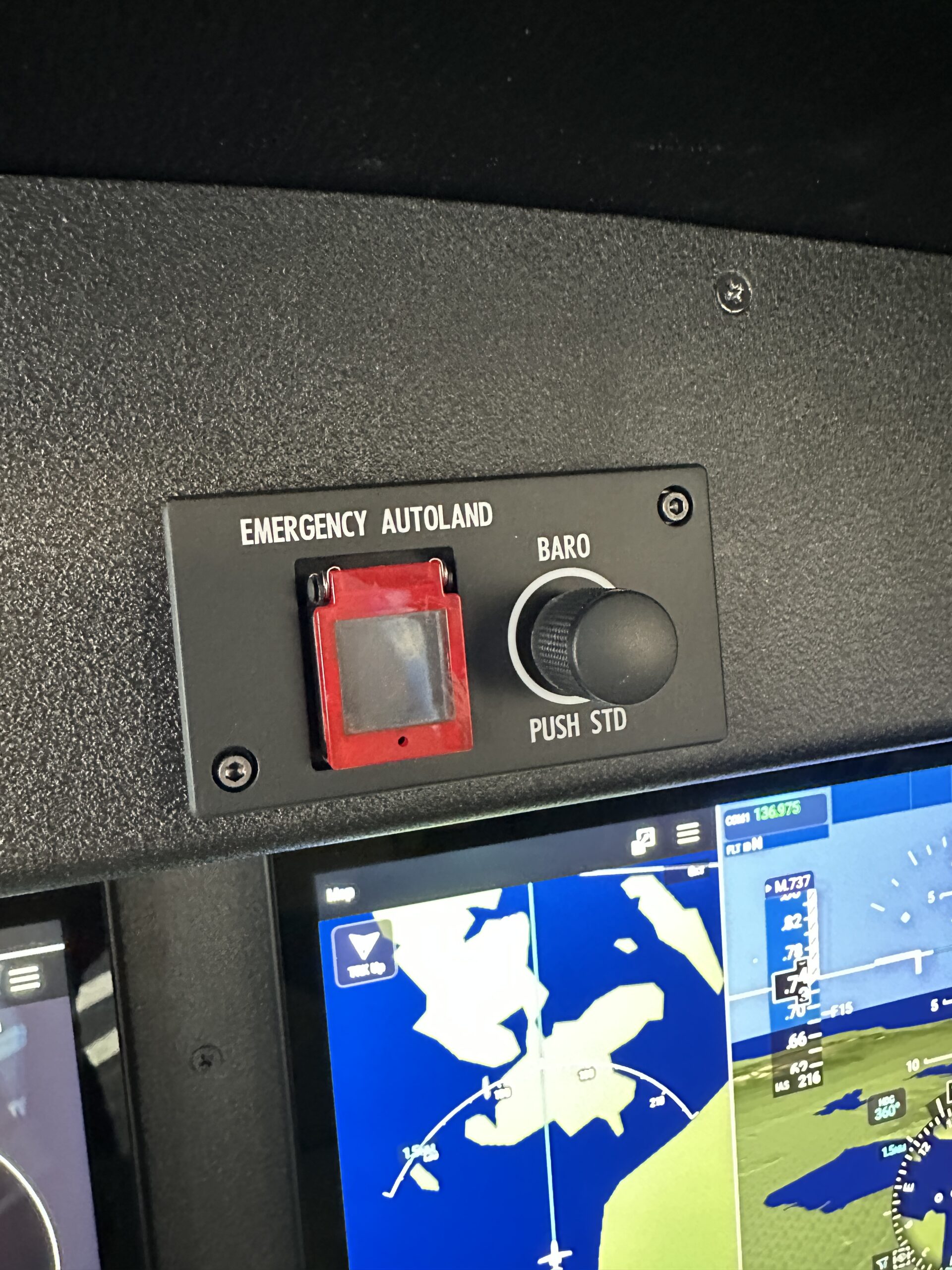
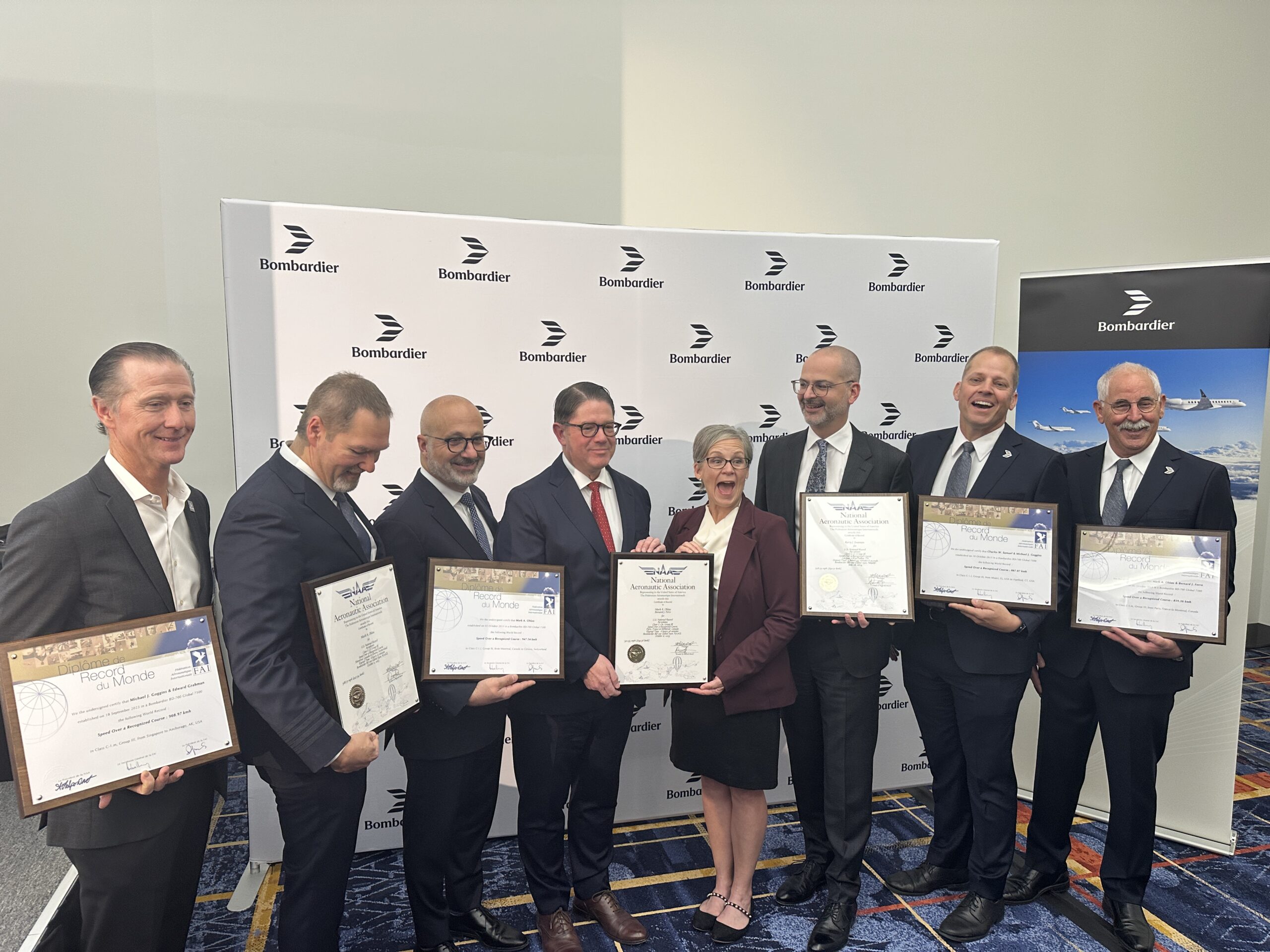
Lannie O’Bannion, SVP of Sales and Flight Ops for TextAV, presents the CJ4 Gen3 model to owner Ryan Samples. [Credit: Julie Boatman]Textron Aviation introduced the Citation CJ4 Gen3 as the launch platform for the new Garmin G3000 Prime flight deck, including Emergency Autoland, a first into the Citation line. [Credit: Julie Boatman]Bombardier’s Éric Martel (center left) and flight test team receive NAA speed records from NAA CEO Amy Spowart at NBAA-BACE. [Credit: Julie Boatman]
Textron Aviation announced the latest upgrades to its 2,600-unit fleet of Citation CJs (the 525 series), with the CJ4 Gen3 as launch platform for Garmin’s G3000 Prime all-touch flight deck, complete with emergency Autoland.
Blackhawk Aerospace Group walked through its turboprop-forward portfolio, including enticing ways to improve the very proven King Air 350, Pilatus PC-12, and TBM 700 series, each with a higher-horsepower flavor of the also-proven Pratt & Whitney PT6A.
Bombardier celebrated its NAA speed-record-setting Global 7500, and the progress on the evolution to the “faster, further, smoother” Global 8000, which has topped Mach 1 in flight test. When certified, the 8000 upgrades can be applied to 7500s in the field—keeping that order book solid for sure.
Daher noted the EASA approval of the 5-blade Hartzell prop on the Kodiak 100, as well as its implementation on float-equipped aircraft. The lower rpm (2,000) of the new prop reduces the noise footprint enough (~6.6dBa) to meet European flyover standards.
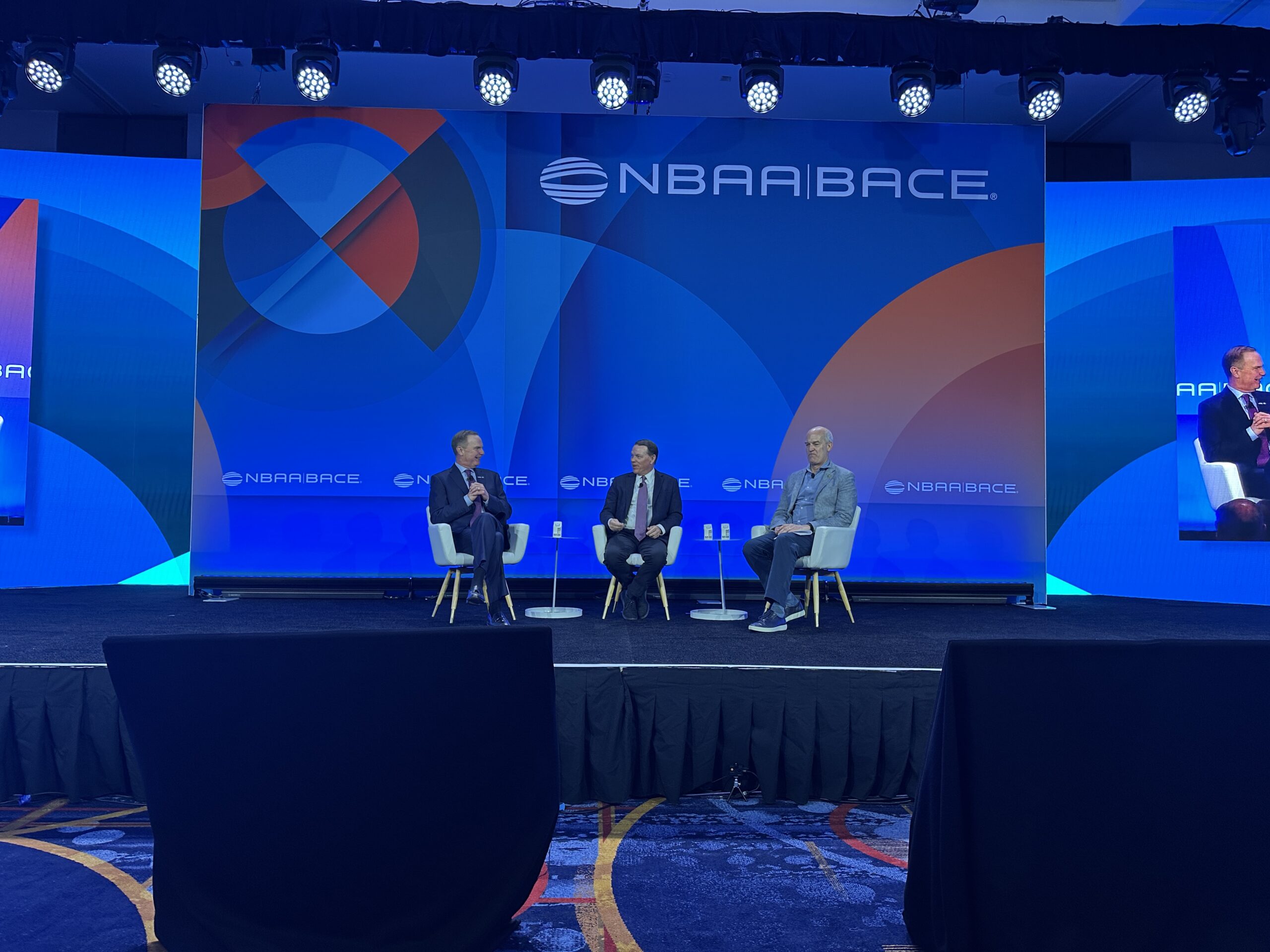
In the Newsmakers luncheon, NBAA president and CEO Ed Bolen brings together partners from across the aisle, Sam Graves and Rick Larsen to celebrate the passage of the FAA Reauthorization Bill. [Credit: Julie Boatman]
FAA Reauthorization Celebrated Too
At the Newsmakers Lunch, NBAA president and CEO Ed Bolen hosted congressmen Sam Graves (R-Mo.) and Rick Larsen (D-Wash.), partners on the Transportation and Infrastructure Subcommittee as chair and ranking member, in a recap of the FAA Authorization Bill and all of the wins tucked inside of it. There should be no uncertainty here… the bill passed with very little opposition. “I feel strong that we have the basis, regardless of which administration is the place, to say we’re very clear about what we want to get done,” said Larsen. “And so, it’s a matter of implementation. It’s not a matter of ‘do you want to do it or not do it?’ You do it—we made that clear.”
And while we’re waiting for the door to crack open on bigger news this week at the show, at least we have that message in place regardless of the election’s outcome next month. And maybe there is more to each of these nuggets of progress to discover—we’ll be diving into each one more deeply in the coming weeks.
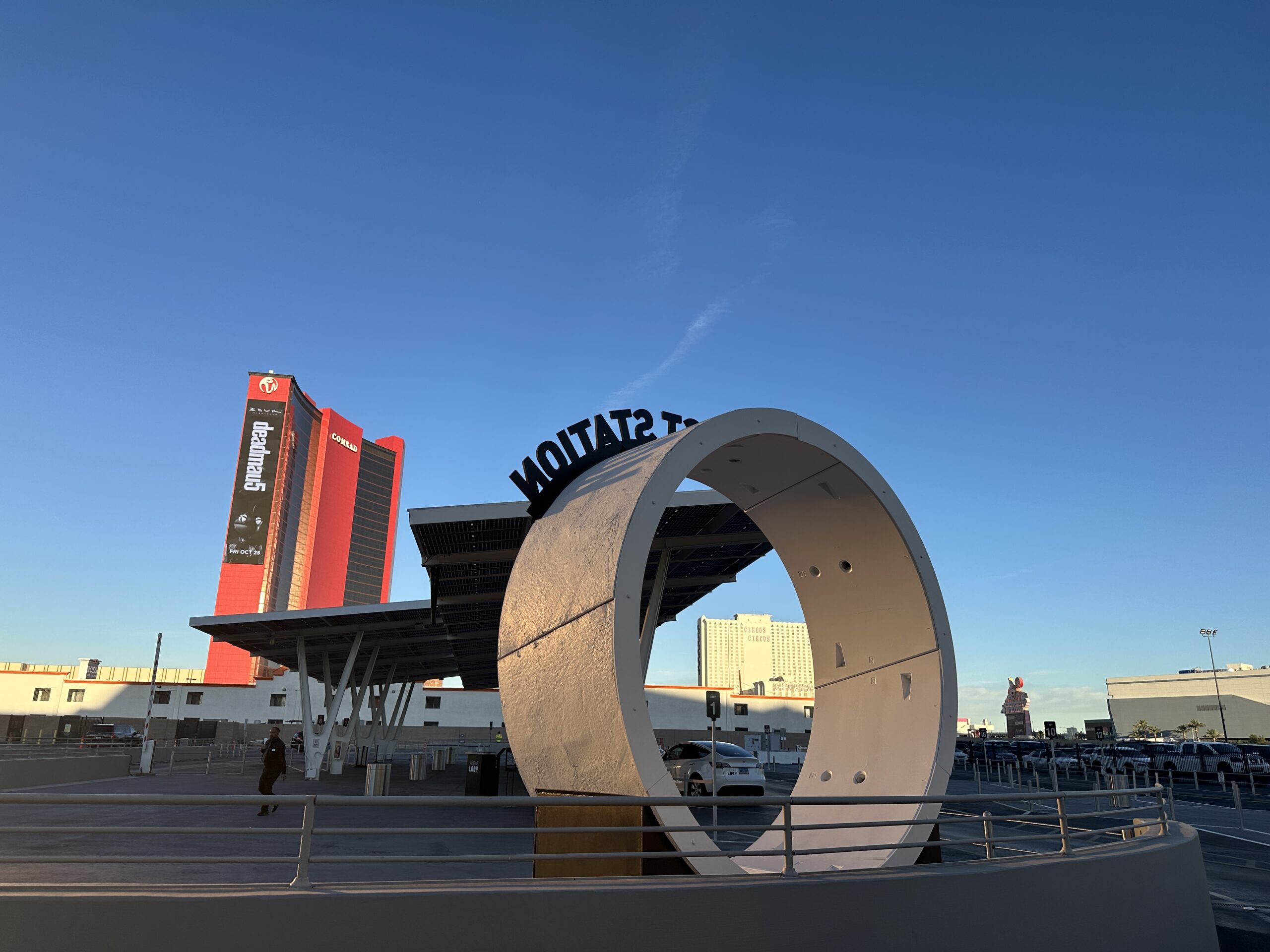
A quiet space can be found in Vegas. [Credit: Julie Boatman]