Trying to re-vision a massive event like NBAA’s BACE—the association’s largest annual gathering—takes time as well as overcoming a lot of inertia, both institutional and across the industry.
With a long-term agreement signed with the Las Vegas Convention Center, NBAA is constricted in its ability to revamp the conference, but it made valiant efforts to do so this year, and try to bring value to the members of the association and the companies and customers they serve.
The Gulfstream team brought the G400, G800, and the cabin mockup of the G300 to the show at NBAA-BACE. [Credit: Julie Boatman]
I found the most value in the meetings, the networking, and the chance conversations that only bringing together a lot of disparate folks in person can do. And that’s really why bizav exists, really, that gathering people together, face to face.
At one point on the exhibit hall floor, I was in a gathering of random friends I knew from no less than 3 prior corporate engagements. No one can plan that kind of synergy.
The sleek black Epic E1000 GX poises on the ramp at NBAA-BACE. [Credit: Julie Boatman]The Citation Ascend on the display at Textron Aviation, greeting the morning sun. [Credit: Julie Boatman]Bombardier brought several of its Global and Challenger fleet to the static display at NBAA-BACE 2025. [Credit: Julie Boatman]
By necessity, the exhibit hall floor was smaller, less full, as well as the static display, with fewer aircraft overall (and a wind/duststorm on Tuesday that drove people away from KHND). But there were some big players there (Gulfstream, Bombardier) as well as new entrants (Epic in a sleek, super-black E1000 GX). In fact, black was a bit of a theme, with Daher’s Kodiak 100 showing up in stealth colors as well.
The flight deck of the Citation Ascend shows the layout of the significant upgrade to the XLS line. [Credit: Julie Boatman]The center power console on the Citation Ascend features two touchscreen controllers as well as the power levers. [Credit: Julie Boatman]
The new Citation Ascend from Textron Aviation made the scene too, and its upgrade from the XLS (though it shares the same type rating, as I was assured) looks pretty spiffy. I can’t wait to fly it. Someday. Maybe I’ll get a chance to do some other Citation flying when the next Special Olympics Airlift comes around—in June 2026, into Minneapolis-St. Paul. It will be my fifth SOA if I can make it happen.
Can you even see the Daher Kodiak multimission aircraft? It is so black. [Credit: Julie Boatman]The stealthy black Cirrus Vision Jet graces the ramp at the NBAA-BACE static display. [Credit: Julie Boatman]
In talking with colleagues from around the bizav space following the show, there was good energy—the dynamic duo of Dierks Bentley and Steuart Walton at the keynote was a high point. I wonder how many downloads/streams of “Drunk on a Plane” or “Riser” happened from that GPS location on the Strip immediately following the keynote… I admit I claim both of them.
All in all, this was still a show not to miss. I found a lot of value in networking and will come away with new business and strengthened relationships across the board.
But the slimmed-down versions of most exhibitors seemed to serve them well too. Your thoughts?
A pair of Falcons perches on the ramp at the NBAA-BACE static display. [Credit: Julie Boatman]
The unofficial kickoff for theannual BACE in Vegas included reflections from all corners of the business aviation industry in a quest to make sense of a challenging, changeable time.
For those of us coming in from the East Coast, or Europe, the sun doesn’t rise quickly enough in Las Vegas. As usual, I woke up, sans alarm, at 4:57 am, ready to roll. Fueled by Tacos El Gordo from the night before, the action began at 7:30 am and did not conclude until I walked “home” from the Honeywell media event at the Las Vegas Country Club (very old school Vegas in a mid-century modern clubhouse) at 8:30 pm. Whew.
Éric Martel, president of Bombardier, announced the goal of a Mach 0.95 certification MMO for the Global 8000. [Credit: Julie Boatman]
Big—and Fast—Jets
We covered Gulfstream’s G300 launch in late September in Savannah. The greater story lies in the rationalization of their product line that has occurred under the leadership of Mark Burns and team. I’m hoping to talk later at BACE with chief of engineering flight test, pilot Scott Evans, out at the static display where the G400 test article, G800 production model, and G300 cabin mockup grace the ramp.
Bombardier in a celebration fested by Cirque du Soleil gymnastiques announced its Global 8000 will aim for certification at a new top MMO of Mach 0.95. The nuances behind the number have been significant, and clearly already addressed in flight test to date, but the traverse to M1.2 during those tests opens up a slew of questions.
Rollie Vincent, CEO of JetNet IQ, remarked upon the effect that the spectre of tariffs have had on the business jet market. {Credit: Julie Boatman]WingX’s Christoph Kohler noted the headwinds and tailwinds found in the market ahead for business aircraft. [Credit: Julie Boatman]
The Market
At the Newsmaker’s Luncheon—during which The Air Current’s Elan Head deservedly secured NBAA’s Gold Wing Award for business aviation reporting—the mood in the room smacked of cautious optimism (that has been a theme for a while), with the collective sentiment captured in two keynote speeches referencing the current political situation in the U.S. as well as the leadership panel convened following lunch.
Those two keynotes formed an interesting parallel. Nick Daniels, president of the National Air Traffic Controllers Association, gave an impassioned plea for Congress to work towards the same kind of bipartisan solution to resolve the shutdown as the one that had led to the FAA reauthorization bill of last year, and which was discussed by Rep. Sam Graves in his remarks just prior to Daniels’. We can all hope, but hope is not a strategy.
Elan Head, of The Air Current, accepts the NBAA Gold Wing Award at the Newsmakers’ Luncheon. [Credit: Julie Boatman]The leadership panel at the Newsmakers’ Luncheon on Monday at NBAA BACE 2025 featured CEOs from aircraft OEMs and fractional operators. [Credit: Julie Boatman]
The uncertainty generated by global economic and geo-political forces underpins each of the market reports presented to the media on Monday, both by Rollie Vincent (JetNet IQ) and Christoph Kohler (WingX/JetNet) and by the Honeywell team, led by strategic planning manager Kevin Schwab. While the demand for business jets continues to rise—with 8,500 (Honeywell) or 9,700 (JetNet) new jets predicted to deliver over the next decade, forces from tariffs, to regulatory/shutdown headwinds, to black swan events on the geo-political scene are keeping everyone on pins and needles about the tenacity of that demand.
Leveling things out a bit, Michael Amalfitano, president and CEO of Embraer Executive Jets (and wearer of the purple socks, always spot on in style) noted the significant impact that large fleet sales have on their business. “What you have in terms of stability of strategic partners like FlexJet…is a great testimony to being able to find efficiencies in your production line, look for solutions that are going to bring more volume to that sector, and recognize that they’re a sales group in the sky.” However, Ron Draper, CEO of Textron Aviation, offered a balancing note–and one grounded in the company’s experience during the recession of 2008: “Fleet customers can change as the economy goes up and down. And so we like a mix of retail and fleet orders, and that’s what our backlog represents today.”
Kevin Schwab, Honeywell, presents the company’s market forecast at an event at the Las Vegas Country Club on Monday evening.Nicolas Chabbert of Daher highlighted the multimission capabilities of the Kodiak turboprops with a video showing a surveillance action in Las Vegas. [Credit: Julie Boatman]
Brazil, Multimission in Focus
In several press conferences, the growth recently seen in Latin America has led to a greater focus on that market by OEMs seeking to capitalize on economic opportunity there, particularly in Brazil, where light jets and turboprops find great application in connecting remote areas of the country to its population centers. As an example, Daher opened its Brazilian office this summer and has now appointed its leadership team on site: Paulo Cesar Olenscki assumes the role of Executive Director for the operation in São Paulo, along with Rodrigo Cendon as the Customer Relations Director.
Also noted by Daher Aircraft CEO Nicolas Chabbert, the Tagine R&D project continues to roll along under funding by the French government. “This program is underway and is delivering papers and a cabinet full of ideas on the innovation side,” said Chabbert. “We took the Kodiak as a good bench to provide the mix between what could be advertised and what solutions can you do when it comes to the trade offs with the battery, and electricity. So this is the purpose of Tagine; it doesn’t necessarily end up with a product.”
In fact, the mountain of papers and data resulting from the joint exercise will be published publicly, according to Chabbert, so the company will determine following that report out if it will put into application the learnings gleaned from it. The problem presented by slow progress on improving energy density in the batteries currently available remains—capacity is roughly 50 percent of what it should be, he noted. And with collaboration on the FAA side that has come to a standstill during the current government shutdown, Chabbert would only remark that Daher’s progress on certification programs in process have paused.
Partnerships
Hartzell Propeller and The Blackhawk Group also announced their partnership ahead of BACE this fall. The plan is to leverage the service and support capabilities of both entities and expand their footprint in North America and Europe. Hartzell will supply its Top Props to Blackhawk for use on its upgrades and aircraft overhaul programs, and provide maintenance and overhaul facilities via its eight service centers.
We look forward to more time in the exhibit hall and at the static display on the official Day One of NBAA on Tuesday…more aircraft pics to come, along with fun times celebrating aviation with friends and colleagues.
True to form, Gulfstream’s team had an ace up their sleeve ready to lay on the table at their Discover the Difference customer event strategically positioned on September 30, two weeks before NBAA-BACE 2025.
During the opening remarks kicking off the event, Gulfstream Aerospace President Mark Burns unveiled the latest model in the Savannah-based OEM’s new line of business jets: the G300. A super midsize jet set to compete in a segment with a very deep bench, the G300 will replace the popular G280, which just celebrated its 300th delivery back in June.
Gulfstream Aerospace President Mark Burns answered questions following the announcement of the G300. [Credit: Julie Boatman]The G300 mockup shows off the two living areas inside, and how they might be configured. [Credit: Julie Boatman]
I was happy I’d made the trip down to Georgia once again, if only for a quick peek at the silvery new mockup and a whirlwind tour of the new Service Center East—with 367,000 square feet accommodating up to 26 aircraft—and an eagle-eye view of the G500/G600 production lines.
The visit gave me the chance to reflect on my previous two, in which I’d been introduced to the G700, G800, and G400, and witnessed the first of the G500s and G600s on that same line.
Gulfstream has achieved under Burns’ watch over the past decade a rationalization of its high-end product, the luxury form of transportation that has entered the cultural lexicon. What started with the turboprop Gulfstream I back in 1958 hit its stride with the Gulfstream GIV and V in 1987 and 1998, respectively. The G650 has logged more than 1 million flight hours with roughly 560 in service.
But Gulfstream has its replacements ready in its long-range, large cabin models. The show must go on. And that’s a good thing, from a pilot’s perspective. Not just because we love to fly something new, always.
The Gulfstream G300 mockup unveiled on September 30 showed off the new Harmony flight deck. [Credit: Julie Boatman]Gulfstream revealed the G300 mockup two weeks before it would go on display at NBAA BACE in Las Vegas. [Credit: Julie Boatman]
On the Gulfstream Flight Deck
The G700 possesses the first flight deck of a large-cabin jet that made me feel—as soon as I comforted myself into the left seat—as if I could turn it on and taxi it away with little prompting.
I’ve yet to actually prove this theory, but hear me out.
Synchronicity—maybe they should have named it that rather than Symmetry, or the slimmed version on the newly announced G300, Harmony—of the flight deck underpins this feeling, and Gulfstream has taken it across the model line to demonstrate the point. From the long-legged G800 through to the soon-to-deliver G400, the Symmetry flight deck makes its trade in presenting clearly to the pilot what needs to happen next, in its context-driven Phase-of-Flight architecture.
Gulfstream continues the pilot-centric view with the digital flight control system, twin “active control” sidesticks that work together to translate the pilot flying’s desires into action—without producing unwanted confusion between the two sticks, and therefore, improving their communication to the pilot not flying should they take the controls.
Fold in the Predictive Landing Performance System, EVS and SVS, and heads-up displays, there’s a lot going on underneath the surface.
We’ll get a chance to delve more deeply into what Gulfstream has for pilots in an upcoming feature. Til then… I’m biding my time.
One month since we left the shores of the Bodensee and our friends at AERO 2025 in Friedrichshafen, and it feels like a good time for a status update. Certainly enough has transpired to keep us all entertained in the aviation world, to say the least.
First, congrats go out to the AERO gang for a phenomenal success and a show that marked tremendous growth for the organization. With more than 760 exhibitors and 32,000+ attendees, the event clearly resonated with the moment.
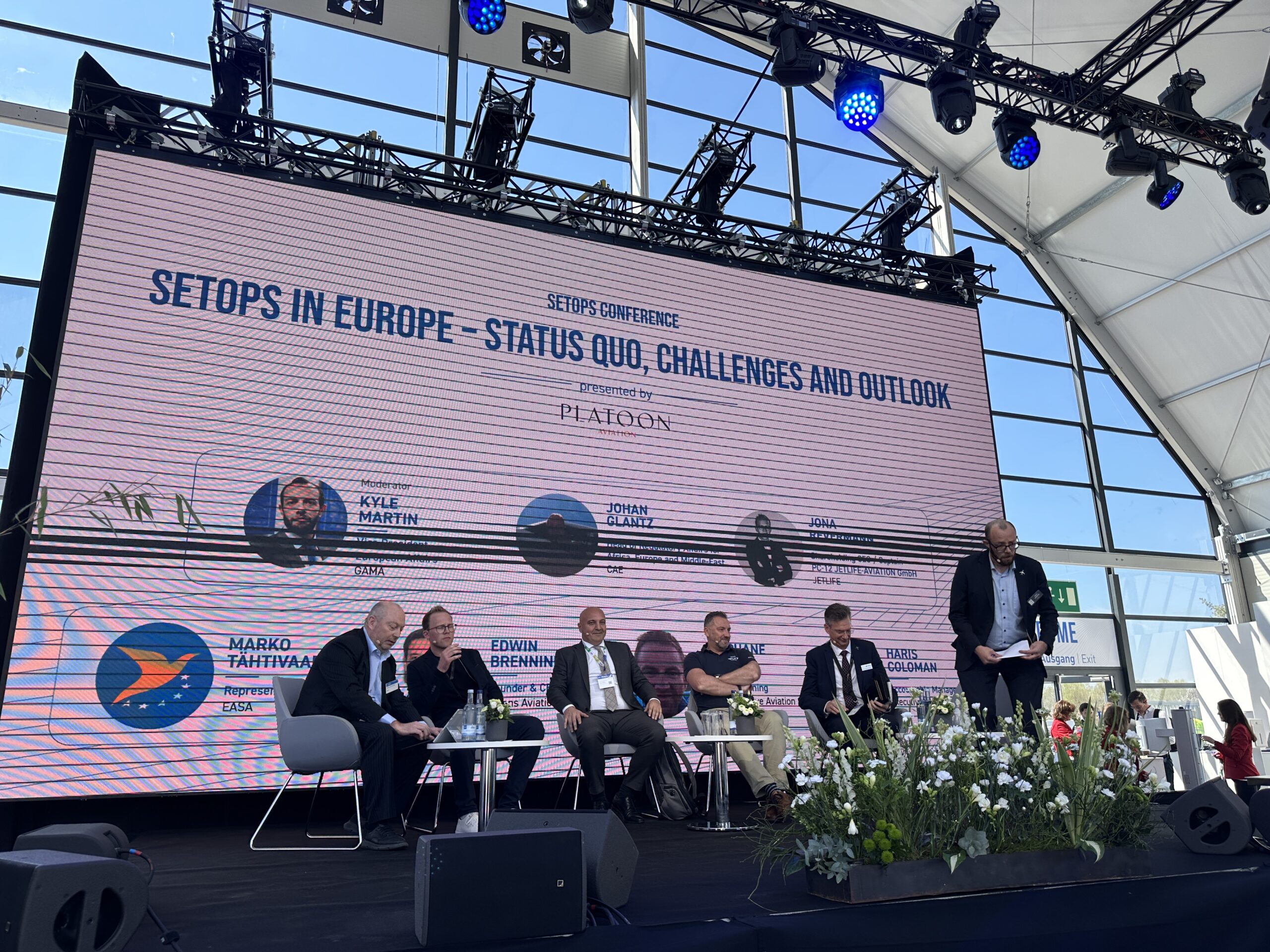
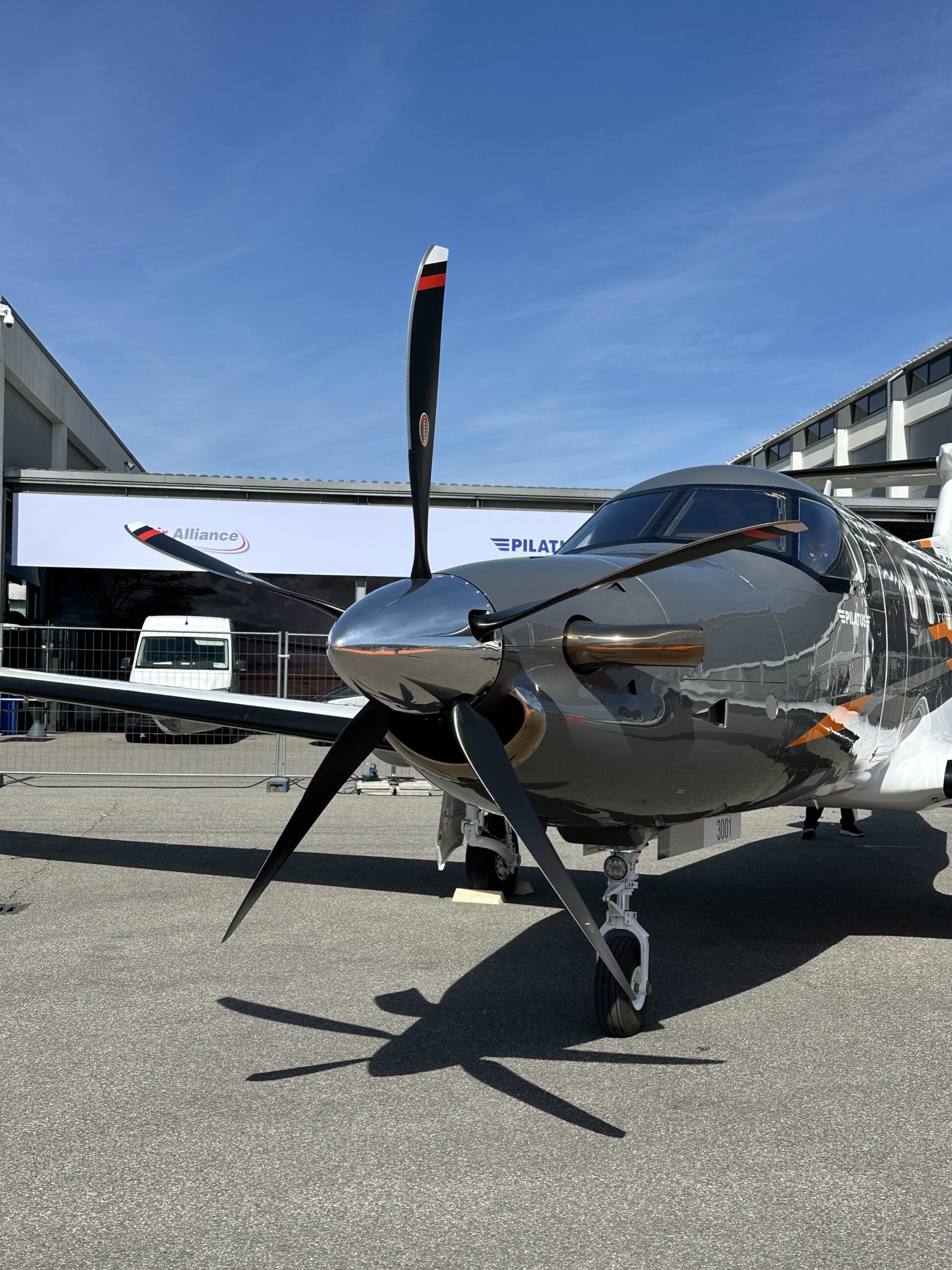
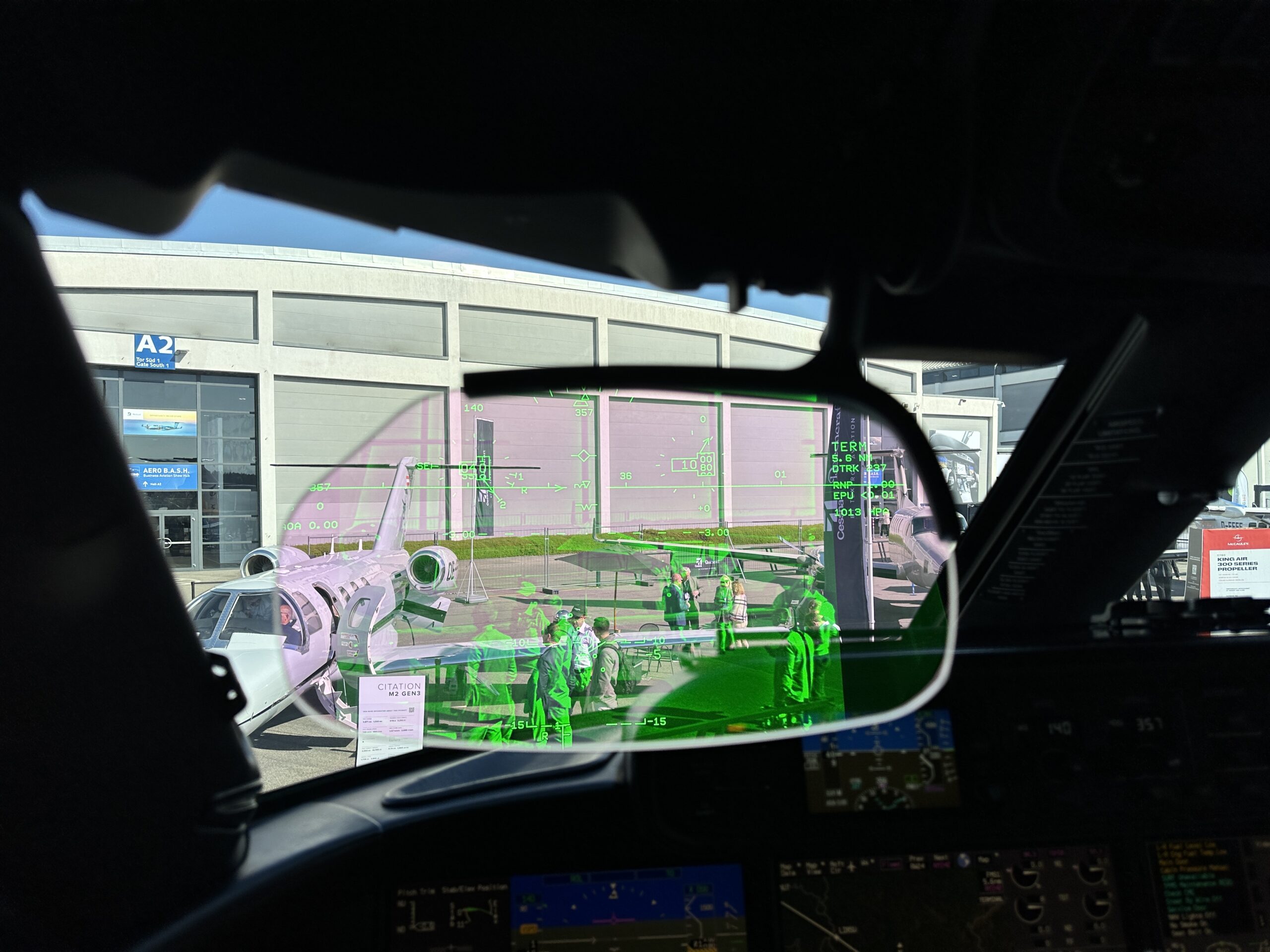
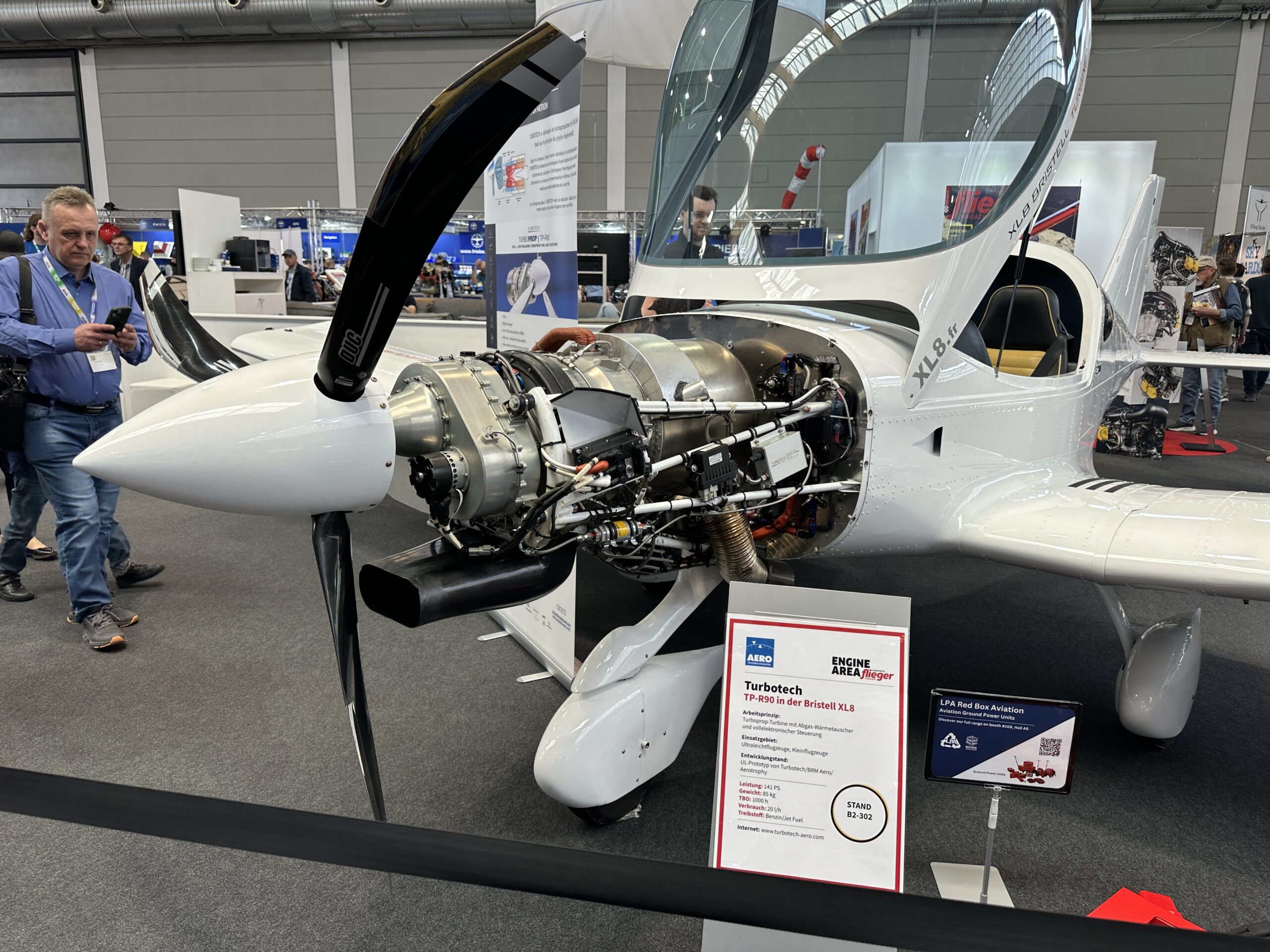
SETOps in the Business Aviation Dome at AERO 2025A cool new Pilatus PC-12 PRO at AERO 2025A HUD’s-eye view from the Gulfstream G650 at AERO 2025
You have to be prepared to meet opportunity, and Tobias Bretzel and team took advantage of the opening left by EBACE’s recasting. AERO had made significant forays into serving the business aviation world more directly in recent years, with exhibitors such as Gulfstream attending last year with an aircraft, and more significant displays from Textron Aviation, Pilatus, and charter operators.
Those continued this year with Bombardier, Dassault Aviation, and Gulfstream providing an outdoor exhibit, along with Platoon Aviation’s sponsorship of what I’m calling the Big BizAv Tent (it went by the official name “Business Aviation Dome”). The venue provided space for various small exhibits, along with a café of sorts and a coffee/wine bar, along with a stage for forums, several of which I attended. This was perhaps the only off note; those hosted in the afternoon in particular suffered from too much sunlight in the wrong place, and strange cube-like seats that weren’t well suited for attendees needing to balance a notebook or device. Minor details, though.
The topics covered throughout the show were on target, however, including the next in the series on Single-engine Turboprop Operations (SETOps), and industry and technology updates. I admit I have been so distracted following the ongoing tariffs saga that I have yet to complete my analysis of the current state of SETOps, which honestly feels like it’s in a bit of a holding pattern while everyone figures out where the industry will land, tax- and delivery-wise!
New sources of power at AERO 2025New sources of stress for aviation OEMs
Which brings me to the current state of affairs. Time to look back at the questions I posed in February, on the following topics:
Tariffs by the U.S. and retaliatory answers from Canada, Mexico, China
The charge to slash U.S. government regulations and only replace them at a 10:1 ratio
Egregious use tax implementation in Europe, targeting business aviation
Deeply cutting personnel reductions at key agencies, including FAA, DoT, and Department of Commerce
Privatization of the National Airspace System in the U.S.
On tariffs. Well, the good news, I suppose, is that the U.S. has apparently walked back from the outrageously steep 145% tariffs applied to many goods from China, down to 30%. And there’s a 90-day pause on many of the remainder, including goods from the EU, Mexico, and Canada. However, the chaotic nature of their application and the resulting retaliation means companies are still having a tough time planning for the future. A 90-day crystal ball just isn’t enough. I think of one good friend who has a publishing company, and he’s in limbo trying to figure out where to have books printed these days. The last container with a pallet of their merchandise on board left China back in mid April. Knowing what tariffs will apply remains a guessing game.
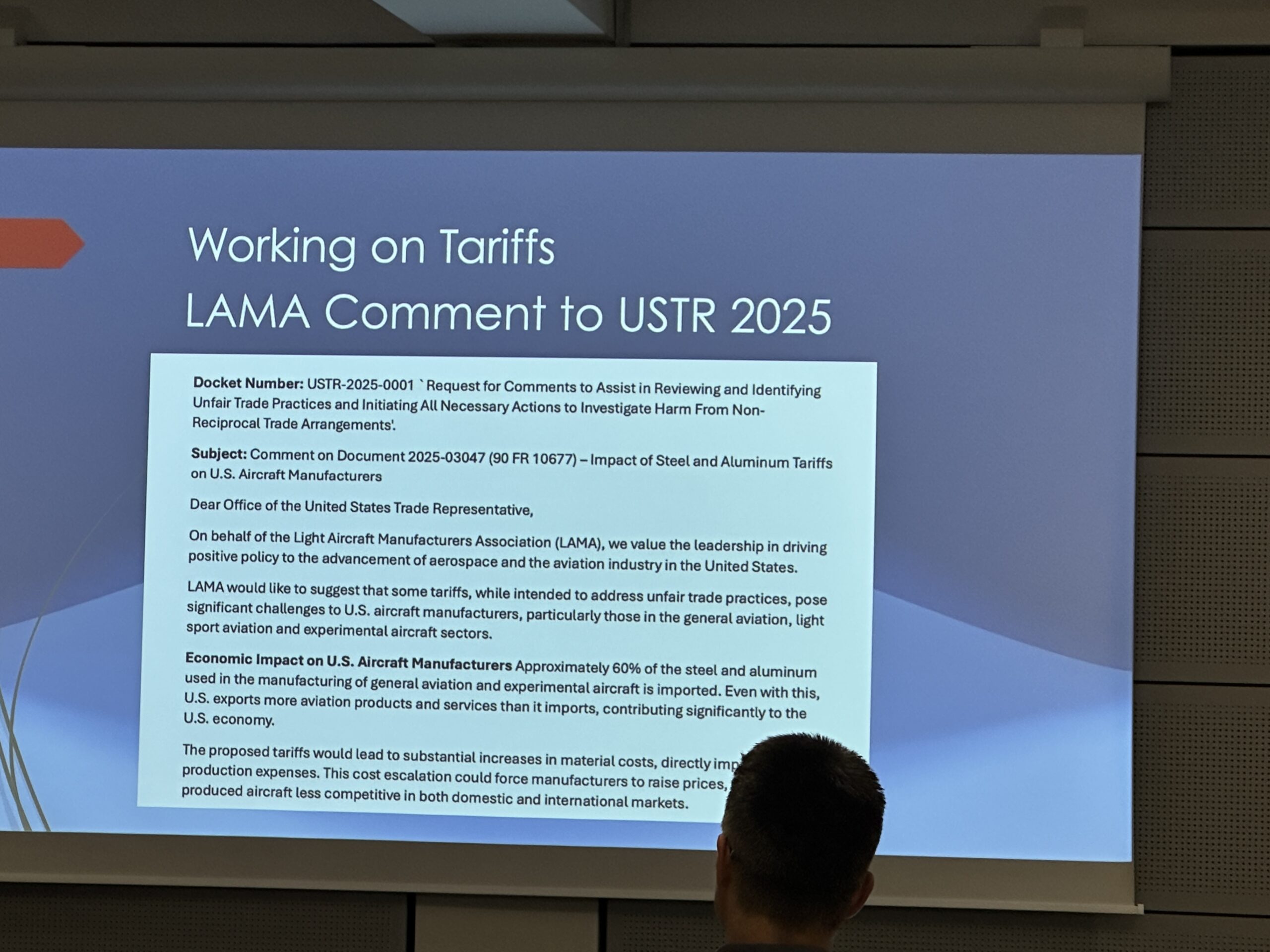
On regulations. We’ve seen more cuts in terms of personnel across government departments than the regs themselves, including at the FAA, and that pain lingers. At the same time, specific regulatory initiatives such as MOSAIC appear to be moving forward, with a final rule to be released late this summer, according to an update from the Light Aircraft Manufacturers Association at AERO.
On EU taxes. France went ahead with its tax on commercial flights, which includes business aviation, to the tune of “420 euros for a passenger on a business jet flying to a destination within the EU or European Economic Area to 2,100 euros per passenger flying to a destination more than 5,500 km away,” according to NBAA. Passenger fees for turboprop aircraft are roughly half the jet rates, which makes the SETOps mission all the more critical for operators to leverage if the capacity fits.
On personnel. I know folks personally who have seen their federal jobs cut, in what appears to be an arbitrary fashion. At the same time, the news this week has featured the lack of necessary staffing in operations including air traffic control, with Newark headlining the worst of the news.
On privatization. So, would a private entity do a better job addressing both the problems of National Airspace System modernization and personnel reductions and shortfalls? A broad coalition of aviation associations endorsed the recent plan announced by Secretary of Transportation Sean Duffy. Nowhere in the points outlined by Duffy over the course of the 3 to 4 year effort does the plan *appear* to include the broad stroke of privatization. We know we need an overhaul of the system…and if there’s political will to get it accomplished, I’m all for that. But this administration’s overarching theme has been to privatize across the U.S. government, so I cannot believe that won’t be the case here.
And it’s frankly too soon to tell, especially given the past 100+ days of 2025.