The TBM 980 Captures a New Era

A Daher TBM 980 single-engine turboprop airplane in flight over the mountains in southern France, with a charcoal grey top and white base with flash orange accents.

With the snow capping the Pyrenées to the south, my last visit to Tarbes took place on a chilly day in November 2021. I was meeting up with Margrit Waltz, who readied a new TBM 940 for its ferry flight across the ocean.

At the time, I didn’t realize that the next TBM had already moved onto the production line, the serial number (SN) that would become the first TBM 960. That model debuted in April 2022, and I had a chance to fly it from Sun ‘n Fun Aerospace Expo down to Daher’s then HQ in south Florida, at KPMP, Pompano Beach.

Now, nearly four years later, Daher debuts its latest, the TBM 980, and what looks like a similar aircraft has changed significantly under its gorgeous skin.

Similiarly, Daher may look like the same company if you just glance at the buildings collected on the ramp at LFBT, but so much has changed. The company has three locations now in Florida—at KSUA where the TBM will soon be built on a new line, and at KFLL where the new U.S. headquarters is located. And the Kodiak’s home base in Sandpoint, Idaho, now churns out Kodial 900s as well as the 100 Series III.

And…just in time to kickoff 2026, the TBM 980 takes the stage.

The sixth 900-series turboprop launched by Daher since it took possession of the aircraft model line in 2014, the TBM 980 integrates the Garmin G3000 PRIME that the avionics OEM debuted in late 2024 on the competing Pilatus PC-12 Pro. But this is more than a makeup game. The G3000 PRIME replaces the previous G3000 with three 14-inch touchscreens and app-based functionality to evolve the flight deck experience to match what most pilots carry in their pockets.

The first integrated flight deck into the TBM series took off when Garmin and then-SOCATA signed the contract to put the G1000 into the TBM 850 at NBAA 2005. It was the beginning of the end of “federated” avionics—the separate boxes that worked in concert that we used to know so well.

Twenty years and 1,000 TBMs later, the flight deck now integrates into the pilot’s life. “When you pick up an iPad, you don’t read a manual, you pick it up and use it intuitively,” said Nicolas Chabbert, Daher Aircraft CEO, at a livestream event on Thursday, January 15, in the evening from Daher’s main hangar in Tarbes. The PRIME drives closer to that mark than any flight deck thus far.

The presets are contextual, allowing for the phase of flight to drive them. And that’s just the beginning. There’s a joystick to aid in selection, rather than a button for scrolling, and the ability to check in on the airplane remotely via Garmin PlaneSync.

Guillaume Remigi, test pilot, said at the event that the biggest surprise he discovered during flight test was how much he appreciated the touchscreens. Rather than being a novelty, they became natural and intuitive, he found.

Another operational improvement sure to be well-received by pilots is the ability to operate without adding Prist to the fuel. The Prist-free option had to be validated in hot and humid weather conditions, so the test pilots related during the livestream how they flew to Agadir, Morocco, leaving the aircraft outside overnight, experiencing temperatures ranging from +40C to -50C in the desert, and up to 90 percent humidity on the coast.

An enhanced interior features a new passenger display through which the folks in the back can see flight data… Chabbert likened it to Concorde, though perhaps not into the Mach numbers!

The new TBM will be Starlink Mini-capable, and to preview this, Daher’s Michel Adam de Villiers and longtime TBM pilot and superfan Dr. Ian Fries called in during the event from in-flight over Florida. Fries is the first publicly announced customer to purchase the TBM 980, which will be SN 1634, ready in March—Number 6 for Dr. Fries. That said, SN 1627 and SN 1628 are already poised to depart for their first customers.

Frankly, I can’t wait to get my hands on the new yoke—and on the touchscreens—either.

Advanced Materials: AERO 2025 Day Two

One theme to my recent reporting and media support in the personal aviation industry has focused on the advanced materials from which the latest aircraft are composed. Composite airframes have matured over the past 20 years—no more overbuilt Beech Starships; now we have more than 10,000 Cirrus SR series singles delivered. But beyond the “skin” lie applications for everything from carbon fiber to thermoplastics in game-changing ways.

Hartzell’s Composite Props

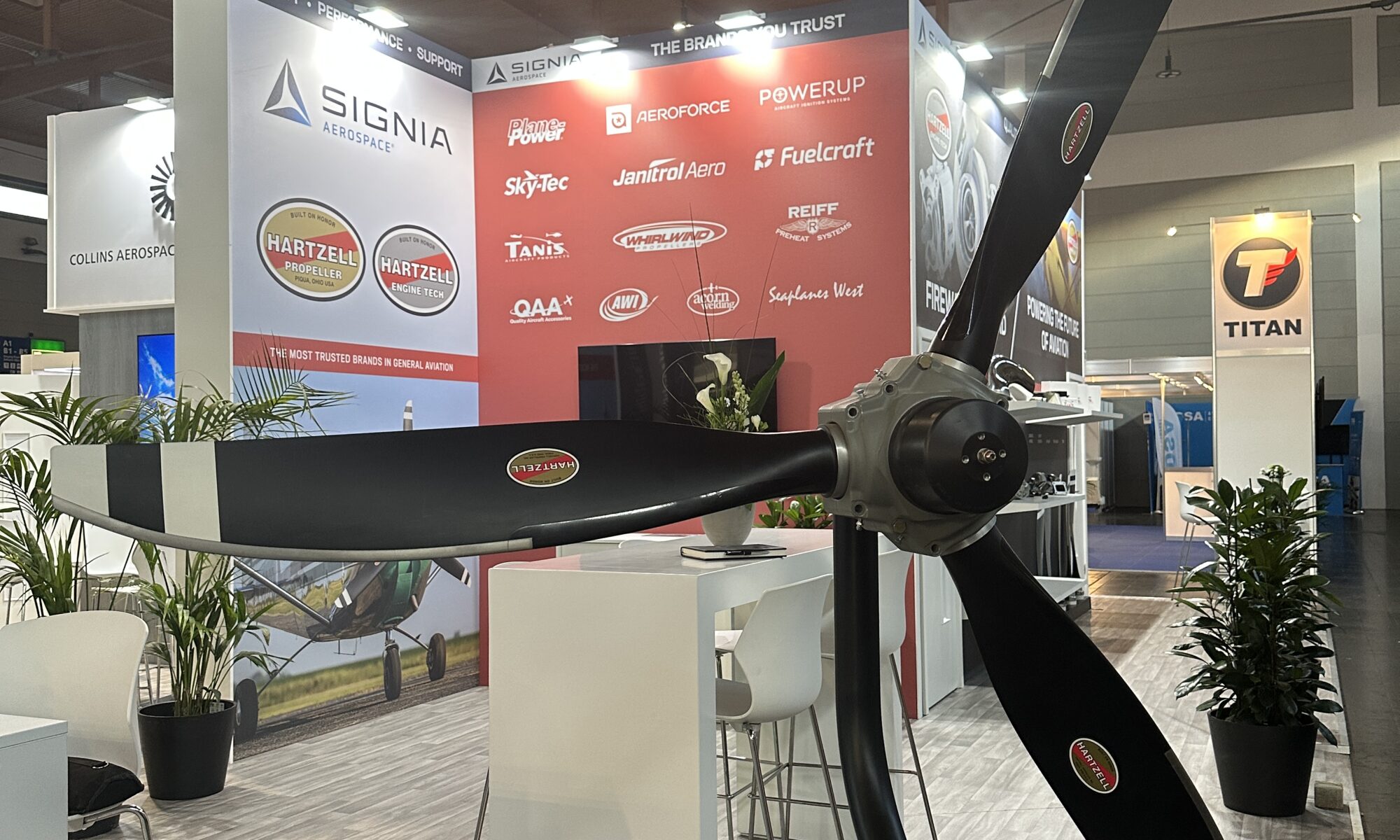
Case in point: Hartzell’s ever-expanding line of composite propellers. The first composite prop was essentially a wood core with a metal leading edge—but we’re way, way beyond that now.

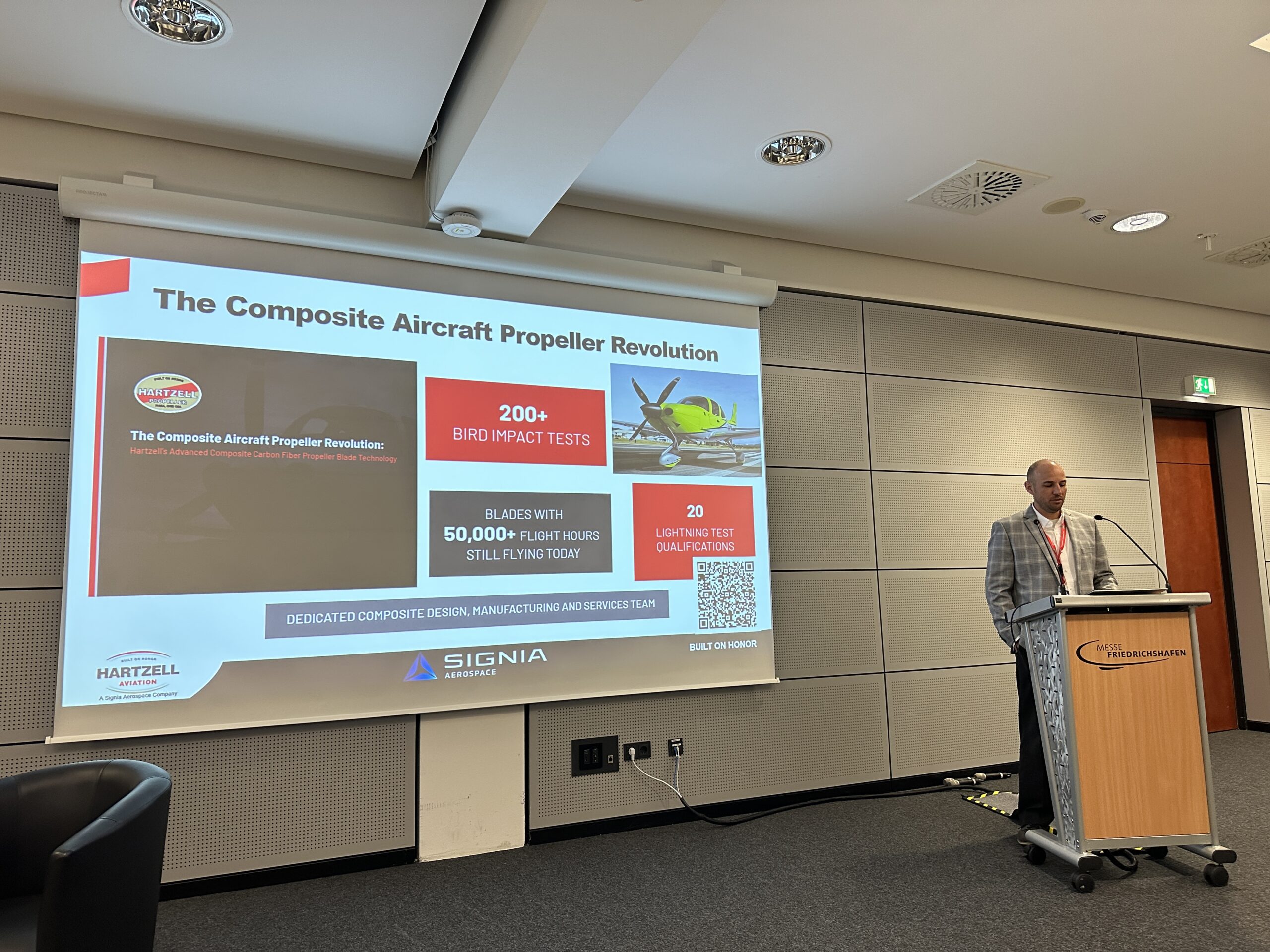
We have had the pleasure of supporting Hartzell’s media efforts at AERO this year, and it’s been very cool to have a front seat to the deep dive they have provided on just how different their new props are. Laid over a rigid urethane foam core, dozens of layers build up the body of the blade over a stainless steel shank. A nickel cobalt leading edge protects the robust blade, belying its thin profile. These stand up so well to the rigors of flight that they have essentially an unlimited life—they can be overhauled repeatedly, adding materials back up to spec rather than filing them away.

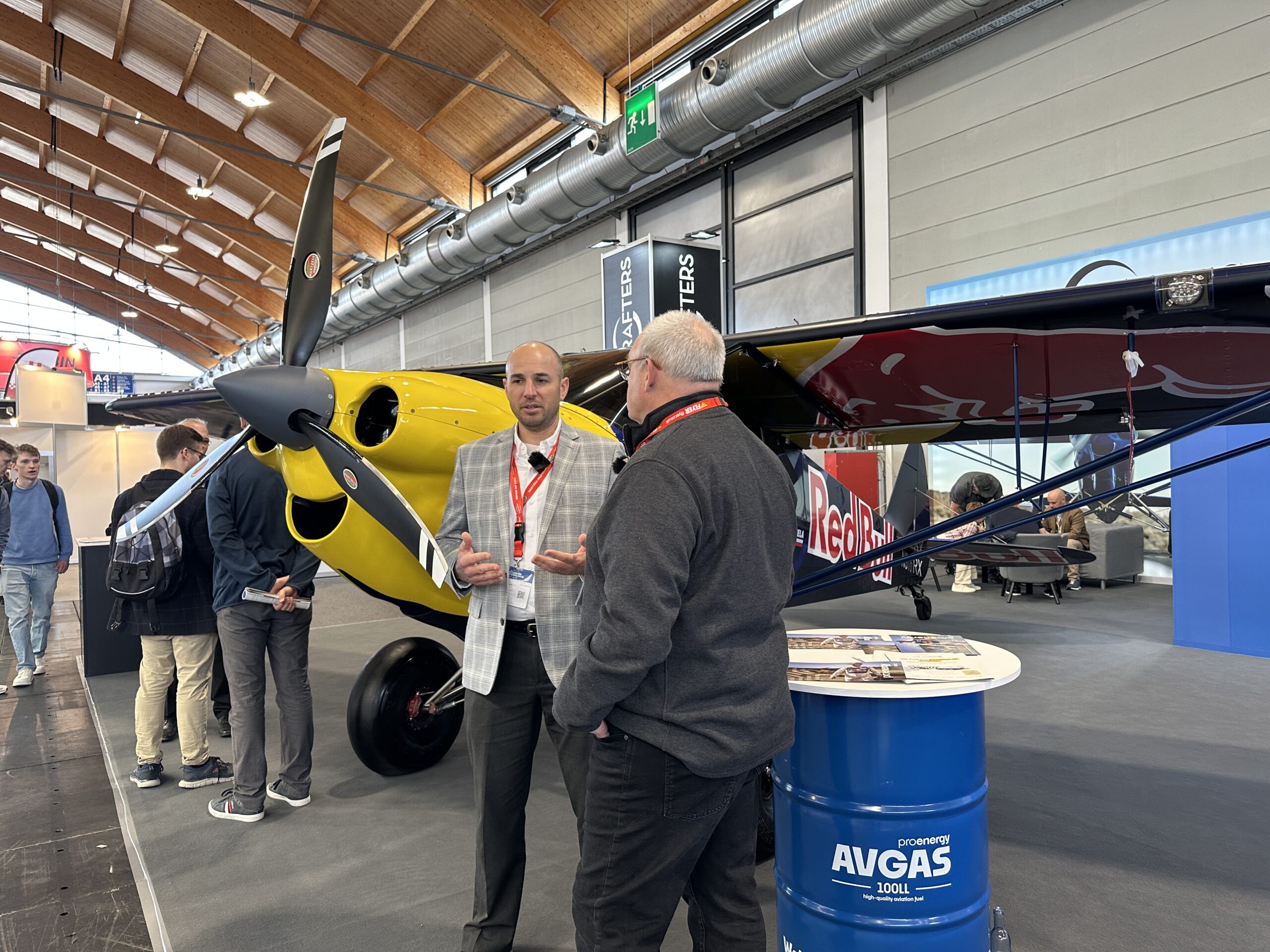
A recent white paper released by Hartzell outlines just how this is done, and it’s worth a read, since their props can be found on everything from the CubCrafters Carbon Cub to the Cirrus SR22T to the Daher TBM 960.

That Citation Longitude Wing

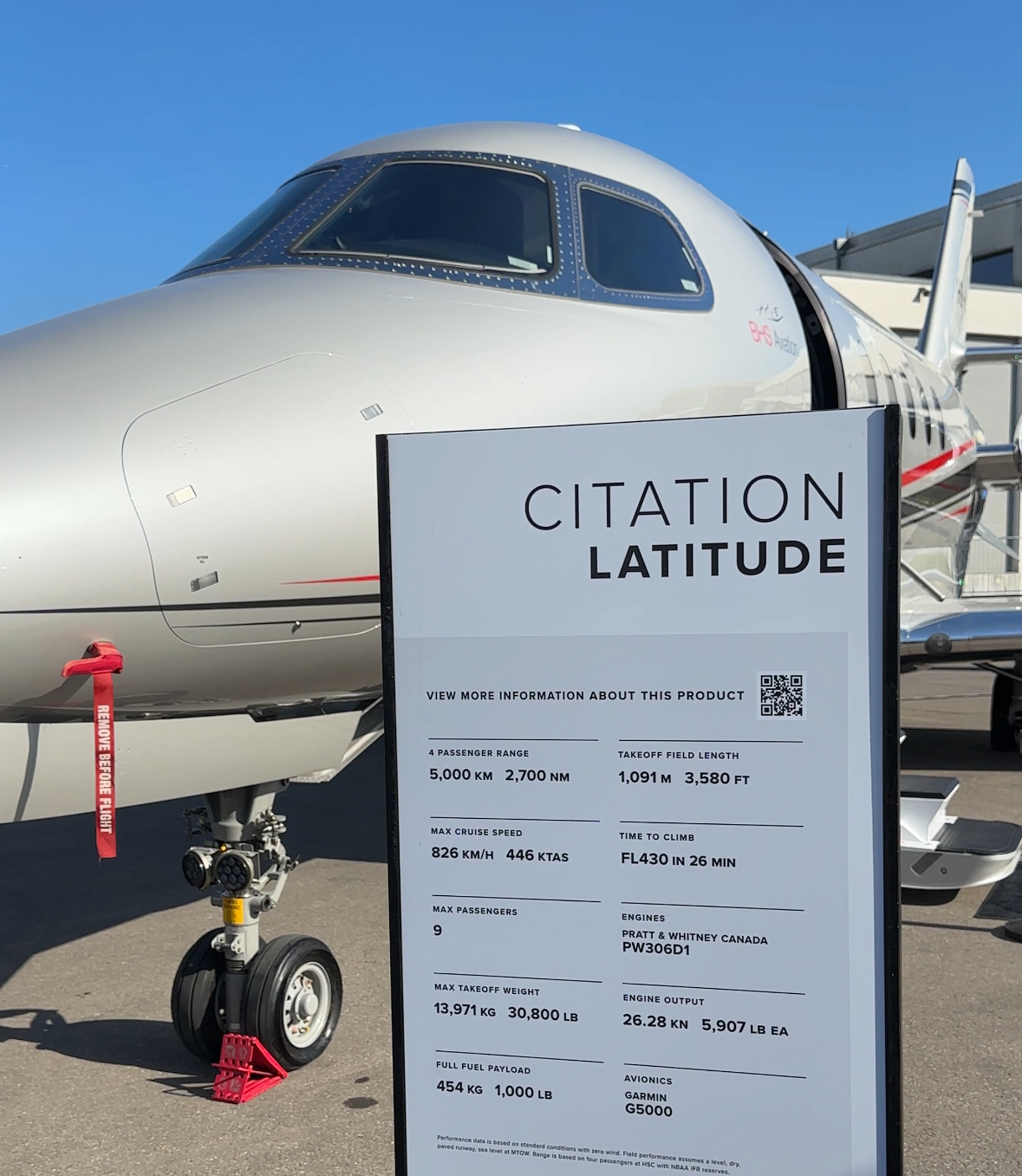
Another place where you’ll find advanced materials making manufacturing more streamlined—and often reducing parts count—lies within the wings and fuselages of Textron Aviation’s Citation Longitude and soon-to-debut Beechcraft Denali. I sat down with Jimmy Beeson, vice president of product innovations at TextAv, and he described how they are able to build the wing monolithically on the Longitude, and they are applying similar principles within the airframe of the Denali. The clean-sheet designs allow for this development—and form one solid reason why we can’t just innovate iteratively. We need to start from scratch to realize the biggest leaps in technology.

Textron Aviation’s Cessna Citation Latitude features advanced materials inside and throughout the airframe. [Credit: Julie Boatman]

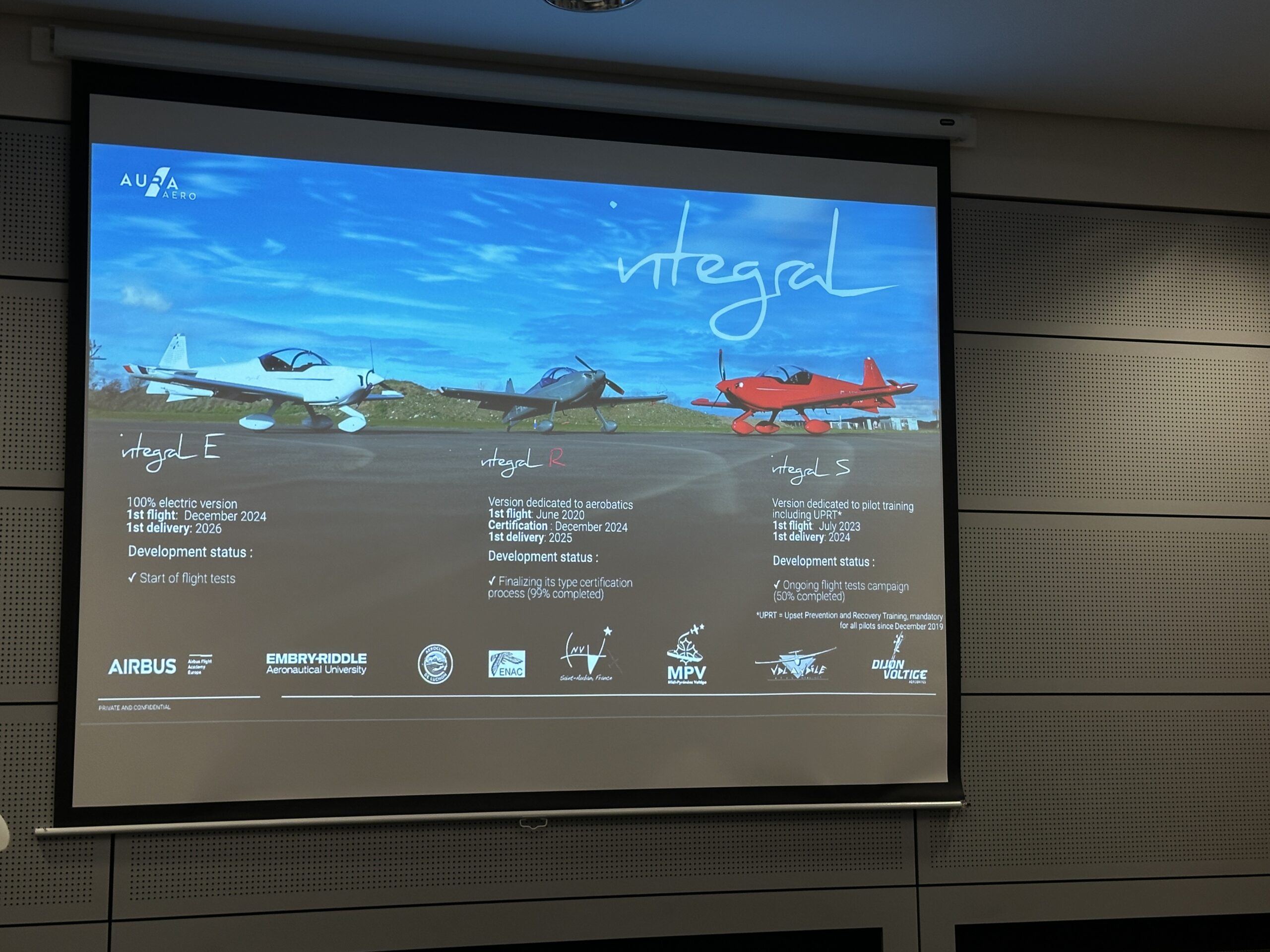
Aura Aero’s Integral R

While a composite aerobatic aircraft doesn’t feel quite as new, the beauty of the recently EASA certified Integral R two-seater lies more than skin deep. The R made its stateside debut at the Sun ‘n Fun Aerospace Expo, and no less an aerobatic star than Mike Goulian has taken it up as his latest mount.

Aura Aero recently delivered the first Integral R in its portfolio of two-seat composite aircraft. [Credit: Julie Boatman0

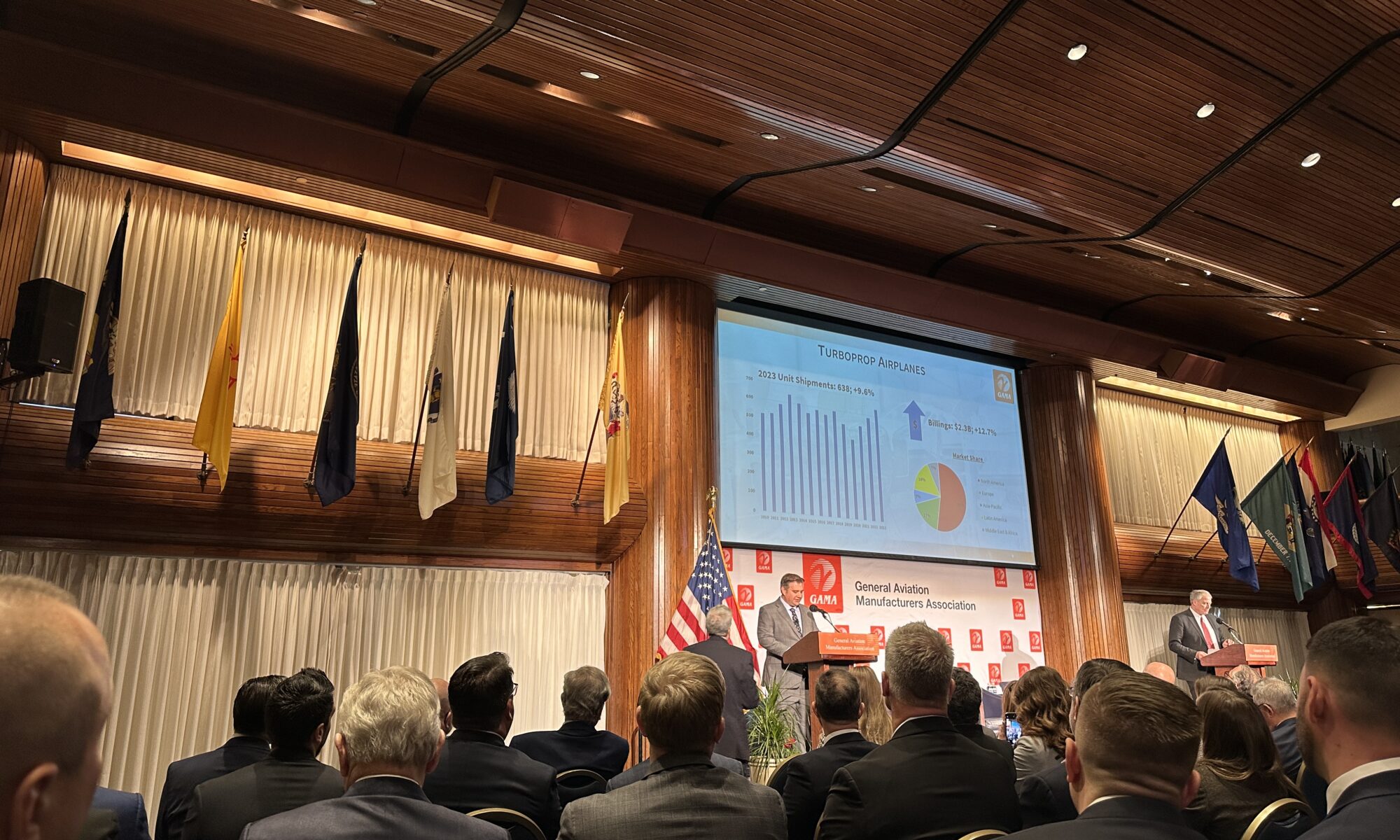
What Happened at GAMA 2024?

The annual report out livestreamed by the General Aviation Manufacturers Association Wednesday delivered good news mixed with ongoing challenges to the industry.

My key takeaways?

  1. The GA industry delivered more than 4,000 units across the piston, turboprop and jet segments last year—more than we have in a decade. That’s exciting and shows continuing strength in the face of supply chain, inflation, and workforce pressures.
  2. The MOSAIC comment period is open again—and we need to weigh in strongly against the proposed shift to Part 36 noise compliance, which would add spurious testing to already extensive certification programs.
  3. We need to push for a commensurate book & claim system in Europe—especially as SAF availability moves to commercial airports and out of reach of BizAv where it can be used to foment innovation.
  4. As we move towards the publication of the SFAR governing advanced air mobility lift, as well as facilitating bilateral agreements we must keep building guidance that is clear and actionable for the front line FAA, EASA, ANAC, and Transport Canada folks to implement.

More on unleaded fuel, electric and hybrid progress, and fallout from Boeing to come.