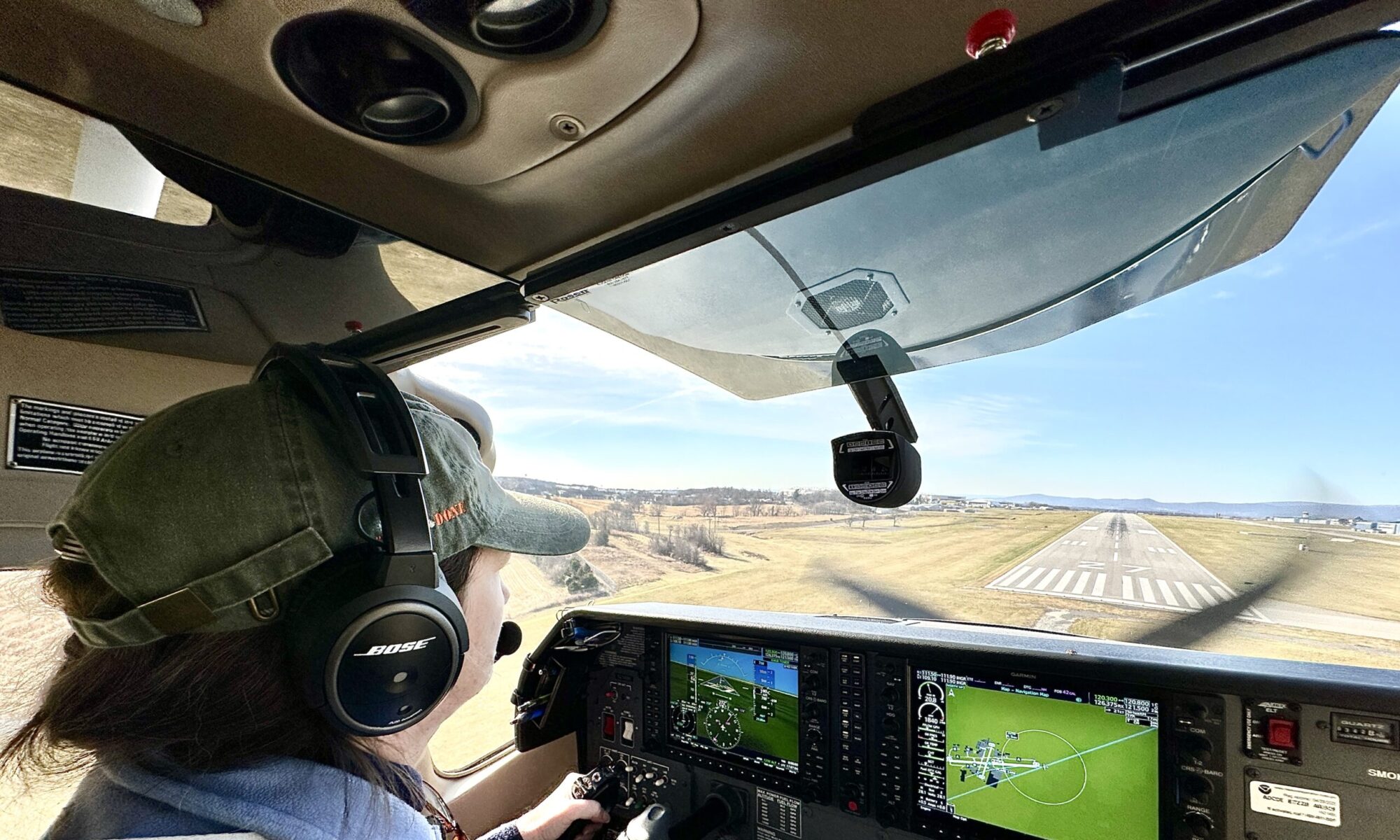
For most folks, Taylor Swift is either a pop star of marginal interest, or a cultural icon, or simply a musician and songwriter to appreciate. The fact she flies often on a Dassault Falcon either means little, or perhaps paints her with an elitist brush.
To aviators, the Easter egg in her latest album, “The Life of a Showgirl,” is that the recording couldn’t exist without her ability to leverage private aviation.
In a clip posted early on the morning of October 3 with the album’s release, Swift recalled saying to her producers, in the midst of the European portion of The Eras Tour: “Do you guys want to do this? I’ll come to you; I’ll make this easy.”
The Swedish producers Max Martin and Shellrock were just a quick leg at FL3X0 away… the pair had collaborated with Swift on three of her previous albums, the glittering and jeweled halls of Red (2012), 1989 (2014), and Reputation (2017).
“It fueled me for the European leg of the tour… getting done with a show, hopping on a plane, and going and writing new songs,” said Swift in the clip.
As an entrepreneur, Swift is an excellent case study, because though her business application (global superstar musician) may not be available to most of us, the lessons she has learned and demonstrated can teach us a lot, especially those of us who work in creative fields.
One that strikes me—a goal that she has successfully obtained earlier this year—is to own your work. I will give you one good reason to listen to her appearance on the New Heights podcast (hosted by her soon to be brother-in-law Jason Kelce and future hubs Travis Kelce) in which she revealed #TS12, her twelfth album—she discusses in detail (starting at 25:15 so you can go right to it) her acquisition of her masters from her first six albums, which she purchased in May. Somewhere before the “folklore” and “evermore” albums of the Covid era, I posit that she fully grasped the raw deal she’d been handed via the recording contract she signed at a tender age.
I didn’t realize (naively) how little most musical artists “own” of their creative product. But I suppose it’s like my having been employed by various aviation publications throughout my life. Little of what you’ve read of my work has actually been produced under my sole ownership.
(Except this is. And it feels awesome. Every time.)
Swift vowed to make it right, and invest in herself and her brand, so buy those masters back she did, from Shamrock Capital, to the tune of $360 million. All of those Eras Tour tickets funded the investment. Now she owns not only the master recordings, but the associated album art with them, among other assets. Bravo!
As for her carbon footprint in the sky, like many responsible corporate and private aviation operators, Swift reports that she purchases “double” what her impact would be, through offsets.
True to form, Gulfstream’s team had an ace up their sleeve ready to lay on the table at their Discover the Difference customer event strategically positioned on September 30, two weeks before NBAA-BACE 2025.
During the opening remarks kicking off the event, Gulfstream Aerospace President Mark Burns unveiled the latest model in the Savannah-based OEM’s new line of business jets: the G300. A super midsize jet set to compete in a segment with a very deep bench, the G300 will replace the popular G280, which just celebrated its 300th delivery back in June.
Gulfstream Aerospace President Mark Burns answered questions following the announcement of the G300. [Credit: Julie Boatman]The G300 mockup shows off the two living areas inside, and how they might be configured. [Credit: Julie Boatman]
I was happy I’d made the trip down to Georgia once again, if only for a quick peek at the silvery new mockup and a whirlwind tour of the new Service Center East—with 367,000 square feet accommodating up to 26 aircraft—and an eagle-eye view of the G500/G600 production lines.
The visit gave me the chance to reflect on my previous two, in which I’d been introduced to the G700, G800, and G400, and witnessed the first of the G500s and G600s on that same line.
Gulfstream has achieved under Burns’ watch over the past decade a rationalization of its high-end product, the luxury form of transportation that has entered the cultural lexicon. What started with the turboprop Gulfstream I back in 1958 hit its stride with the Gulfstream GIV and V in 1987 and 1998, respectively. The G650 has logged more than 1 million flight hours with roughly 560 in service.
But Gulfstream has its replacements ready in its long-range, large cabin models. The show must go on. And that’s a good thing, from a pilot’s perspective. Not just because we love to fly something new, always.
The Gulfstream G300 mockup unveiled on September 30 showed off the new Harmony flight deck. [Credit: Julie Boatman]Gulfstream revealed the G300 mockup two weeks before it would go on display at NBAA BACE in Las Vegas. [Credit: Julie Boatman]
On the Gulfstream Flight Deck
The G700 possesses the first flight deck of a large-cabin jet that made me feel—as soon as I comforted myself into the left seat—as if I could turn it on and taxi it away with little prompting.
I’ve yet to actually prove this theory, but hear me out.
Synchronicity—maybe they should have named it that rather than Symmetry, or the slimmed version on the newly announced G300, Harmony—of the flight deck underpins this feeling, and Gulfstream has taken it across the model line to demonstrate the point. From the long-legged G800 through to the soon-to-deliver G400, the Symmetry flight deck makes its trade in presenting clearly to the pilot what needs to happen next, in its context-driven Phase-of-Flight architecture.
Gulfstream continues the pilot-centric view with the digital flight control system, twin “active control” sidesticks that work together to translate the pilot flying’s desires into action—without producing unwanted confusion between the two sticks, and therefore, improving their communication to the pilot not flying should they take the controls.
Fold in the Predictive Landing Performance System, EVS and SVS, and heads-up displays, there’s a lot going on underneath the surface.
We’ll get a chance to delve more deeply into what Gulfstream has for pilots in an upcoming feature. Til then… I’m biding my time.
When I began the technical writing phase of my career, in 1997, I joined Jeppesen’s Aviation Courseware Development department. Led at the time by editor Pat Willits, ACD had the responsibility of producing Jepp’s distance-learning flight instructor refresher clinic (FIRC), delivered on VHS cassettes for $199 (plus tax and shipping).
The FIRC allowed instructors for the first time to complete their every-two-years certificate renewal without having to attend an in-person or “live” FIRC, which were held over the course of two days (16 training and testing hours total), in hotel conference rooms across the U.S.
After securing my initial CFI certificate in 1993, I renewed first by getting my CFI-Instrument in 1994, placing my renewal on its current even-years rhythm. For my first renewals, I attended AOPA’s live FIRCs, where I enjoyed meeting fellow instructors and sharing stories and best practices as well as a laugh or two about the commiserate moments of working with student pilots.
After a year or so at Jepp, I was promoted to Assistant Editor, and tasked with acting as its Airman Certification Representative (ACR), responsible for the physical review and signing of every FAA 8710 form that came in with the FIRC completion before the CFI’s new certificate could legally be issued. Every week I’d go upstairs to the customer service area and sign roughly 50 to 100 of the forms.
My first brush with aviation fame came when I signed Patty Wagstaff’s 8710.
Jepp went on to develop and produce in concert with AOPA the second online FIRC to gain approval from the FAA, and I was part of the team that put it together. With online FIRCs now composing the grand majority of CFI renewals, the live FIRC has all but vanished. Most instructors just “get it done” every two years, take in the minor and major updates to the regs and processes, and honestly probably retain little else from the exercise. The FAA requires the 16-hour training curriculum, and while providers strive to keep us entertained whilst sitting in front of the laptop or clutching an iPad for that period, it’s probably not something most of us would choose to participate in, given the choice.
We still find more meaning in connecting face to face.
The Douglas C-47 Ruptured Duck has no engines in its nacelles as it stands outside the MAPS Museum at the Akron-Canton Airport in Ohio. [Credit: Julie Boatman]A panel on mental health for pilots at NAFI Summit was moderated by Dr. Victor Vogel, and included Federal Air Surgeon Dr. Susan Northrop, former NTSB member Greg Feith, and Dr. Tony Reed, with Samantha Bowyer behind the podium. [Credit: Julie Boatman]
For Monday and Tuesday of this week, I attended the Summit hosted by the National Association of Flight Instructors. NAFI’s two-day conference this year, at the MAPS Museum at the Akron-Canton Airport (KCAK) in Ohio, featured about… 16 hours of presentations on a buffet of topics eerily similar to those covered within a standard FIRC TCO (training course outline).
The Summit kicked off with presentations from FAA AFS-810 manager Everette Rochon on the Part 141 Modernization rulemaking group progress, and two panels, one gathering experience designated pilot examiners (DPEs) Karen Kalishek, Katie Sample, and Jason Blair, and the mental health one moderated by Dr. Victor Vogel, with Federal Air Surgeon Dr. Susan Northrop, Greg Feith, and Dr. Tony Reed.
Head of FAA AFS-810 Everette Rochon presented at the NAFI Summit on the progress on Part 141 Modernization. [Credit: Julie Boatman]ERAU professor Samantha Bowyer outlined the changes brought into reality by the passing of MOSAIC for pilots and aircraft certification. [Credit: Julie Boatman]
Martha and John King (whose Kings Schools online FIRC I’ve taken many times) led a talk on risk management, with easy mnemonics to use on the flight deck to enable solid aeronautical decision making. Samantha Bowyer, professor at Embry-Riddle Aeronautical University, outlined the changes brought forth by the passing of the MOSAIC ruling for pilot and aircraft certification, with a lively Q&A trying to find clarity on the topic. And Dr. Reed walked instructors through the ways they can make lifestyle changes to support their own physical health.
Day Two featured more breakout sessions, with great choices to select from, including how to ensure the first hours of training connect with the prospective student, as well as the use of AI in training, implementation of sims within a course syllabus, and a deep dive on spins, slips, and skids. Mental health was addressed in more detail by Dr. Rob Zeglin, and Judge Couch zoomed in remotely to illuminate the process behind the NTSB’s Office of Administrative Law and how to mitigate and protect against certificate actions as an instructor.
Martha and John King presented at the NAFI Summit on their experience and how it relates to teaching sound aeronautical decision making and risk management. [Credit: Julie Boatman]NAFI’s Paul Preidecker and Karen Kalishek give closing remarks at the NAFI Summit 2025 in Ohio. [Credit: Julie Boatman]
All in all, with the exception of the TSA training session, I felt nothing was missing from the program that would preclude it counting as a CFI renewal. NAFI currently gives FAA WINGS credit for the session, which helps a pilot complete ongoing training in lieu of a flight review, but it would gain a lot of value for attendees if the Summit could become, yes, an in-person FIRC for its investment of $300 to attend.
It certainly gave that value to me.
But the best part of the event came in the new connections I forged with fellow instructors, and the longtime friendships we have kept in the industry over the years. In those in-between moments, sitting around a table of 8 with a standard Midwestern buffet lunch, I met CFIs from around the country and across the globe, and understood again how much we have in common, and how much we can learn from each other, simply by taking the time and listening.
Our front yard hosts an absolute tyranny of thistle that springs back into life each year, starting in April and not letting up until the frost hits the pumpkin. Just when I think I have it all pulled, down to the tap roots, a few miscreant spikes push through the mulch and taunt me.
The spines prickle and irritate, so my RAF-issued work gloves have had no less than four sessions already of bending and turning soil and pulling carefully to get the most noxious stuff out.
The path to the RAF work party took us 120 nm to the northeast on a pretty late August Saturday. [Credit: Julie Boatman]The Cessna 182 has been here for camping fun before us. [Credit: Julie Boatman]
And that’s almost exactly the task assigned to me first when we taxied onto the ramp at Clarion County Airport, in western Pennsylvania. We secured the Cessna 182, walked through the FBO, and saw the wooded entrance to the camping site across the parking lot, not a football field length away.
RAF liaison for PA/WV Chip Vignolini hailed us from behind his truck, and promptly introduced us to co-liaison for PA Andrew Turner and sons Caleb and Josh, who would be working on building a lean-to for firewood, and splitting the logs piled up on the ground nearby. Right on our heels, RAF volunteer Doug Turnbull flew in and parked his Piper Cruiser next to us, and along with us was given the task of clearing the brush along the banks of the pond.
What pond?
Before the brush clearing around the pond, you would have no idea the pond was there! [Credit: Julie Boatman]Andrew Turner, RAF co-liaison for PA, recruited his sons Josh and Caleb, into lending a hand, and they were awesome. [Credit: Julie Boatman]
You couldn’t see it through the thicket of black locust trees, ragweed, and other scrub that had sprouted up since the last time Andrew and crew had tackled the area. They all had to go. So we rolled up our sleeves, and Stephen grabbed a strimmer (a weed-whacker to non-Brits), and we went to it.
The bench with a newly cleared view at KAXQ, just in time to say hello to the birds stopping by on migration southbound. [Credit: Julie Boatman]Kim Eaton, Andrew, Josh, and Doug Trumbull contemplate the utility of the wheelbarrow. [Credit: Julie Boatman]
Two hours later, we not only could see the pond, but the area around the bench was clean as a whistle. We took a break from hauling brush to the other side of the camping area and throwing it into the forest, and then S took on his next assignment: grilling lunch. I worked on finding and clearing the trail supposedly circling the area. I found an old tree stand…and a lot of marshy weeds. But with more of S’s strimming work, a semblance of a path came out of the woods.
Round about noon, the burgers and hot dogs were ready on Chip’s portable grill, and everyone took a load off to enjoy the lunch al fresco. The young men had the shelter framed up, placed nearly equidistant from the twin RAF fire rings already in place. All it needed now was the aluminum roof secured and the RAF sign placed at the entrance to the camping area.
A shiny new sign was posted near the entrance to the camping area, alerting pilots to its location, as well as its benefactor. [Credit: Julie Boatman]The camping area at Clarion Country Airport hosts enough room for quite a few folks to pitch a tent. [Credit: Julie Boatman]Caleb and Chip drive in posts for the firewood lean-to. [Credit: Julie Boatman]
And that’s the story of most RAF work parties. You don’t need special skills (though if you have them, you’ll be assigned accordingly), and the most important thing to bring is a great attitude, some perseverance, and a tough pair of work gloves. With just eight folks pitching in, we conquered the task list in just a few hours.
We departed right after lunch to beat the potentially building thunderstorms along the Appalachian spine between KAXQ and our home airport at Hagerstown. Once more, we were spent physically but emotionally filled back up from the shared effort.
As it turns out, the airplane had visited KAXQ before, bringing its owners to explore the biking and hiking trails that thread throughout the forest south of the airport, all the way to the Clarion River.
One of two RAF fire rings installed at the camping site for pilots at Clarion County Airport. [Credit: Julie Boatman]The camping area at KAXQ is circled in RAF orange. [Credit: The RAF Airfield Guide]
Upon talking with Andrew and Chip, they filled us in on how unsung the place was, and mostly empty for much of the year. Though the camping area gets good use during the fall, there are still plenty of times when it doesn’t. And they’d love to see more folks take advantage of the easy access from the airport (which has lots of tie-downs, and self-serve fuel) and the quiet natural beauty that surrounds the place.
We’ve joined work parties before, twice at Moose Creek USFS in Idaho, and those strips get a lot of attention. But it’s the ones close by—Clarion is just 120 nm from home for us—that will entice us throughout the year.
They all deserve our loving care.
For more information on these incredible places, check out the RAF’s Airfield Guide. And to find a way you can help the RAF preserve and maintain airstrips and aircraft camping areas around the country, join them here.
The Clarion County Airport (the “new” one) was founded in 1974. [Credit: Julie Boatman]Exhausted but happy campers on the flight back to KHGR. [Credit: Julie Boatman]
The sunlight filtered through a high layer of mackerel clouds as we flew towards it—well, really towards southern New Jersey. On an August Friday morning, the skies north of the DC metro area remained relatively quiet, prompting me to tune in Potomac Approach just to hear some back and forth. Stephen was asleep in the right seat; I take that as a vote of confidence that he slumbers so readily while I keep us on course.
The Maryland countryside wakes up as we fly to Millville to meet our LightHawk passenger for the conservation flight. [Credit: Julie Boatman]The flight plan in ForeFlight applied to the chart to track marshland, dredged island status, and new infrastructure along Cape May. [Credit: ForeFlight/Julie Boatman]
We’ve been tapped again for a LightHawk mission, supporting the conservation flying efforts of the nonprofit group I joined as a volunteer pilot last year. We’re building on our mission last year, which was to run GoPros on the wing and on the glareshield to capture the water levels along the Chesapeake Bay and Atlantic shorelines around the DelMarVa peninsula during a king high tide.
On this day we were booked to meet Jim Wright, volunteer photographer for The Nature Conservancy, and provide him lift for shooting the marshlands and barrier islands that pearl along the Atlantic from Sea Isle City to Cape May. He would also check out a handful of dredged islands for their status, and frame up in his lens the new boardwalk at the nature reserve in South Cape May Meadows.
As luck would have it, when we went out the evening before to preflight the Cessna 182 that our friends so graciously let us use, we needed to top up the tires with air. For anyone who has wrestled with the wheel pants and tire stems on the high-wing Cessna fleet, you know this is much easier said than done. After a lot of cursing—and a call to a generous A&P with the local Martin’s flight department who possessed the right fitting for the compressor’s air hose—we sorted out all three wheels. That should improve my landings!
Early Friday morning we topped off fuel at KHGR (avgas is running $5.95/gallon self-serve, which feels joyous) and headed east. Just off Hagerstown, a dancing oil pressure reading had me momentarily concerned but it settled down and appeared to be just the probe—the single most likely thing to fail on the combined Garmin G1000 NXi/Lycoming IO-540 installation.
We met up with Jim at Big Sky Aviation at KMIV, and Stephen headed for the airport café while I settled Jim into the right seat, with his laptop and camera ready to go. It wasn’t his first LightHawk flight by a long shot, so I briefed him on the specifics of the airplane and the flight, and he was delighted that we would be able to open the window all the way once airborne.
Looking out over the ocean as we fly south along the Atlantic shore. [Credit: Julie Boatman]The Atlantic coastline passes under the wheels of the Cessna 182 near Avalon, New Jersey. [Credit: Julie Boatman]
We took off for the eastern shore, and popped through a thin, scattered layer of coastal cumulus around 1,500 feet msl (and agl on this part of the state). The coast itself was clear, and it was too early for the banner towers to populate the skies. We headed south, making circles around various points of interest, trying to determine exactly which little spot of sand and sawgrass was the critical one. Fortunately, we had time in the tanks and capture it all just in case.
Once down around Cape May, Jim spied the new boardwalk that sits between the town and the lighthouse, and we made circles there to ensure we got it at every angle. Part of the mission was also to show the juxtaposition and interplay between development and nature preserve, so Jim took a few landscape shots with the town in the foreground and the beach and the wide Atlantic sea stretching out to the east.
The Nature Conservancy’s Jim Wright photographs the southern tip of Cape May, with South Cape May in the distance. [Credit: Julie Boatman]
On our way back to the Millville airport, we had one more point to spot, on the Maurice (pronounced “Morris”) River that weaves back up the Delaware River delta towards the town of Millville. Bluffs line part of the river. For the life of me, I saw no “bluffs,” but perhaps my perspective was skewed by too much time out west. Jim took enough shots to nearly fill his card, and when we landed back at KMIV, he ran out of battery as we were snapping a shot of us in front of the airplane. Impeccable timing to be sure!
Mission accomplished, we bid farewell to Jim—a screech owl expert who has written a book on the amazing birds—and packed up to head west before the chance of thunderstorms blossomed into a certainty. With 4.3 on the Hobbs back at KHGR, we pushed the trusty girl back into her nest, and patted her on the cowl. We collapsed back at home, spent but satisfied.
The LightHawk mission has once again brought meaning to our flying.
After 17 years of personal frustration with the hits and misses of the light sport aircraft category and sport pilot certificate, relief lies in plain sight. In fact, in about 3 months, I’ll have the ability to fly both airplanes I frequent—a Lockwood AirCam and a Cessna 182 under the FAA’s revised sport pilot privileges—announced with the confirmation of the MOSAIC final rule on Tuesday at EAA AirVenture in Oshkosh, Wisconsin.
That means (since I currently hold a higher level of pilot certificate) I can fly those aircraft with a valid driver’s license, rather than a medical certificate. This is a game changer for a lot of folks—and not just the senior cadre of flying friends I’ve accumulated over the years.
Table 9 Summary of Changes to Sport Pilot Privileges released by the FAA this week with the confirmation of the MOSAIC final rule. [Courtesy of the FAA/EAA]
Aircraft certification rules also open up with the launch of MOSAIC, including removing the weight limit imposed by the original LSA classification (1,320 pounds for land-based airplanes), no limit on number or horsepower of engines, and the expansion to four seats (though the pilot flying under sport privileges must stick to just one passenger). The upper limit for the stall speed for airplanes also expands, to a VS1 of 59 knots CAS, opening up not only the Skylane but a host of other single- and light twin-engine airplanes I have in my logbook.
I’ll write more on these memories at a later date, but the removal of the weight limit would have allowed Cessna much more flexibility in the design of the Skycatcher, and I argue would have made it an even better airplane, performing far better in the marketplace.
A host of already CS 23 certified airplanes (under EASA) are poised for deployment into the U.S. market too as a result, including the Elixir two-seat training airplane that also announced Part 23 certification this week (understanding that with that milestone passed, it can be flown by private pilots ahead of MOSAIC implementation).
The playing field just opened up significantly, with the cost to entry lowered substantially at the same time.
I cannot overstate how critical these changes will be in assuring the health and accessibility of general aviation as we integrate new technologies and ways of flying into the mix. I’ll see you in these new, blue skies!
There’s a common thread here. Each one helps add context and fluency to our daily flight ops, whether we fly for ourselves, professionally, or in pursuit of opportunity.
Making sense of all the data we carry in our pocket or purse (or just being able to find it when we need it, at the moment we need it)….this has been the holy grail, elusive to grasp even as we power up the devices we have access to.
Any aircraft owner or pilot flying a high performance airplane in the IFR system knows the intersection of documentation both operational and procedural. Tying all of it together has felt like pushing a boulder up a mountain—from planning the flight and ensuring the aircraft is ready (and legal) to executing a flight plan through the clouds, to recording it faithfully at the end (and getting credit for those approaches logged) and making appointments for the next inspections.
With the sequential release of Garmin’s Smart Charts and ForeFlight’s Dynamic Procedures, depending on which app you use in your planning and as a backup on the flight deck, you can now use the power of the database (Garmin proprietary for Smart Charts or Jeppesen for ForeFlight) to carve out the plan you expect, and then be able to change it on the fly—and only present the data (from NOTAMs to fixes and altitudes) relevant to the approach you plan to fly. Or the one ATC switches you over to (or you choose based on changing conditions).
You can then follow along as your blue ownship toodles through the course on your smart phone or tablet. Briefly. While flying the airplane IRL.
ForeFlight’s Dynamic Procedures reduces the info on the display (here shown on the iPad) and uses a unique sidebar to distill the information and put it into context. [Credit: Julie Boatman]Flying with Garmin Pilot testing Smart Charts on the map view. [Credit: Julie Boatman]The geo-referenced profile view on Garmin Pilot with Smart Charts enabled puts you on the approach, with an immediate visual representation. [Credit: Julie Boatman]
On the aircraft side, two recent updates to the airplane management app world continue to drive critical information into your device, and connect you remotely to your airplane, should you be lucky enough to own one of the new ones. The enabling technology underneath both the Cirrus IQ app and the Daher Me & My TBM (now in a Kodiak version) is Garmin’s GDL 60 datalink unit installed in the airplane.
It needs a connection in order to “go live” so, as it was mentioned in Daher’s press conference today, you need to make sure you park your TBM 960 or Kodiak 900 in a pot with LTE 4G service. Hopefully your hangar has this capability, to start with.
If so, you can wake up the airplane remotely, and find out the fuel, TKS, oxygen, and database status on your phone…before you call the FBO to truck you over some avgas or Jet-A. Pretty amazing stuff.
Cirrus’ Todd Simmons talks about the connected nature of the Cirrus Experience at its press conference at Oshkosh 2025. [Credit: Julie Boatman]Capturing the latest connected Cirrus SR22 G7+ at EAA AirVenture 2025. [Credit: Julie Boatman]Daher Aircraft CEO Nicolas Chabbert and customer service developer Mathieu Pardo talk about the connectivity needed through the Garmin GDL 60 to enable the Me & My Kodiak app. [Credit: Julie Boatman]
Plus, you can stay connected with your friends in the type association, comparing notes on landing prowess and efficiency. If you want. Or you can just assess your own performance and take note accordingly the next time you meet up with an instructor. Other OEMs have similar programs in development, but it’s cool to see Cirrus and Daher leading the pack here in creating the ecosystem that can serve you up the data you need. When you need it.
Stay tuned for more connectivity news as EAA AirVenture 2025 continues….now with charging stations everywhere, appropriately.
One month since we left the shores of the Bodensee and our friends at AERO 2025 in Friedrichshafen, and it feels like a good time for a status update. Certainly enough has transpired to keep us all entertained in the aviation world, to say the least.
First, congrats go out to the AERO gang for a phenomenal success and a show that marked tremendous growth for the organization. With more than 760 exhibitors and 32,000+ attendees, the event clearly resonated with the moment.
SETOps in the Business Aviation Dome at AERO 2025A cool new Pilatus PC-12 PRO at AERO 2025A HUD’s-eye view from the Gulfstream G650 at AERO 2025
You have to be prepared to meet opportunity, and Tobias Bretzel and team took advantage of the opening left by EBACE’s recasting. AERO had made significant forays into serving the business aviation world more directly in recent years, with exhibitors such as Gulfstream attending last year with an aircraft, and more significant displays from Textron Aviation, Pilatus, and charter operators.
Those continued this year with Bombardier, Dassault Aviation, and Gulfstream providing an outdoor exhibit, along with Platoon Aviation’s sponsorship of what I’m calling the Big BizAv Tent (it went by the official name “Business Aviation Dome”). The venue provided space for various small exhibits, along with a café of sorts and a coffee/wine bar, along with a stage for forums, several of which I attended. This was perhaps the only off note; those hosted in the afternoon in particular suffered from too much sunlight in the wrong place, and strange cube-like seats that weren’t well suited for attendees needing to balance a notebook or device. Minor details, though.
The topics covered throughout the show were on target, however, including the next in the series on Single-engine Turboprop Operations (SETOps), and industry and technology updates. I admit I have been so distracted following the ongoing tariffs saga that I have yet to complete my analysis of the current state of SETOps, which honestly feels like it’s in a bit of a holding pattern while everyone figures out where the industry will land, tax- and delivery-wise!
New sources of power at AERO 2025New sources of stress for aviation OEMs
Which brings me to the current state of affairs. Time to look back at the questions I posed in February, on the following topics:
Tariffs by the U.S. and retaliatory answers from Canada, Mexico, China
The charge to slash U.S. government regulations and only replace them at a 10:1 ratio
Egregious use tax implementation in Europe, targeting business aviation
Deeply cutting personnel reductions at key agencies, including FAA, DoT, and Department of Commerce
Privatization of the National Airspace System in the U.S.
On tariffs. Well, the good news, I suppose, is that the U.S. has apparently walked back from the outrageously steep 145% tariffs applied to many goods from China, down to 30%. And there’s a 90-day pause on many of the remainder, including goods from the EU, Mexico, and Canada. However, the chaotic nature of their application and the resulting retaliation means companies are still having a tough time planning for the future. A 90-day crystal ball just isn’t enough. I think of one good friend who has a publishing company, and he’s in limbo trying to figure out where to have books printed these days. The last container with a pallet of their merchandise on board left China back in mid April. Knowing what tariffs will apply remains a guessing game.
On regulations. We’ve seen more cuts in terms of personnel across government departments than the regs themselves, including at the FAA, and that pain lingers. At the same time, specific regulatory initiatives such as MOSAIC appear to be moving forward, with a final rule to be released late this summer, according to an update from the Light Aircraft Manufacturers Association at AERO.
On EU taxes. France went ahead with its tax on commercial flights, which includes business aviation, to the tune of “420 euros for a passenger on a business jet flying to a destination within the EU or European Economic Area to 2,100 euros per passenger flying to a destination more than 5,500 km away,” according to NBAA. Passenger fees for turboprop aircraft are roughly half the jet rates, which makes the SETOps mission all the more critical for operators to leverage if the capacity fits.
On personnel. I know folks personally who have seen their federal jobs cut, in what appears to be an arbitrary fashion. At the same time, the news this week has featured the lack of necessary staffing in operations including air traffic control, with Newark headlining the worst of the news.
On privatization. So, would a private entity do a better job addressing both the problems of National Airspace System modernization and personnel reductions and shortfalls? A broad coalition of aviation associations endorsed the recent plan announced by Secretary of Transportation Sean Duffy. Nowhere in the points outlined by Duffy over the course of the 3 to 4 year effort does the plan *appear* to include the broad stroke of privatization. We know we need an overhaul of the system…and if there’s political will to get it accomplished, I’m all for that. But this administration’s overarching theme has been to privatize across the U.S. government, so I cannot believe that won’t be the case here.
And it’s frankly too soon to tell, especially given the past 100+ days of 2025.
Well, now we know which manufacturer will bring Garmin’s Autoland to piston airplanes.
The spark that propels innovation brought Cirrus Aircraft to life—and the company has become a catalyst to change the way people engage with the world around them and explore it on their own terms through the 25 years of its SR Series aircraft.
With a relentless desire to elevate quality and comfort within a total safety envelope, Cirrus leveraged its deep bench of precision engineering and legacy of craftmanship to create the highest expression yet of the game-changing Cirrus SR Series, the G7+, which it debuted on May 6.
For Cirrus, the generational progress encapsulated in the G7+ takes safety, style, ergonomics, connectivity, and convenience to the next level, into an airplane that is truly transporting—with updates to answer some of our biggest desires as pilots:
To make the most of our time and opportunities.
To offer a way to bring our families and loved ones together, in magical places.
To get where we’re going wrapped in an environment that rivals the finest luxury autos.
The G7+ adds to the full palette of pilot tools that Cirrus pilots have enjoyed, including the Cirrus IQ PRO app and Collier award winning Cirrus Airframe Parachute System (CAPS), with the introduction of Safe Return, an emergency automatic landing system that solves one of the most pressing concerns in personal aviation: What happens if something happens to the pilot?
Now there is an answer to that. Garmin has seen more than 1,000 aircraft delivered hosting versions of its Autoland system—but they’ve all been turbine- or turboprop-engined aircraft with an autothrottle already introduced.
So how would a piston OEM incorporate the system without that AT in place? The SR Series has had a combined prop/throttle lever and separate mixture, so how to solve that piece of the puzzle?
Turns out, it’s a digital mixture and throttle control system that kicks in when the Safe Return button is depressed and the protocols go into effect. I’d asked Ivy McIver, executive director for the SR Series, about the features added to the G7 that were, shall we say, opportune? when we flew the first version of the series in stealth mode back in December 2023. She couldn’t say it then, bien sûr, but the automated tank selection, flap overspeed functions, and enhanced envelope protection were all keys to the puzzle that would enable the Safe Return system.
I guess they figured out the automatic braking too.
In any event, it has been a pleasure all of these years to watch Cirrus wrap us bit by bit into that total safety envelope—and as a pilot, you get to choose which features you use during any given flight.
But now your passengers get a choice too, in case you’re “unable.”
One theme to my recent reporting and media support in the personal aviation industry has focused on the advanced materials from which the latest aircraft are composed. Composite airframes have matured over the past 20 years—no more overbuilt Beech Starships; now we have more than 10,000 Cirrus SR series singles delivered. But beyond the “skin” lie applications for everything from carbon fiber to thermoplastics in game-changing ways.
Hartzell’s Composite Props
Case in point: Hartzell’s ever-expanding line of composite propellers. The first composite prop was essentially a wood core with a metal leading edge—but we’re way, way beyond that now.
We have had the pleasure of supporting Hartzell’s media efforts at AERO this year, and it’s been very cool to have a front seat to the deep dive they have provided on just how different their new props are. Laid over a rigid urethane foam core, dozens of layers build up the body of the blade over a stainless steel shank. A nickel cobalt leading edge protects the robust blade, belying its thin profile. These stand up so well to the rigors of flight that they have essentially an unlimited life—they can be overhauled repeatedly, adding materials back up to spec rather than filing them away.
A recent white paper released by Hartzell outlines just how this is done, and it’s worth a read, since their props can be found on everything from the CubCrafters Carbon Cub to the Cirrus SR22T to the Daher TBM 960.
JJ Frigge, president of Hartzell Propeller, talks composite props with Flyer’s Ian Seager in front of the Carbon Cub at AERO 2025. [Credit: Julie Boatman]Hartzell’s first press conference at AERO 2025 gave President JJ Frigge the opportunity to brief the media on the latest in composite prop technology. [Credit: Julie Boatman]
That Citation Longitude Wing
Another place where you’ll find advanced materials making manufacturing more streamlined—and often reducing parts count—lies within the wings and fuselages of Textron Aviation’s Citation Longitude and soon-to-debut Beechcraft Denali. I sat down with Jimmy Beeson, vice president of product innovations at TextAv, and he described how they are able to build the wing monolithically on the Longitude, and they are applying similar principles within the airframe of the Denali. The clean-sheet designs allow for this development—and form one solid reason why we can’t just innovate iteratively. We need to start from scratch to realize the biggest leaps in technology.
Textron Aviation’s Cessna Citation Latitude features advanced materials inside and throughout the airframe. [Credit: Julie Boatman]
Aura Aero’s Integral R
While a composite aerobatic aircraft doesn’t feel quite as new, the beauty of the recently EASA certified Integral R two-seater lies more than skin deep. The R made its stateside debut at the Sun ‘n Fun Aerospace Expo, and no less an aerobatic star than Mike Goulian has taken it up as his latest mount.
Aura Aero recently delivered the first Integral R in its portfolio of two-seat composite aircraft. [Credit: Julie Boatman0