Integrity and Leadership Kick Off WAI 2026

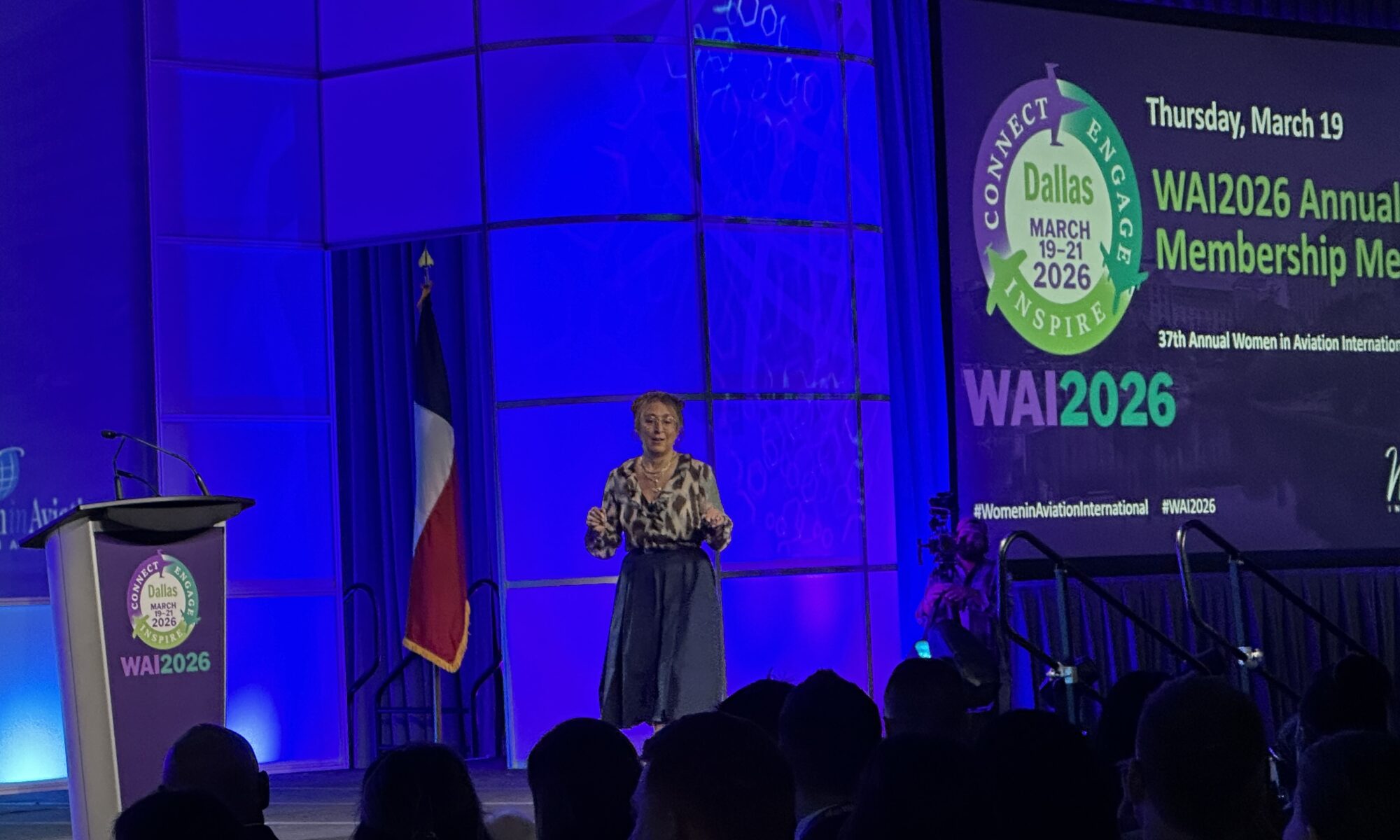
A brunette woman on a stage with deep blue lights in the background and the WAI 26 logo

There’s always an unexpectedly emotional moment within words delivered by the featured speakers at the Women in Aviation International Conference, and my first tears this morning came during the presentation of the colors.

We have friends, family, colleagues in harm’s way right now, and their service must be honored. This integrity and leadership have already become themes at WAI 2026, and we’re barely halfway through the first day.

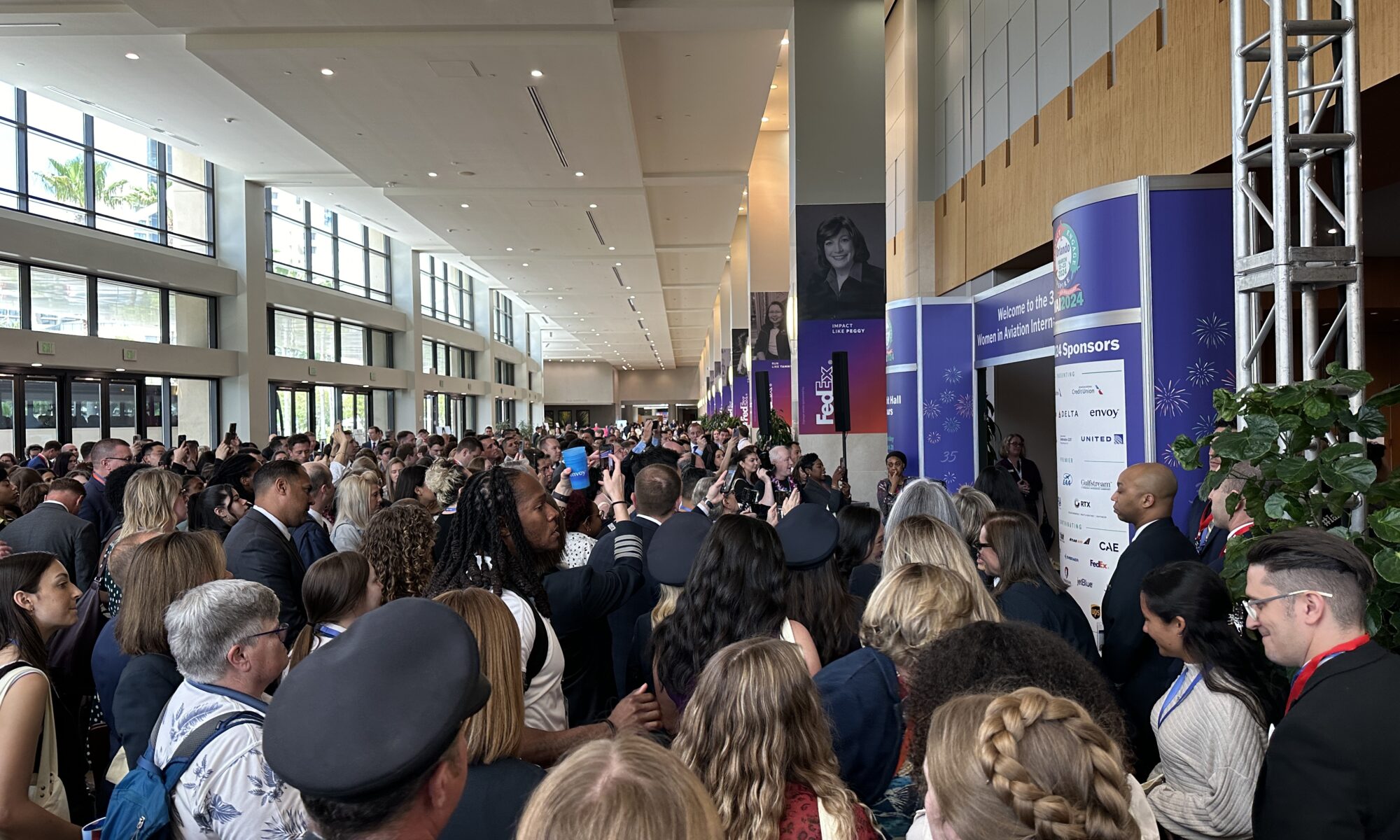
With 20,000 members spanning 112 countries, these days WAI has earned the international part of its name, though almost 92% of the membership hails from the U.S. or its territories. More than 5,000 people are expected at the conference this year, and by midday on Thursday almost 4,000 had come through the doors at the Gaylord Texan Conference Center in Grapevine, Texas.

WAI CEO Lynda Coffman is entering her third year at the helm, coming out of retirement after decades of leadership roles at United Airlines. That time has been focused on restoring the organization’s financial health, and in a large part, she has led the team to a steadier course, now earning a 4 star rating from Charity Navigator, its highest.

Building cash reserves continues, so that the organization will be able to better withstand the inevitable headwinds—Coffman called out COVID specifically—and fully fund its programming for the growth ahead.

Part of that growth steers WAI back towards its high-water marks in scholarship monies granted. While not yet near the $900K years around 2006, the $530,000 scholarships in 2025 and $610,000 scholarships to be bestowed this year show the strength and resilience of the industry.
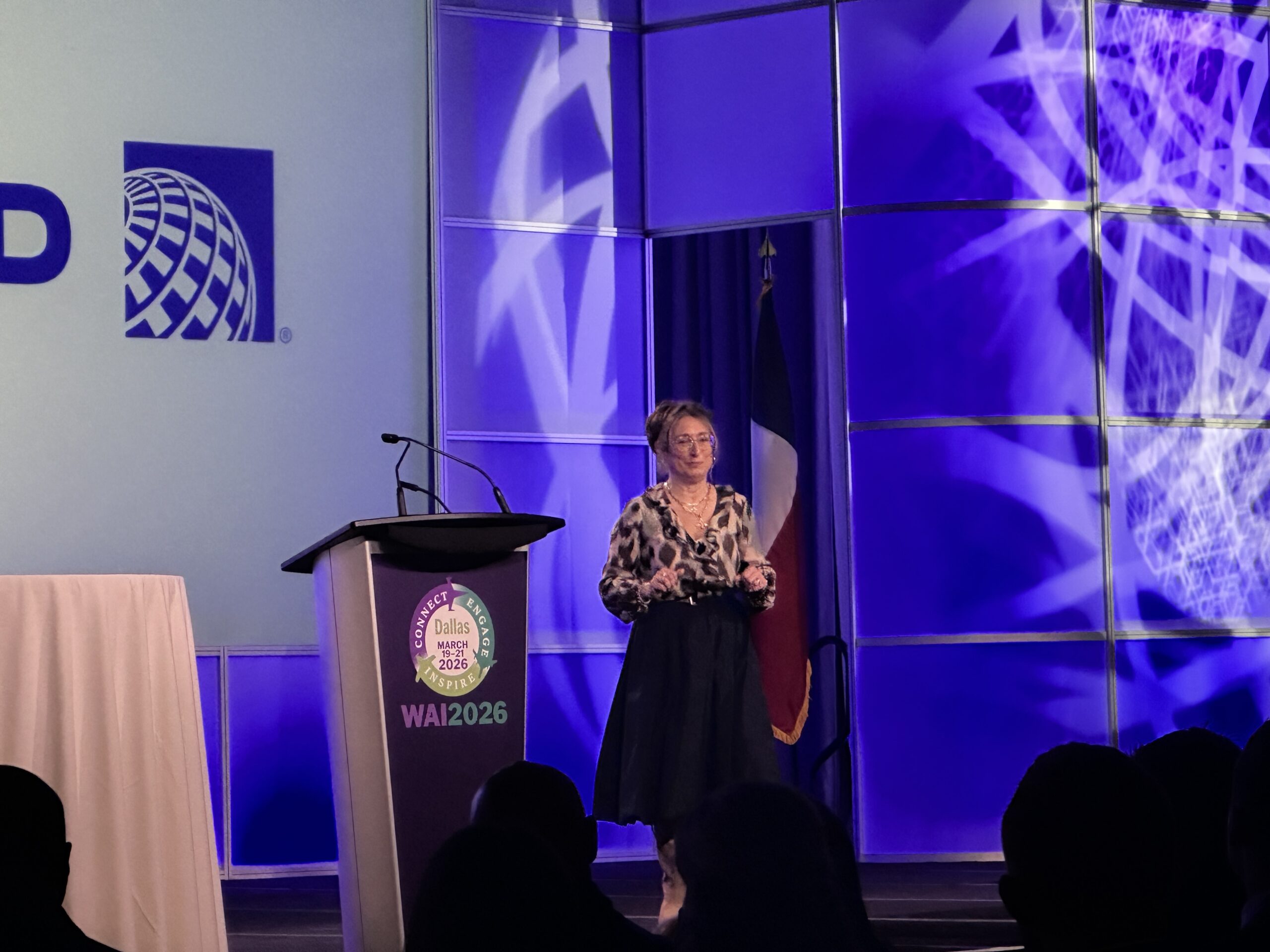
A brunette woman with her hair pulled back and glasses standing next to a podium with the United Airlines logo in the background.
WAI CEO Lynda Coffman spent decades of her career at United Airlines in a number of leadership roles before coming out of retirement to lead Women in Aviation International. [Credit: Julie Boatman]

International programs take on focus too, under Coffman’s tenure. Case in point, International Girls in Aviation Day (GIAD) hosted 40,000 girls in 30 countries in 2025, and the addition of International Ambassadors brought WAI to the Dubai Airshow, among other engagements centering opportunities for women around the world.

Very exciting to me: the introduction of the Global Access Program, which Coffman announced during her opening remarks. Launching on April 1, GAP fills a serious one for women and young ladies in economically challenged regions, with adjusted individual and chapter dues for those wanting to participate. Yes, the $49 dues can feel insurmountable when you’re trying to put food on the table, but dreams should not suffer. The 2026 seed funding for the GAP came from the current WAI Board of Directors and their personal donations to lift the program off the ground.

2026 sees the 50th anniversary of the Women Military Aviators association, honoring their service. Also, WAI has introduced two new awards, the Spirit of Service going to Liz Booker, Literary Aviatrix, and the Mentor of the Year to ERAU professor Samantha Bowyer.
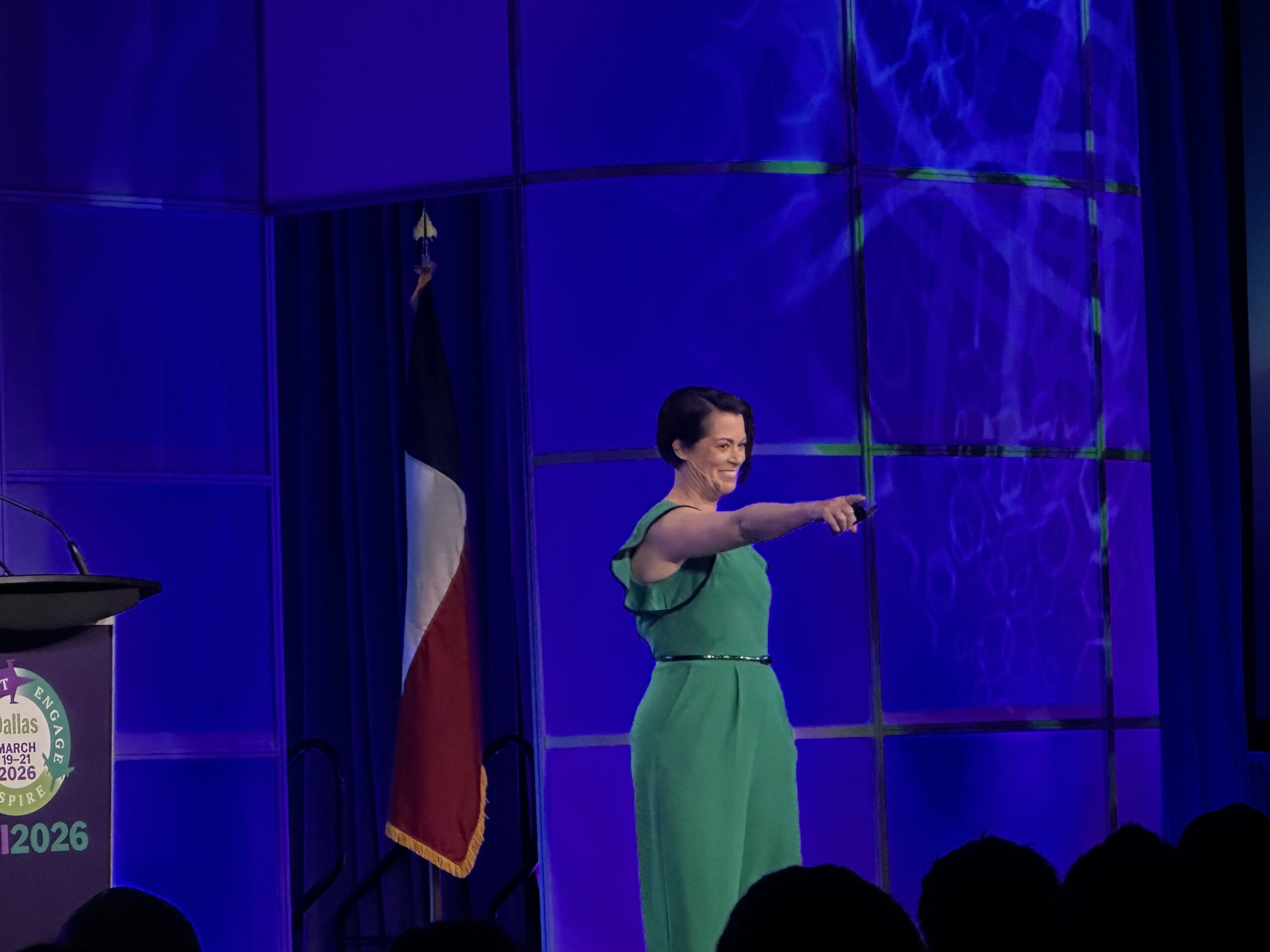
A woman with short dark brunette hair in a kelly green jumpsuit smiles and points to the crowd from the stage
USAF Thunderbird Nicole Malachowski gives a shout out to her “she-roes” in the audience at WAI 26. [Credit: Julie Boatman]

Nicole Malachowski Inspires

In a keynote at least in part responsible for the full-to-the-brim general session on Thursday morning, Col. Nicole Malachowski (USAF, ret.) gave us more on integrity and leadership with the story of her path to the cockpit of the F-15E as a Thunderbird.

“I knew I was too short to be a showgirl, so I went with Plan B and became a fighter pilot,” said Malachowski about her childhood in Las Vegas, Nevada.

Just six pilots get to selected to join the illustrious demo team in any given year; Malachowski was picked in 2005.

So it’s not a surprise, really, that my second emotional moment came during Nicole’s talk about her favorite part of being a Thunderbird: the autograph line that assembled for her that was 2 to 3 times longer than the lines for the other pilots. The reason? It would be full of young women, 8-21 years old, who came to see someone who looked like them doing what she did.

Her stories backed up the key takeaways she gave us:

  • Choose an unscripted life.
  • Believe those who believe in you.
  • Breaking barriers requires integrity… you must maintain fidelity to who you truly are.
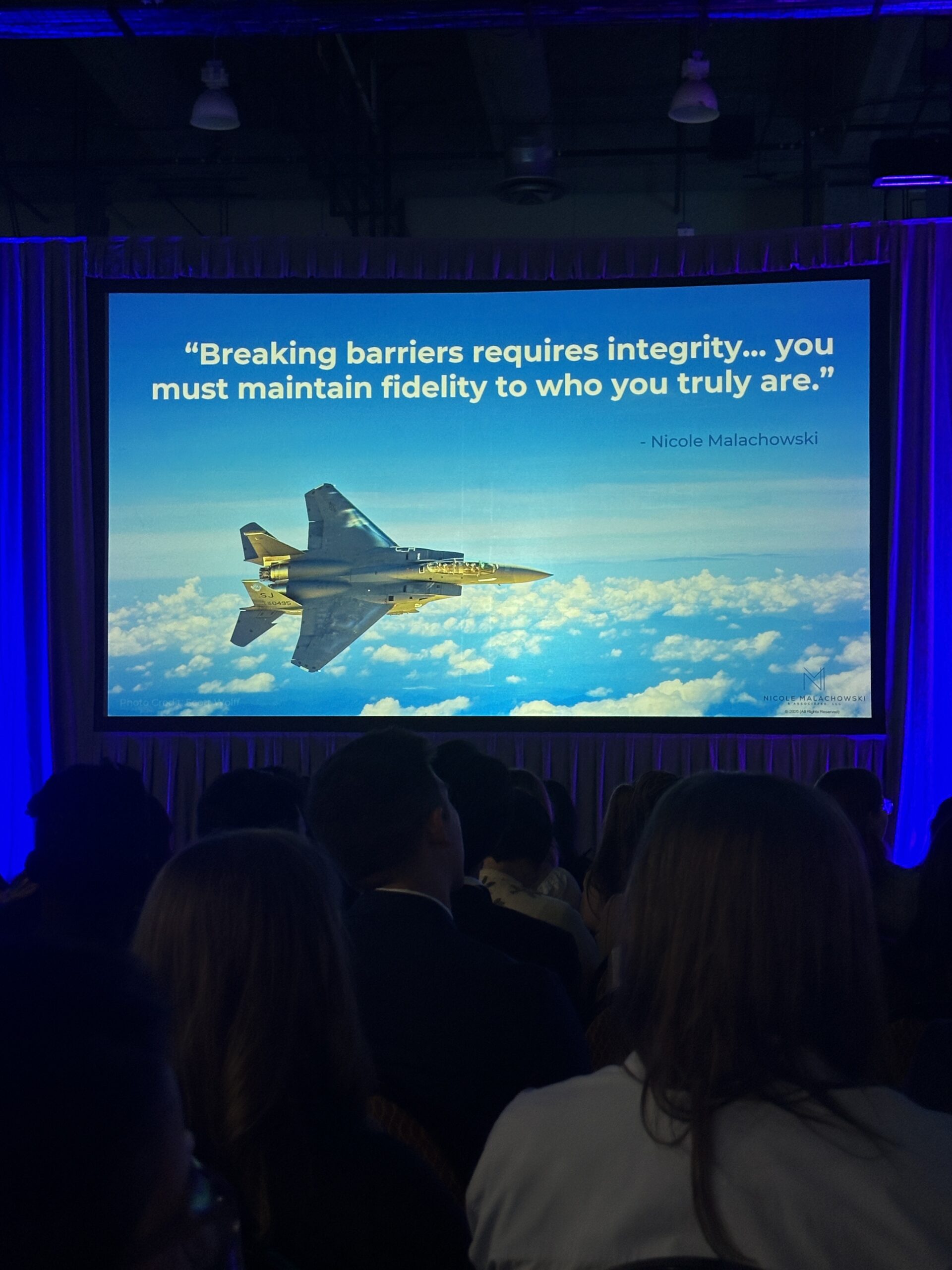
A powerful quote from F-15E pilot and Air Force Thunderbird Nicole Malachowski at WAI 26. [Credit: Julie Boatman]

No Minced Words: WAI’s CEO Kicks Off WAI25 Tapping Into ‘Outrage’

“A world where the sky is open to all—where aviation and aerospace dreams are possible without barriers.”

Without barriers. If you had to encapsulate the mission of Women in Aviation International, that’s it. The fact we’re even *having* a conversation about the raising of those barriers in 2025 is unbelievable.

But here we are.

WAI25 Meets the Moment

Each time winter breaks through to the first signs of spring, I weigh our ever-expanding travel schedule to determine which aerospace events to attend against three factors: 

  • What I must attend
  • What I want to attend
  • What I can prioritize down in order to say yes to 1 & 2

The Women in Aviation International Conference—which I’ve made a part of my life since 1999—once more went from a “want” to a “must.”

Now, more than ever, this association’s critical mission meets the global moment as it faces a list of challenges, many coming from the U.S. government leadership, that would have been unimaginable a year ago.

Every day brings news of more “takedowns”: the violent scrubbing of resources and references supporting diversity, equity, and inclusion initiatives from websites to policy manuals, in the interest of tilting the playing field back to where it was in some vaguely unspecified time before we recognized the importance of representation across our workforce and communities.

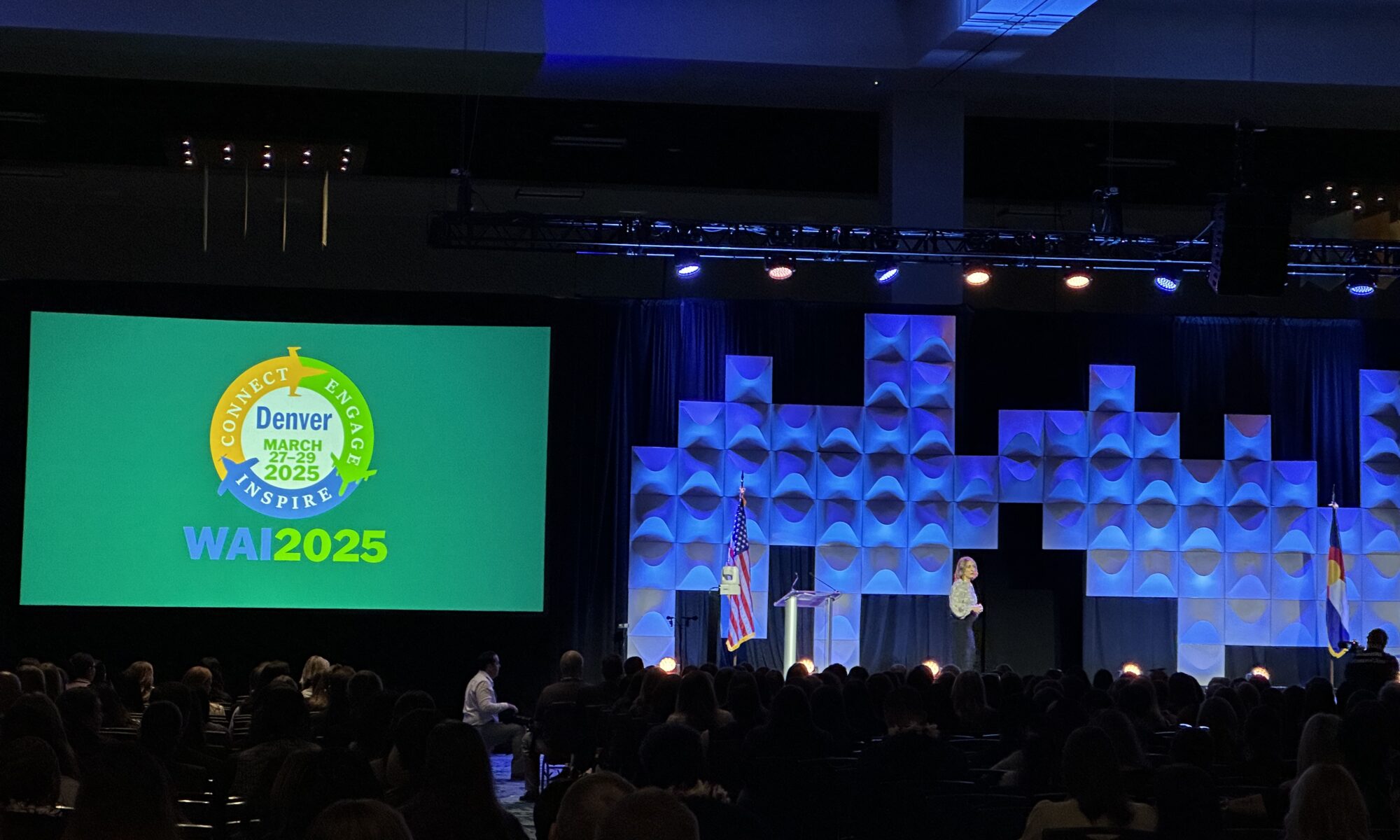
WAI CEO Lynda Coffman pulled zero punches kicking off the conference on Thursday, March 27, at the Gaylord Rockies Resort & Convention Center in Denver at the opening general session.

“As we sit here now, our hard-earned achievements and accomplishments are being erased,” said Coffman. “The policies that are perpetuating barriers and negative stereotypes will only reduce the number of women who can or want to enter aviation.”

So why should we care? Coffman—speaking from experience given her previous role in senior leadership at United Airlines—drew a direct connection to the bottom line for the aerospace industry. “That will lead to smaller talent pipelines for the industry. And those smaller talent pipelines mean a smaller talent pool for the industry, which means thinner pickings for the most qualified people.” That’s not good for anyone—especially when we compare the industry’s “stellar” safety record under these broadening initiatives and their positive impact on the recruitment of the best people.

Tapping into the spirit of the room, which numbered several hundred young people interested and invested in aviation sitting next to seasoned aviation professionals, Coffman asked how many felt disoriented, abandoned, and, yes, angry, given the current state of affairs. Hands flew up. “Yes, you should be feeling angry, because the rhetoric that’s down there right now is a damn outrage. 

“How dare anyone say we are less than, or less qualified because of our gender? It’s utter BS.”

Coffman urged those taking part in #WAI25 to move those feelings to collective action:

  1. Stand together and make their voices heard.
  2. Reach out to those women and allies feeling isolated, singled out, or anxious.
  3. Grow the community, with the stretch goal to lift membership in WAI to 25,000 by April 15.

“Let’s also make this a day,” said Coffman, “that we’ll send the message that we will stand together, we will not be undermined, we will not allow our talents and qualifications to be questioned, and we will not stand for our full contribution to history to be erased.”

Do We Need WAI?

Today, on #JustJuliesTakes, I ask the question I heard a couple times last week at the Women in Aviation International conference:

Do We Still Need “Women in Aviation”?

The raw numbers say yes—the percentage of pilots holding ATPs that are women has doubled, but when you start at 3.5% just a few decades ago the meaningful change still leaves much room for growth.

The nature of what it means to be a pilot is changing, as we move away from manual skill towards systems management. The breadth of roles is increasing too, with a variety of piloting jobs available—including those from flight instructor to tourist flights to the super short-haul routes promised by eVTOLs that allow a parent to stay home every night. This reduces a key “barrier to entry” particularly for women who are primary caregivers.

And, though the spectre of forcing people into “traditional roles” keeps popping up even in the U.S., changing attitudes towards women working internationally have reached a tipping point in so many countries that we can consider a future when perhaps this isn’t a “thing”—and we’re serving on an equivalent to the flight deck of the Starship Enterprise, where each person contributes according to their talents and skills. (Thank you “Dragon Lady” Merryl Tengesdal for giving me that analogy.)

Speaking of which, both Dragon Lady (a U-2 pilot) and Caroline Jensen (“Blaze,” a Thunderbird) are moms. In our generation, we went from “no women fighter pilots” to this, normalizing these multifacted roles. Moms are soooo badass!

As for how each woman pilot found our way into the cockpit, all I can say is it’s been through our individual means. Some folks are self-directed and appear to need little encouragement, and some need real prodding before they figure out how to shine on their own. Many of us didn’t “need” WAI or the 99s or ISA+21… but those groups have been here to support us and cheer us on anyway. For others, the “hand up” has been priceless.

I foresee a time—10 years? 20?—when we no longer need the distinction of WAI and the 99s any more than we’ll have the QBs (Quiet Birdmen).

Maybe then, the conference will remain the main event, but simply settle into its role as a careers conference for all genders to attend—kinda like today—one that just so happens to do what it does better than most other venues for networking and recruitment. Maybe because we have made it such a nurturing environment that all young professionals appreciate. And it does so around the core of celebrating women within its sectors.

Hey—it’s kinda there already, a marvelous pathway for a diverse group of people to learn about all the roles possible in aviation. Not just pilots.

And as long as we need the beacon to shine the light for more people to follow and join our ranks, we need to preserve as many pathways into the dream as possible.